
Category

Deen (Religion)


Category

In his book ‘100 most influential persons in history’, Michael Hart ranked Prophet Muhammad (Peace Be Upon Him) as number one:

“My choice of Muhammad to lead the list of the world’s most influential persons may surprise some readers and may be questioned by others, but he was the only man in history who was supremely successful on both the religious and secular levels.

Of humble origins, Muhammad founded and promulgated one of the world’s great religions, and became an immensely effective political leader. Today, thirteen centuries after his death, his influence is still powerful and pervasive.

The majority of the persons in this book had the advantage of being born and raised in centers of civilization, highly cultured or politically pivotal nations. Muhammad, however, was born in the year 570, in the city of Mecca, in southern Arabia, at that time a backward area of the world, far from the centers of trade, art, and learning. Orphaned at age six, he was reared in modest surroundings. Islamic tradition tells us that he was illiterate. His economic position improved when, at age twenty-five, he married a wealthy widow. Nevertheless, as he approached forty, there was little outward indication that he was a remarkable person…” A RANKING OF THE MOST INFLUENTIAL PERSONS IN HISTORY by Michael H. Hart.

This may be a surprise to the non-Muslims of today but even during the pre-Islamic period and before prophethood, Muhammad peace be upon him was known for his exemplary behavior and outstanding dealings with other human beings. He was nicknamed ‘Assadiqul ameen’ to mean ‘Honest and Trustworthy’ and he was distinguished among his people for his modesty, gentleness, virtuous and graceful manners and his extreme kindness.

“He was an exemplary man of weighty mind and faultless insight. He was favoured with intelligence, originality of thought and accurate choice of the means leading to accurate choice of the means leading to accurate goals. His long silence helped favourably in his habit of meditation and deep investigation into the truth. His vivid mind and pure nature were helpfully instrumental in assimilating and comprehending ways of life and people, individual and community wise. He shunned superstitious practices but took an active part in constructive and useful dealings; otherwise, he would have taken a route to his self-adopted seclusion. He kept himself aloof from drinking wine, eating meat slaughtered on stone altars, or attending idolatrous festivals. He held the idols in extreme aversion and disgust. He could never tolerate someone swearing by Al-Lat and Al-Uzza.” (The Sealed Nectar by Safi-ur-Rahman, page 81)

It is said that during a conversation with Muhammad aleyhi ssalam, Bahirah, the monk in Syria swore, ‘Bi Llata wal Uzza’ since this was the common swearing of the people in Makkah and Muhammad peace be upon him immediately expressed his detest by such swearing.

It is clear that Allah (S.W) protected him and detached his heart from evil practices even before his prophethood.

Al Bukhari reported on the authority of Jabir bin Abdullah peace be upon him that he said: ‘While the people were re-building Al-kaabah, the prophet Muhammad (S.A.W) went with ‘Abbas to carry some stones. ‘Abbas said: ‘Put your loincloth round your neck to protect you from the stones.’ (As he did that) the prophet fell to the ground and his eyes turned skyward. Later on, he woke up and shouted: ‘My loincloth…my loincloth.’ He wrapped himself in his loincloth.” (Sahih Al Bukhari. Chapter: The building of Al-Ka’bah, 1/540.)

In another instance where Allah (S.W) protected Muhammad (S.A.W) is a hadith reported by Ibn Al-Athir who reported Muhammad as saying: “I have never tried to do anything the people of ignorance did except for two times. Every time Allah intervened and checked me from doing so and I never did that again. Once I told my fellow shepherd to take care of my sheep when we were in the upper part of Makkah. I wanted to go down to Makkah and entertain myself as the young men did. I went down to the first to the first house in Makkah where I heard music. I entered and asked: ‘what is this?’ Someone answered: ‘It is a wedding party.’ I sat down and listened but soon went into a deep sleep. I was awakened by the heat of sun. I went back to my fellow-shepherd and told him what happened to me. I never tried it again.” (There is a disagreement over the authenticity of this hadith. Al-Hakim said that it was authentic but Adh-dhahabi graded it weak, as did Ibn Kathir in Al-Bidayah wan-Nihayah.)

Even after his first revelation at the cave and fear had engulfed him, his wife Khadijah peace be upon her tried to soothe and reassure him by saying: ‘Allah will never disgrace you. You unite uterine relations; you bear the burden of the weak; you help the poor and the needy, you entertain the guests and endure hardships in the path of truthfulness.’

Muhammad, peace be upon him was known for his love and mercy for children, for his relatives, neighbours…you name it! Michael Hart, the author of 100 most influential persons in history, as mentioned earlier stated how the prophet p.b.u.h was very well successful in both the secular and religious life. We as human beings struggle to bring a balance to anything in our lives. When we work, we miss out on spending valuable time with our family. When we spend valuable amount of time with our family, we reduce the amount of worship we do. When we focus on worshipping and family, our work is affected. How great then is the prophet p.b.u.h to have established such a strong and powerful religion while he still had the time to help his wives in cooking and other house chores? To have been able to win in all sectors from leadership to being a role model of the youth, to being a teacher, to being a strategic warrior at the war zone, to being a great father and husband? Isn’t this reason enough for the non-Muslims to believe in his prophethood, of how much we should follow his footsteps and emulate and love him?

  • Aisha, the wife of the Prophet Muhammad (pbuh), was asked, “What did the Prophet () use to do in his house?” She replied, “He used to keep himself busy serving his family (كَانَ يَكُونُ فِي مِهْنَةِ أَهْلِهِ) and when it was the time for prayer he would go for it.” (Bukhari)

In another report Aisha is reported to have said, “He did what one of you would do in his house. He mended sandals and patched garments and sewed.” (Adab Al-Mufrad graded sahih by Al-Albani)

In yet another report it is said that she said, “He milked his goat.” (Ahmad)

He also said, “The best of you is the one who is best to his wife, and I am the best of you to my wives.” (Tirmidhi; Ibn Majah)

The prophet peace be upon him would always enter upon his wives smiling and happy, looking neat and a siwak in his mouth. He never bet any of his wives or even the slaves. Every morning after fajr prayers, he would sit at the same place worshipping until sunrise. He would then go to each of his nine wives to greet them and would make a dua for them. In another narration by Aisha, the prophet would make the visits during evening hours. During every dinner, he would bring all his wives together and eat with them. He was kind, merciful and loving to his wives and even loyal to his deceased first wife Khadijah bint Khuweylid.

The prophet peace be upon him married Khadijah bint Khuweylid, who was a successful business woman, when she was 40 years while he was just 25 years old. Yet she supported the prophet and believed in him when no one did. The prophet thus never forgot her ihsan (beneficence) to him and forever held her in very high esteem.

  • It had been related by Abu Huraira that on one occasion, when Khadijah was still alive, Jibreel AS came to the Prophet SAW and said, “O Messenger of Allah, Khadijah is just coming with a bowl of soup (or food or drink) for you. When she comes to you, give her greetings of peace from her Lord and from me, and give her the good news of a palace of jewels in the Garden, where there will be neither any noise nor any tiredness.” It was also narrated by Ali (RA) that he heard the Prophet (PBUH) saying “Mary, the daughter of Imran, was the best among the women (of the world of her time) and Khadijah is the best amongst the women (of this nation).” (Sahih Al-Bukhari 58:164)That was how special Khadijah peace be upon her was and the prophet never stopped appreciating her.


  • Aisha reported: “I never felt so jealous about any woman as I did for Khadija, although she had died three years before I married the Prophet, peace and blessings be upon him. That was because I heard him mentioning her so often and because his Lord has ordered him to give her glad tidings that she would have a palace in Paradise made of reeds; and also because the Prophet would slaughter a sheep and distribute its meat among her friends.” [Source: Sahih Bukhari 5658]


  • Muhammad said about her “She believed in me when the whole world refuted me and she attested to my veracity when the whole world accused me of falsehood. She offered me compassion and loyalty with her wealth when everyone else had forsaken me.”

Prophet Muhammad peace be upon him showed great understanding to his wives and not just them but with everyone else. One important matter he understood was of the jealousy that would naturally occur between any co-wives. As such, he was always merciful and compassionate to each one of them and treated them in a special way.

  • Al-Bukhaari (5225) narrated that Anas said: “The Prophet (blessings and peace of Allah be upon him) was with one of his wives, when one of the Mothers of the Believers sent a bowl in which there was some food. The one in whose house the Prophet (blessings and peace of Allah be upon him) was struck the hand of the servant, and the bowl fell and broke. The Prophet (blessings and peace of Allah be upon him) picked up the pieces of the bowl, then he began to collect the food that was in it, and said, “Your mother got jealous.” Then he made the servant wait until the bowl belonging to the one in whose house he was, was brought. He gave the intact bowl to the one whose bowl had been broken, and he kept the broken bowl in the house of the one who had broken it.” It is believed the wife mentioned for getting jealous was Aishah peace be upon her.

Even in times of conflict and misunderstandings, his wives felt safest with him, with surety that he would never harm them.

  • Nu’man ibn Bashirradiallahu ‘anhusaid: That Abu Bakr sought permission to enter the Prophet’s apartment. In the meantime he heard ‘A’ishah speaking in a louder voice that the Prophet sallallahu ‘alayhi wa sallam. When Abu Bakr entered the apartment, he caught ‘A’ishah and said, “Beware! From now on I should never see you speaking thus.” He wanted to slap her. The Prophet held Abu Bakr by the waist and thus saved ‘A’ishah. Abu Bakr went out angrily. When Abu Bakr had gone, the Prophet said to ‘A’ishah, “Well, how did I save you from the man.” After a few days absence Abu Bakr again sought permission, and saw that both the Prophet and ‘A’ishah were at peace. Then he said, “Let me enter in your peace as I had entered in your dispute.” The Prophet said, “We do so, we do so.” [Al-Bidayah, vol. VI, p. 46]

In another instance, the prophet peace be upon kneeled down and asked his wife Safiyyah to step on his lap to climb on the camel.

The prophet peace be upon him would also have casual conversations with his wives and he would listen without interrupting or saying he had better things to do. A good example of this is a narration by Aisha (Radi Allahu anha):

  • “Eleven women sat (at a place) and promised and contracted that they would not conceal anything of the news of their husbands.

The first one said, “My husband is like the meat of a lean weak camel which is kept on the top of a mountain which is neither easy to climb, nor is the meat fat, so that one might put up with the trouble of fetching it.”

The second one said, “I shall not relate my husband’s news, for I fear that I may not be able to finish his story, for if I describe him, I will mention all his defects and bad traits.”

The third one said, “My husband is a tall man; if I describe him (and he hears of that) he will divorce me, and if I keep quiet, he will neither divorce me nor treat me as a wife.”

The fourth one said, “My husband is a moderate person like the night of Tihama which is neither hot nor cold. I am neither afraid of him, nor am I discontented with him.”

The fifth one said, “My husband, when entering (the house) is a leopard, and when going out, is a lion. He does not ask about whatever is in the house.”

The sixth one said, “If my husband eats. he eats too much (leaving the dishes empty), and if he drinks he leaves nothing, and if he sleeps he sleeps alone (away from me) covered in garments and does not stretch his hands here and there so as to know how I fare (get along).”

The seventh one said, “My husband is a wrong-doer or weak and foolish. All the defects are present in him. He may injure your head or your body or may do both.”

The eighth one said, “My husband is soft to touch like a rabbit and smells like a Zarnab (a kind of good smelling grass).”

The ninth one said, “My husband is a tall generous man wearing a long strap for carrying his sword. His ashes are abundant and his house is near to the people who would easily consult him.”

The tenth one said, “My husband is Malik, and what is Malik? Malik is greater than whatever I say about him. (He is beyond and above all praises which can come to my mind). Most of his camels are kept at home (ready to be slaughtered for the guests) and only a few are taken to the pastures. When the camels hear the sound of the lute (or the tambourine) they realize that they are going to be slaughtered for the guests.”

The eleventh one said, “My husband is Abu Zar and what is Abu Zara (i.e., what should I say about him)? He has given me many ornaments and my ears are heavily loaded with them and my arms have become fat (i.e., I have become fat). And he has pleased me, and I have become so happy that I feel proud of myself. He found me with my family who were mere owners of sheep and living in poverty, and brought me to a respected family having horses and camels and threshing and purifying grain . Whatever I say, he does not rebuke or insult me. When I sleep, I sleep till late in the morning, and when I drink water (or milk), I drink my fill. The mother of Abu Zara and what may one say in praise of the mother of Abu Zara’? Her saddle bags were always full of provision and her house was spacious. As for the son of Abu Zar, what may one say of the son of Abu Zar? His bed is as narrow as an unsheathed sword and an arm of a kid (of four months) satisfies his hunger. As for the daughter of Abu Zar, she is obedient to her father and to her mother. She has a fat well-built body and that arouses the jealousy of her husband’s other wife. As for the (maid) slave girl of Abu Zar, what may one say of the (maid) slavegirl of Abu Zar? She does not uncover our secrets but keeps them, and does not waste our provisions and does not leave the rubbish scattered everywhere in our house.”

The eleventh lady added, “One day it so happened that Abu Zar went out at the time when the milk was being milked from the animals, and he saw a woman who had two sons like two leopards playing with her two breasts. (On seeing her) he divorced me and married her. Thereafter I married a noble man who used to ride a fast tireless horse and keep a spear in his hand. He gave me many things, and also a pair of every kind of livestock and said, ‘Eat (of this), O Um Zar, and give provision to your relatives.” She added, “Yet, all those things which my second husband gave me could not fill the smallest utensil of Abu Zar’s.” ‘Aisha then said: Allah’s Apostle said to me, “I am to you as Abu Zar was to his wife Um Zara.” [Al-Bukhari (5189), Muslim(244)]

To be continued….please stay tuned 🙂

Please share the post and earn rewards from it biidhnillah.

P.S I am not a scholar and this is my little effort in spreading the knowledge therefore in case of any mistake/correction/addition needed in this article about the prophet (p.b.u.h) and his life, kindly email me at: info@lubnah.me.ke.

***

Assalam aleykum everyone,

Kindly there is a sister who needs our help and is in critical condition. She has a disorder called endometriosis, which causes extreme pain when she is in her monthly periods. She has tried going to many hospitals in Kenya and in Tanzania but no hospital has helped. She was told to go to India and the cost is 500,000/= and it is a lot for her. She has to go by the end of this month. She is currently in pain and she does not have to delay for the operation or else she will reach a point where she cant sit, stand or even sleep.

We are currently at 22,600/= with the fundraising. Please let’s all join hands and assist her with whatever small we can afford. Every coin goes a long way.

To contribute Mpesa: 0700892829

Kindly do share this message and remember her in your duas.

May Allah bless you all and easen all your battles. Ameen.

Back in university one of the ladies in our lot got pregnant in the middle of the semester. Or at least that’s when her belly started revealing. The lady was very quiet and reserved. She wasn’t a Muslim but she always seemed decent. Soon as her pregnancy became vivid, some of my mates started saying, ‘See she was acting all innocent but now she’s been exposed.’ I thought about it to myself for a moment and I said, ‘But that’s not fair.’ I mean, for the years that I knew the lady there was no single day she declared herself ‘innocent’ nor was there any day that I saw her pointing fingers and slandering others for their wrongdoings. There was no day that she acted or even spoke like she was ‘holier than thou’. How was it really fair to slander someone when they slip just because they weren’t openly showing their horns or posting it up on social media for the whole world to see?

See, wrong is wrong however we try to sugarcoat it. But there’s always more to the story. The world we live in at the moment is the kind that expects you to put up your dirty laundry outside on broad daylight in the name of ‘I am being myself. At least I don’t pretend.’

I once had a conversation with a lady who was talking about her personal situation and some sort of scheme she was plotting. Okay, no judgement whatsoever. But then the conversation rolled on to a point where she said, ‘Hawa wakimya ndio nawaheshimu. Utaona hakuna innocent kama wao then just one day they shock you to the peak with their actions.’

I mean, where did this mentality come from? That one should either be openly sinning and making mistakes or be the perfect angel as we see you. Where was it written that exposing your mistakes makes you any better than the one who doesn’t? Or that the one who doesn’t is a hypocrite? Isn’t it silly that we consider the reserved, seemingly pious people to be 120% right, 360 degrees all round perfect?! Like ‘Oh my God, he is PERRR-VECT, nur ala nur 😀

Really bro?!

We see it all the time. With sheikhs, famous people and colleagues. Someone does a mistake that is exposed and poof! Everyone has a reaction and an opinion and we just blow it completely out of proportion because ‘they were hypocrites all along’. That same thing, if it were to be done by anyone else we would go on with our lives like nothing happened. But hey! this is so and so…we have to break the internet about it.

We come out each day showing people our displeasing actions because we want people to see us for who we are and accept us as is. But in the process of doing that, we unveil any sense of shame left within us because the moment someone approaches us to humbly correct us we are so quick to say, ‘Don’t judge me’ or ‘You shouldn’t judge me.’ The same goes to those who openly reveal the good that they do and slander everyone else who isn’t like what they perceive themselves.

Truth is that there is no angel. There is no one who can look back and confidently say, ‘I am perfect or sinless’. We are all struggling with something, whether it is visible or not, we are. Even the best of sheikhs and the people we consider our role models. We all have skeletons hidden in our wardrobe and chapters of our lives we don’t read out loud. There are people we have harmed or caused pain, whether intentionally or not, we have. So the next time a certain sheikh or role model does a mistake and the internet family actively discuss about him/her, remember that they too are human beings. They wrong just as you do. The mistakes or sins may be different but they are still there. And just because you can’t see them, doesn’t mean you should forget that they too have flaws and weaknesses and things they are not proud of.

Fair enough, you’d probably be disappointed because you looked up to them but never allow that to overshadow your judgment on who can or can’t sin and who should/shouldn’t be forgiven.

Most importantly, don’t let the current world push you to exposing your sins in the fear of people having overly high expectations on you. You being ashamed about your mistakes and sins is the first step to repentance. Or how else do you expect to sincerely repent after posting it on your social media page with your sparkling smile as you sin?!

Abu Hurayrah (radi Allahu anhu) reported that the Messenger of Allah (sal Allahu alaihi wa sallam) said, “Every one of my followers will be forgiven except those who expose (openly) their wrongdoings. An example of this is that of a man who commits a sin at night which Allah has covered for him, and in the morning, he would say (to people): ‘I committed such and such sin last night’ while Allah had kept it a secret. During the night Allah has covered it up but in the morning he tears up the cover provided by Allah Himself.” [Sahih al-Bukhari and Muslim]

There is a famous story of the sahabi Nuayman ‘ibn Amr Al-Ansari RA who was known to have issues with alcohol. Despite knowing the ruling of Islam towards the intoxicating drink, Nuayman RA struggled with breaking his addiction, and was flogged twice for drinking. Upon the second flogging, ‘Umar RA who was angered by Nuayman’s RA behaviour quipped, “La ‘nat Allah alayhi – may God’s curse be on him”. The Prophet Muhammad (S), upon hearing this, was quick to intervene, “No, no, don’t do (such a thing). Indeed he loves God and His Apostle. The major sin (as this) does not put one outside the community and the mercy of God is close to the believers.” Watch the full story on Nuayman here: https://www.youtube.com/watch?v=7TCCzKs3-bo

The reason I shared his story is because it should be a reminder that even the sahabis did sin and mistakes too yet that didn’t make them to be regarded any less than the believers they were. The difference with us is how much they really regretted their acts and most importantly, how the prophet treated the believers who sinned; without despising them or shunning them off.

Once a young man came to the Prophet ﷺ requesting from the Prophet to grant this man permission to have sex outside of marriage. The people were shocked and were trying to silence his question. The Prophet ﷺ asked him a series of questions. “Would you like it for your mom?” He ﷺ continued to ask if this man would like it for his daughter, sister or other female relatives. The man continually responded in the negative, intellectually convinced by the logical argument of the Prophet ﷺ. Finally, the Prophet placed his blessed hand on the man and prayed to God, “Dear God! May you forgive his sins, purify his heart and make him chaste.” And it is narrated that this man never got involved in what he was requesting after this experience with the Prophet.

Ibn Mas`ud (May Allah be pleased with him) reported: A man kissed a woman. So he came to the Messenger of Allah (PBUH) and informed him about it. Then Allah revealed this Ayah: “And perform the Salat, between the two ends of the day and in some hours of the night. Verily, the good deeds efface the evil deeds (i.e., minor sins).” (11:114) The man asked the Messenger of Allah (PBUH) whether this applies to him only. The Messenger of Allah (PBUH) said, “It applies to all of my Ummah.” [Al-Bukhari and Muslim].

Now imagine if these situations happened today and the people involved were maybe known to be pious or God-fearing; how would we react then?! How would we respond to them? Wouldn’t we be the first ones to label them as hypocrites and a disgrace to the Muslim community? Wouldn’t it be a big scandal that we’d talk about for days on?! The prophet p.b.u.h corrected them and prayed for them instead. We should also keep in mind that we’d never know how much a person regrets their actions, feels extremely guilty and cries for repentance every night. Be merciful upon others just like you’d want others to be with you if you were in the same position. Never say ‘I’d never do that or say that’ because honestly, life is the scariest thing to be too sure about. Tables turn every.single.day.

This of course isn’t a justification for anyone’s wrongdoings. Nor should it be an excuse and an easy gateway for people to sin secretly in the hope that Allah (S.W) will cover our tracks. Also, this differs according to the sin/mistake in hand. Cases like rape, sodomy, molestation, harassment, murder or any other grave sin may need a call for justice upon the doer so as to protect others from him/her or to remove them from a certain position.

Allah (S.W) surely knows what is in our hearts and what we struggle with to change and our intentions behind all our actions. Don’t expose your sins but also try with all your being to keep away from them.

Ibn al-Qayyim Rahimahu Llah said : ‘Know that if people are impressed with you, they are impressed with the beauty of Allah’s covering of your sins.’

Thank Allah (S.W) when He protects the world from seeing the darkness within you. Thank Allah when He guides you. Thank Allah when He grants you a chance to sincerely repent.

May Allah (S.W) protect us from the whispering of shaitan and from our own nafs and guide us together with all our loved ones. Ameen.

P.S Leave the skeletons where they belong; in the wardrobe (not literally, but you get me right? )

For quite some time, people were drowning in self-pity and throwing pity party for themselves due to low self-esteem. Social media became the voice of all the people trying to fit in, breaking and self-loathing. It became our dearest diary, so we spoke up. We talked of our deepest pain and how we wish we could be like so and so, look like so and so, dress like so and so, have partners like so and so…Slowly with time, the social media power gave people a chance to appreciate themselves, love how they are without having to necessarily to fit in. Different became the new trend. It was all good at first. Emotional support from people we barely know, a chance to know people who are like us…until finally, FINALLY, we learnt to embrace ourselves. It was great! Self-love rocks no doubt. But something else happened too. We now became overly-obsessed with ourselves. And as the saying goes, ‘Too much of anything is poisonous.’

We don’t want anyone correcting us, we don’t want anyone to put a mirror in front of us and show us the darkness eating our insides like worms. We became the untouchables. Me above Everyone else. Me as flawless as I am. Me being perfect. Look, look at the particles of empathy slip between our fingers. Look at kindness being the toilet rag. Look at appreciation breaking into a thousand glass pieces. Look at forgiveness flying with the wind. While we were showering ourselves with all this love we desperately needed, we over-stepped a bit. We became too blinded and eventually did not recognize the beast we have created within ourselves with Social media being our partner in crime.This beast is called Narcissism.

Narcissism: extreme selfishness, with a grandiose view of one’s own talents and a craving for admiration, as characterizing a personality type.

Don’t get me wrong, self-love is so beautiful and uplifting for the soul but when we let it infest our brains like mites, we become arrogant. We become selfish (not in the good way). We look down upon others who are on a different journey from ours and disregard and call names to anyone trying to advise us. We idolize ourselves too much to the extent we disrespect other people.There’s a thin line between self-love and Narcissism, and majority of us have crossed it.

So we became these people who can’t be told anything, unapproachable and inhumane. We speak and treat people recklessly in the name of loving ourselves.

The thing with people is that they don’t forget. They don’t forget how good or bad or even how indifferent you were to them. And you might be so surprised how something small you did to a person years back may result to them helping you in a difficult situation or decide to do the total opposite.

{Worship God alone and do not associate with Him any partners. Be kind to your parents and near of kin, to orphans, the needy, the neighbor who is related to you and the neighbor who is a stranger, the friend by your side, the wayfarer, and those whom your right hands possess. God does not love those who are arrogant and boastful.} (Qur’an: 4: 36)

A simple example, I know of this lady during campus who was staying at the hostels and one time needed help fixing her room plug which wasn’t functioning. So she asked the campus guard for help and he did fix it. Some other girls were really surprised that he had actually helped because they had just a few days asked him for help and he didn’t offer any help. They asked the lady jokingly why he favoured her and she said, ‘I usually greet him every time I pass by the gate’ And that was just it. She greeted him and he appreciated it more than she personally imagined.

Have you for example ever seen the reaction of a non staff, like the school cook or guard or cleaner when you coincidentally bump into them after you are done with school and actually recognize who they are and greet them? They most probably would give you a glowing smile, not necessarily because of the greeting but mostly because you remembered who they are. They really appreciate you for it. And that’s how it always is with people. Your simple act of kindness and respect goes a long way.

Right now most of us thump our chests and say, ‘I don’t need anyone. Kwani who are they to me? Hawanilishi hawanivishi’ Well, it may be true they don’t feed or clothe you but that doesn’t make you any better than them or them any lesser than who you are. People keep pumping it to us that we shouldn’t listen to what others tell us. That this is your life, do as you wish. You are not accountable to anyone nor does anyone have the right to question your behaviour. But where do we draw the line between self-love, our self-efficacy, our independence and straight up disrespect and narcissism?

Self-efficacy is an individual’s belief in his or her innate ability to achieve goals. 

 “And do not walk upon the earth exultantly. Indeed, you will never tear the earth [apart], and you will never reach the mountains in height.” (Surah Israa: verse 37)

I agree that certainly there are circumstances whereby one needs to disregard what others say about you. Like when they make you feel inferior or paint you in an unrecognizable way. Like when people try to stop you from achieving your goals or being who you truly are. Nonetheless, bad behaviours shouldn’t be romanticized with, ‘This is who I am so like me as I am or leave’. Like really?!

I purposely highlighted bad habits because I don’t want the statement to be misunderstood. Yes, none of us is perfect. We all have personality flaws and bad behaviours. But the only time we are justified to ask people to accept us for who we are is when we are trying to be better and working on ourselves, NOT as we continue disrespecting other people or the bad habits we have.

Remember the advice of Luqman Al Hakim to his son:
[And Luqman said], “O my son, indeed if wrong should be the weight of a mustard seed and should be within a rock or [anywhere] in the heavens or in the earth, Allah will bring it forth. Indeed, Allah is Subtle and Acquainted.O my son, establish prayer, enjoin what is right, forbid what is wrong, and be patient over what befalls you. Indeed, [all] that is of the matters [requiring] determination.And do not turn your cheek [in contempt] toward people and do not walk through the earth exultantly. Indeed, Allah does not like everyone self-deluded and boastful.And be moderate in your pace and lower your voice; indeed, the most disagreeable of sounds is the voice of donkeys.” (Surah Luqman: 16-19)

Don’t allow this temporary world make you be egoistic, boastful, inconsiderate and impolite because truly, you never know who will benefit you eventually. So treat people as you would want to be treated.

Be kind. Respect others. Love yourself within limits and enough to accept your mistakes and work on being better. Treat others as you would want to be treated. Because yes, what goes around comes around. In Arabic we say, ‘Kama tadin tudan’ to mean ‘What you do unto others will eventually be done on you too!’

***
Abu Darda (RA) reported that Rasulullah (SAW) said, “Nothing is weightier on the Scale of Deeds than one’s good manners.”(Al-Bukhari)

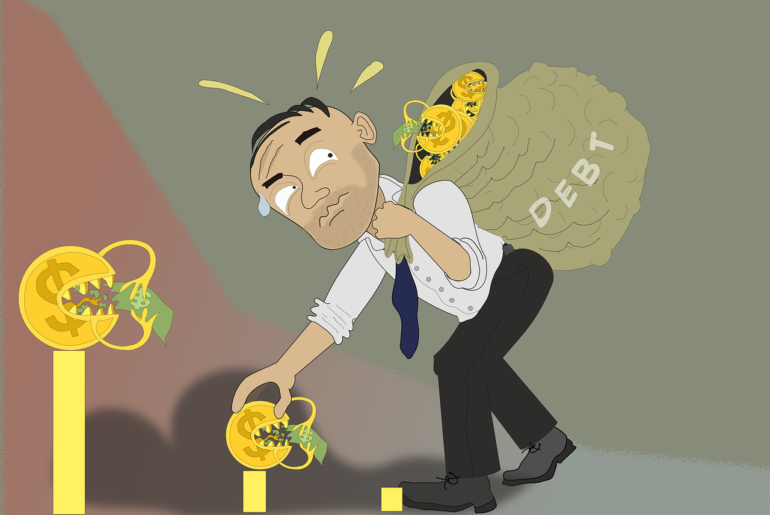
I find it quite amusing that the longest verse in the Qur’an is about debt rather than murder and crime or marriage and divorce, or worship or oppression and war or any other matter that we perceive to be huge in our lives. This is how heavy the matter of debt is, quite unexpected right? In our lives we consider debt as this small dismissible issue that doesn’t require our worry. We take loans, borrow money and disappear for years with someone’s wealth until they hopefully forget about it or forgive us. They don’t need it, we say.  They have enough money, what I took is like a drop of the vast ocean, they won’t even feel the loss.

We let people follow us like eagles as we play hide and seek with what is rightfully theirs. We let them beg and pester us endlessly to pay them back. We rub their hearts like sandpaper on wood as they weep for their money, as they sleep hungry, as they pray for justice. We still assume that debt is something as small as the ant, compared to the elephant in the room i.e. bloodshed and crime and divorce. But this one verse commonly known as ayatul dayn, is clear proof that debt is one of the last things you should ignore and underestimate.

When we go for jobs, we ask for contracts because we always need something that can bring us justice when manipulation or injustice happens. One of the hardest lessons I ever learnt is that you must and should write a contract with whoever you have a deal with, whether small or big, whether a family, friend, neighbour or boss especially when it is family because we usually disregard them as being manipulators. Yet it happens; family manipulating family and friends betraying their closest friends. Sometimes you or the lender forget what the initial agreement was and eventually, doubt comes in between you because of the different statements each gives. Remember when Allah (S.W) said in surat Anfal verse 28, And know that your properties and your children are but a trial and that Allah has with Him a great reward.’ Indeed, wealth has been known as one of the biggest matters to break marriages, friendships and even kinship all over time, all over the world. It happens, a lot.

In this longest ayah, surat Baqarah, verse 282, Allah (S.W) gives us a lengthy description on how to conduct financial transactions, about contracts, how to fulfil promises, being God-conscious and the importance of witnesses.

‘O you who have believed, when you contract a debt for a specified term, write it down. And let a scribe write [it] between you in justice. Let no scribe refuse to write as Allah has taught him. So let him write and let the one who has the obligation dictate. And let him fear Allah, his Lord, and not leave anything out of it. But if the one who has the obligation is of limited understanding or weak or unable to dictate himself, then let his guardian dictate in justice. And bring to witness two witnesses from among your men. And if there are not two men [available], then a man and two women from those whom you accept as witnesses – so that if one of the women errs, then the other can remind her. And let not the witnesses refuse when they are called upon. And do not be [too] weary to write it, whether it is small or large, for its [specified] term. That is more just in the sight of Allah and stronger as evidence and more likely to prevent doubt between you, except when it is an immediate transaction which you conduct among yourselves. For [then] there is no blame upon you if you do not write it. And take witnesses when you conclude a contract. Let no scribe be harmed or any witness. For if you do so, indeed, it is [grave] disobedience in you. And fear Allah . And Allah teaches you. And Allah is Knowing of all things.’

A few things we learn from this ayah is that:

  • Financial transactions, debts and agreements are NOT a small matter as we usually perceive.
  • It is very important to write down any transactions however small or big or even how much you trust another person.
  • Every person should dictate what his terms are.
  • The writer of the agreement must be a third party; an honest person with integrity.
  • The writer must write with all fairness and justice and use clear, precise words.
  • When one can’t dictate his terms due to young age or feeble-minded or is unable to do so for any reason, his guardian or trustee may do it on his behalf.
  • Witnesses are required when making a deal just in case one of you forgets or tries to manipulate another.
  • Witnesses are required to be two trusted men and if not available then one man and two women so that if one of the women errs, then the other can remind her.
  • Witnesses should not refuse to give evidence when required to.
  • All those involved in the transaction must be God conscious and not manipulate the other.
  • No harm must come either to the document writer or to the witnesses and their rights must be observed.
  • If a transaction is occurring in the present moment then it isn’t wrong if they don’t write it down.


In the verse that follows, Allah (S.W) says: ‘And if you are on a journey and cannot find a scribe, then a security deposit [should be] taken. And if one of you entrusts another, then let him who is entrusted discharge his trust [faithfully] and let him fear Allah, his Lord. And do not conceal testimony, for whoever conceals it – his heart is indeed sinful, and Allah is Knowing of what you do.’

In this ayah we learn the validity of mortgage (pledge) commonly known as ‘Rehani’ with the proper Islamic rules. In a narration by Aisha peace be upon her: The prophet peace be upon him bought some food stuff on credit for a limited period and mortgaged his armour’ (Sahih Bukhari: Vol. 3, hadith No. 686)

To further show the emphasis given to debt, here are a few hadiths on the subject:

The Prophet (Sal Allaahu Alaiyhi wa Sallam) said: “The soul of the believer is held hostage by his debt in his grave until it is paid off.” Tirmidhi,

Explaining this hadeeth al-Suyooti said: “It (soul) is detained and kept from reaching its noble destination. Al-‘Iraaqi said: “No judgment is passed as to whether it will be saved or doomed until it is determined whether his debt will be paid off or not.”

Al-Tirmidhi Hadith 2929 Narrated by Muhammad ibn Abdullah ibn Jahsh, The Messenger of Allah (saws) said: By Him in whose hand Muhammad’s soul is, if a man were to be killed in Allah’s path then come to life, be killed again in Allah’s path then come to life, and be killed once more in Allah’s path then come to life owing a debt, he would not enter Paradise till his debt was paid.” This is how serious the matter of debt is.

Another beautiful story on paying a debt is related in Sahih Al-Bukhari from Abu Hurairah (May Allah be satisfied with him) from Allah’s Messenger (May Allah exalt his mention and protect him from imperfection): A man from the Children of Israel asked another man from the Children of Israel to lend him 1000 dinars, and he answered, “Bring witnesses who will bear witness (to this transaction).” The first man said, “Allah is enough as a Witness.” He said, “Then bring me a guarantor.” He said, “Allah is enough as a Guarantor.” The man said, “You have spoken the truth.”

He gave him the money for a fixed term. The debtor travelled by sea and when he fulfilled the purpose of his journey, he was looking for a ship that he could board and return on to pay the debt at the appointed time. However, he was not able to find a ship, so he took a piece of wood, pierced it, and thrust into it 1000 dinars along with a letter to the creditor. Then he took it to the ocean.

He said, “O Allah, You know that I borrowed 1000 dinars from such and such person, and he asked me for a guarantor. I said: Allah is enough as a Guarantor. He was pleased with You, and he also asked for a witness. I said: Allah is enough as a Witness, and he was pleased with You (as a Witness). And I have not been able to find a ship on which I could send him that which is due to him, so indeed I trust it to you.”

He threw the piece of wood into the ocean until it was swallowed by it, and then he went away. He then continued to search for a boat on which he could return to his country. The creditor went out looking – perhaps a boat would come with his wealth. He found a piece of wood – in which was the money – and he took it to his family as firewood. When he broke the wood open, he found the money and the letter.

Then the debtor returned, bringing with him 1000 dinars. He said, “By Allah, I continued to search for a boat in order to return your wealth to you, but I did not find one until I found the one that I came on now.” The other man asked, “And did you send anything to me?”… “For indeed, Allah paid for you through the wood that you sent.”

Is that what we do today with other people’s wealth and possessions? Can we go this far to ensure we have kept our promises and paid back as per the time frame originally given?

As we go on with our busy lives, make sure to take a pause at some point and pay back our dues even if it means missing out on something else. You never know how much the lender desperately needs what he gave you. Be empathetic and just. Fear Allah in all your dealings and transactions because for sure, all these things we will be questioned about on the day of judgement. Start paying back now!

P.S Writing down your agreements doesn’t necessarily mean you don’t trust the other party. Both of you are human beings, either of you could forget or get confused about what was initially agreed or die in which his family might need proof to pay back the debts. There is so much wisdom in this ruling. Let’s put it to work.

P.S 2: Don’t you find this to be so beautiful and amazing? That our religion has covered every single aspect of our lives, we just need to read, understand and follow? Indeed, Islam is not just a religion but a way of life too.

May Allah protect us from the burden of debt. Ameen.

‘Why is this happening to me’ is one of the very frequent questions we ask when we are in despair, when we are sad and in pain. Sometimes we are so angry with God, we don’t understand why we go through what we do. We demand for answers from anyone who seems pious or close to God. We ask ‘Why is there evil on earth?’ ‘Where is God? Why is He not answering my prayers?’ ‘I have been good all my life. I’ve been a consistent worshipper, I’ve been obedient to Him and to my parents and I haven’t harmed anyone, why did God give me this illness? Why am I struggling?’ At this point we have heard enough of ‘Be patient’, ‘Keep praying’ and all the other consolations we say to each other in difficult situations. We want to understand WHY.

If you ask me i’d tell you, this life is a test. Thousands of years before we came to existence, it was already ordained for us that we’d come to this earth and we’d have to work with sweat and blood to earn Jannah. But you probably have heard enough of that already. You want satisfactory answers. But part of the test is that you won’t have all the answers. There is no one who will ever come to you and say, ‘So, on this date, when you were 25 years old you committed injustice to so and so…that’s why you became bankrupt today.’ Or that you missed your only chance to get a scholarship because two years later, another better chance will be there for you. We don’t and won’t have the privilege that nabii Musa aleyhi salaam got by learning the wisdom behind tragic events from Al Khidhr. No. Nothing like that will ever happen. Sometimes, maybe months or years later you come to appreciate what happened to you because now you can see the wisdom behind God’s plans. And sometimes, you won’t understand one bit of what is going on and you will never get the closure you need, but will you still believe?? Will you still have faith that God is the best of Planners and wants what is best for you? Will we learn to trust as from the stories of our prophets and the pious people that came before us?

In a hadith in sahih Bukhari, the Prophet (sal Allahu alaihi wa sallam) said, “Allah the Most High said, ‘I am as My servant thinks (expects) I am. I am with him when he mentions Me. If he mentions Me to himself, I mention him to Myself; and if he mentions Me in an assembly, I mention him in an assembly greater than it. If he draws near to Me a hand’s length, I draw near to him an arm’s length. And if he comes to Me walking, I go to him at speed.’” Some of the commentaries of this hadith is this: Imam Nawawi (may Allah have Mercy upon him) also said: “al-Qadi ‘Iyad said that this means He will forgive him if he seeks such, will accept his repentance if he repents, will answer him if he supplicates, and will suffice him if he asks for something. It is also said that it refers to having hope and longing for relief, and this is more correct.”

Ibn al-Qayyim (may Allah have Mercy upon him) said: “Most people – in fact, all of them except those protected by Allah – assume other than the truth, and assume the worst. Most people believe that they are deprived of their rights, have bad luck, deserve more than what Allah gave them, and it is as if they are saying: ‘My Lord has wronged me and deprived me of what I deserve,’ and his soul bears witness to this while his tongue denies it and refuses to openly state this. And whoever digs into his soul and comes to know its ins and outs will see this in it like fire in a triggered explosion…And if you dig into anyone’s soul, you will see that he blames fate and would rather have something else happen to him than what actually did, and that things should be this way or that…So, dig into your own self: are you protected from this? If you are safe from this, you have been protected from something great. Otherwise, I do not see that you have been saved.” [Zad al-Ma’ad]

There is a very thin line between belief and disbelief and questioning, is one of those things that can drastically push you to the other end of the line. Many people have found God due to questioning, researching and contemplating life while many other pious people ended up falling into disbelief because of constant questioning which ended up in wrong conclusions. This is why we need to be careful on what we say and how we say it, the intention behind it. One of the main reason atheists don’t believe in God is because they question how and why there is evil on this earth if there is a Just and All-knowing God.

In a hadith in sahih Bukhari [Volume 2, Book 24, Number 555:], the prophet p.b.u.h talks about this:

Narrated Ash-sha`bi:

The clerk of Al-Mughira bin Shu’ba (radiallaahu `anhu) narrated, “Mu`awiya (radiallaahu `anhu) wrote to Al-Mughira bin Shu’ba (radiallaahu `anhu): Write to me something which you have heard from the Prophet (sallallaahu `alayhi wasallam) .” So Al-Mughira (radiallaahu `anhu) wrote: I heard the Prophet (sallallaahu `alayhi wasallam) saying, “Allah has hated for you three things:

1. Vain talks, (useless talk) that you talk too much or about others.

2. Wasting of wealth (by extravagance)

3. And asking too many questions (in disputed religious matters) or asking others for something (except in great need).

All I mean is, sometimes we just have to trust God’s plan and His process. Sometimes we just need to have this undoubted faith that God knows your pain and will surely take care of you.

Ibn al-Qayyim (may Allah have Mercy upon him) also said: “The more you have good expectations of your Lord and hope in Him, the more you will rely on and trust in Him. This is why some explained true reliance and trust to be having good expectations of Allah. In reality, having good expectations of Him leads to relying on and trusting in Him, as it is unthinkable that one can trust in someone that he has bad expectations of or no hope in, and Allah Knows best.”

Abu Huraira reported: The Messenger of Allah, peace and blessings be upon him, said, “Verily, thinking well about Allah is a part of the excellent worship of Allah.”

There is this quote by Ibn al-Qayyim rahimahu Llah that is too beautiful. He said:“Had Allah lifted the veil for his slave and shown him how He handles his affairs for him, and how Allah is more keen for the benefit of the slave than his own self, his heart would have melted out of the love for Allah and would have been torn to pieces out of thankfulness to Allah. Therefore if the pains of this world tire you do not grieve. For it may be that Allah wishes to hear your voice by way of duaa. So pour out your desires in prostration and forget about it and know; that verily Allah does not forget it.”

So the next time you are asking yourself ‘why is this happening to me’ or someone asks you the same, tell yourself this ayah:
‘Do the people think that they will be left to say, “We believe” and they will not be tried?’ Surat Ankabut: Verse 2.

May Allah grant us the patience and great faith in whatever He plans for us. Ameen.

P.S Our next creative writing training is set for next month in shaa Allah. Kindly check the details in the poster for registration. Please share!!


N.B: This essay was initially submitted to Islamic Online University, Department of Psychology (with a few additions). It is thus subjected to copyright. Enjoy!

There is a reason why we all love to see ‘SALE!’ on our favourite shopping malls or anywhere really; it means buying, buying and more buying. There is some sort of excitement that comes with shopping and an ego-inflating thrill of owning it afterwards when we buy things we want, even when not really needed. We often confuse this short-term spark of endorphins and dopamine to be happiness until the stuff we have bought lay around for some while and we realize it wasn’t such a big deal anyway. This leads to further acquisition of other materials so as to acquire the same kind of elation once again. When we become too engrossed in the consuming habit and making it a priority, we end up being materialistic people.

Belk (1984) describes materialism as “The importance a consumer attaches to worldly possessions” and “possessions assume a central place in a person’s life and are believed to provide the greatest sources of satisfaction and dissatisfaction”.

Advertisers play a big role in influencing materialism. Advertisements eat away at people’s happiness and erode the general satisfaction they have with what they already own. It makes people feel inadequate and sometimes tamper with their self-worth and in return, brainwash them into buying ‘happiness’ or items that would make them feel better about themselves.

Unhappiness unfortunately generates a need for material possessions and more wealth. For this reason, unhappiness and materialism reinforce each other; materialism breeds unhappiness and vice versa. (Akers, n.d.) This has been depicted in TV shows, movies and many other online posts where unhappy or depressed people go for shopping in pursuit of extinguishing the emptiness or pain within them. In retrospective, people who frequently watch these TV shows and consume the media a lot, end up believing that materialism is an effective and spontaneous way to acquire happiness.

While many have fallen victim of materialism in pursuit of happiness, another plausible explanation as to why people continue to purchase materialistic goods is the social comparison theory (Festinger, 1948). By the social comparison theory we refer to how people often compare themselves to their peers, friends and family. Trying too hard to fit in, people go an extra mile to purchase, acquire and own things that sometimes don’t work with their current income or savings. Some take huge debts and some misplace their priorities for the same. This might grant them social acceptance and to be regarded from a certain class, it doesn’t grant them happiness or inner peace.

Materialism has adverse effects on the minds and happiness of people. The first thing is that, materialism causes erosion of moral values. When a person puts a great importance to money and worldly possessions, they tend to give up most of their moral values to get what they want. Sometimes they lose their sense of right and wrong and become too pre-occupied in gaining what they yearn for. They become selfish, envious and too aggressive in being discontent with themselves and what they possess. An example of this is when people indulge in disgusting sexual relations just to acquire wealth and status or when they turn against their own friends and family and commit injustice to take wealth from them.

People tend to be blinded with greed once they taste the thrill of materialism. They want more and more and they’d overcome all limits to get what they want. Some people go to the extent of committing murder and breaking the law just to acquire the things they want. It becomes like a dangerous addiction where one no longer cares what they have to do, to get these worldly possessions.

Consumerism may breed narcissistic personalities. According to psychologist Tim Kasser, narcissists turn to actions of arrogance and are very concerned with issues regarding their worth to other people. They turn to other people for self-assurance. Materialism affects the mind in the same way.

Narcissists’ desire for external validation fits well with the conception of materialistic values as extrinsic and focused on others’ praise. They seek power and prestige to cover their inner feelings of emptiness and low self-worth. People in consumerism driven cultures believe their worth as a person is measured by how much stuff they own. As such, it is quite expected that a materialistic person may turn out to be narcissistic as well.

With all the moral values gone, it becomes very difficult for a materialistic person to have healthy relationships with other people. Their entire world revolves around money, wealthy people and how to gain more. As such, they rarely have time to make proper connections and to be compassionate with other beings. Materialism has been proven to be one of the reasons for lower marital quality and unhappiness in marriages.

With all the social media channels that we have, life couldn’t be harder for teenagers and young adults. They spend hours online scrolling and admiring how their peers and their idols seem to be spending and ‘being happy’. There are new trends coming up every other day and keeping up with it all becomes too overwhelming. Society pressures them to ‘look cool’ and keep up with these trends so as to fit in. This makes some of them fall into depression or to be manipulative so as to acquire what they want. Materialism in teens could also lead to self-esteem issues and bullying, because they are pressured into buying these things and are often teased if they don’t.
The alarming mistake we are making is allowing ourselves to believe that material possessions will enhance our well-being and the quality of our lives. Despite this being a wrong belief, it is widely embraced by both the poor and the rich.

Our deen, Islam has set for us the perfect way of living and if followed, most of the agony and pain we inflict on ourselves wouldn’t be available. As much as we as Muslims are encouraged to seek better and comfortable livelihoods, there are limits to everything. Material possessions are regarded as secondary to moral and spiritual development of human personality. We therefore are to strive for the hereafter more than the temporary worldly possessions.

To effectively deal with materialism, a Muslim can adopt the following principles as established by Allah (S.W.) in the qur’an and by the prophet (P.B.U.H).

1. Focusing on the purpose of this dunya: Allah (S.W) clearly states in the qur’an: “And this life of the world is nothing but a sport and play; and as for the next abode, that most surely is the life, did they but know.” (Surah Al Ankabut: 29: 64) This life is temporary and when we die, everything we ever possessed becomes for those we live behind. This should motivate us to strive for the hereafter which is eternal.

If the purpose of life is to become wealthy, there would be no purpose after becoming wealthy. Many people yearn to become wealthy with the thought that this is what will give them happiness and satisfaction of this life, however, when they attain the wealth, the reality dawns on them that materials can never fulfil them. This eventually leads to feelings of despair and depression.

The true purpose of our existence is to worship Allah (S.W) and to seek his pleasure and if we follow His path, then this dunya wouldn’t mean so much to us. We would focus on attaining jannah in the hereafter where we will attain the true happiness and bliss.

2. Being content (Having qan’a3a): Prophet Muhammed (saws) said, “Riches does not mean having a great amount of property; real wealth is self-contentment.” Sahih Bukhari. For us to be content we need to look at those below us and not those above us. We should buy what we need and not just want. We should be content with Allah has given us without being greedy. This will set the limits on how much one seeks to spend on material world.

3. Acting selflessly and giving charity: When we look outward and strive to help other people, the more we become happy and content with our own lives. Allah (S.W) says: “If you offer up to God a goodly loan, He will amply repay you for it, and will forgive you your sins: for God is ever responsive to gratitude, forbearing.” We should feel empathy for the poor and know that they have rights on our excess money. The benefits of sadaqah have been mentioned in many ayahs and hadith and they act as a good shield from materialism.

4. Avoiding Israf: Imam Jafar Sadiq (as) said: “If a son of Adam (as) possessed two vast valleys wherein gold and silver flowed, he would still wish to search for the third one.” This shows how weak we are as human beings when it comes to wealth. Nonetheless, Allah (S.W) warns us, “…and eat and drink and be not extravagant; surely He does not love the extravagant.” (Surah al-Ar’āf 7:31)

5. Showing gratitude to Allah (S.W): Allah promises us in the qur’an that if we are grateful He will indeed increase His favours upon us. Showing gratitude is beneficial for our souls for it makes us appreciate what we are granted and be content with it.

From all the above, we can see there is no direct correlation between income and happiness. Wealth may help in improvement of quality of life but even so, once the basic needs are met, wealth makes very little difference to one’s overall well-being and sense of happiness. In fact, extremely wealthy people actually suffer from higher rates of depression.

In conclusion, materialism has proven to be a dreadful disease in our current society and for us to be truly happy in this life, we need to follow our shariah and sunnah that gives us the right way to live well in this dunya.

Photos by: Husna Lali (& a few from the Mombasa Toa Donge Lako Page)

There are some things, moments and people you are definitely never going to forget, like beautiful sunsets, the best meal you ever had, laughter until you cried and long-term friendships. It is not about who or what exactly they are but rather what they made you feel and how they changed your perspective on life or maybe just made you take a step back and review your life with new eyes. Charity is one of those things. Your heart swells with joy as you see the the spark in their eyes, as they pull you into their arms for a hug, tears already formed, a half smile and many unspoken words. You see all the emotions mixing on their faces like paint. Perhaps you may never get to understand how big your help is to them, but they do and sometimes even words can’t fully describe emotions. It could be happiness on their side, faith in humanity, hope and gratitude. And on your side it is joy, satisfaction, contentment and food for thought. You have made a difference in someone’s life and that precise moment may never be recaptured in the same exact way ever again.

Last Sunday, 20/5/18, marked a new wonderful experience with the Mombasa Toa Donge Lako community group. We started our trip from Mombasa all the way to the interior most parts of Kilifi, visiting orphanages and mosques that truly deserve help. It was a long trip full of excitement, laughter, extremely silent moments, feeling the saum pangs moments 😀 and fatigue. Yet all one could say at the end of it all is that it was entirely worth it.

This was really an eye-opening experience which exposed me to a world I had only heard about. Children and orphans living in small houses, squeezing themselves in the tiny beds with very thin mattresses or none at all, with leaking roofs, torn clothes and empty stomachs. Children having to walk a distance of around forty five minutes to one hour to school and madrassa every single day. These same children who can’t even afford one uniform to keep them at school. People who have to walk for two hours to get to the nearest clinic. People who don’t even know what three meals are. People who live in very deserted places such that you could have an emergency and die alone in your house without anyone hearing your screams and cries.

I have been to orphanages before but this was different. This was like a different world entirely. Cracked land, brownish water, malnourished children, children parenting other children, children going into the bushes and far distances for firewood every single day. Yet that is their daily life. Many of them probably have no idea of how other people live out there or maybe they do, yet still appreciate their own lives. It is a blessing of some sorts because they are so engrossed in their own livelihoods and their struggles, they barely have time to start comparing themselves with other people or to complain of how they couldn’t afford a tuktuk to Mwembe Tayari from Kibokoni today. Their children carry responsibilities beyond their age and they grow up before their right time. And we wonder how very old grandmas from these areas are still very strong and continue to manage the affairs of their homes…this is because they are a product of struggle, endurance and patience. Indeed God only gives you what you can handle.

Our convoy of vehicles included a Dola Truck, Dreamline bus, Istiqama bus and two personal cars with a total of 94 people, all in the name of humanity. I couldn’t say there’s a better convoy. This was until the Dreamline bus carrying the ladies, broke down after two institutions and unfortunately they had to cut short their trip and go back to Mombasa.

Most people in the Kilifi interior areas keep swapping between religions, switching to what is convenient for their livelihoods. Poverty levels are so high and Islamic faith and knowledge is very little. As such, they confess that most of them change religions according to those who stand by them. When Christian missionaries go and preach and provide food, they become Christians. And when Muslims go to them, they switch again. They are naive and mostly helpless due to their living conditions. They don’t even have electricity poles apart from some few places closer to the Kilifi town itself. Some of these places use lamps during the night and taraweh prayers while some imams have to use phone torches to give them some light.The Muslim women lack modest clothing so they just wear whatever they have, their toilets are in a sad state and the mats in their mosques and madrasas are totally worn out. Some of these places got well wishers who built the masjids and madrasas but most of the times it is a one time thing where they do khairat, finish it then leave. As such, their day to day problems of food shortages and high poverty levels remain the same.

Below are some of the places we visited during the trip:

Markaz Rayyan-Mtondia, Kilifi

Madrasatul SSalam- Mtsanganyiko, Kilifi

Masjid Taqwa- Kazandani

Masjid Sakina-Ganze, Kwakumbo

Masjid Istiqama-Mwapula

Masjid Ali-Mdangarani

And lastly was in Mombasa: Anfaal Intergrated- Bamburi and Island Girls-Bombolulu

During the last places we visited, we were quite in a hurry because of the time and the long way back ahead of us and for that, only a few snaps were captured.

Below is a slideshow of some of these places:

Some of the things I learnt from this trip is:

# There are so many people out there who really deserve our help yet we are even oblivious of their struggles and livelihoods.

#There is a lot that still needs to be done in terms of daawah especially in the villages.

#Appreciation of the people who actually take such long trips just to do charity. It takes a big heart to sacrifice their leisure time to endure a tiresome trip and help other people.

#The rizq that is meant for you will still get to you even if you are at the end of the world.

#God doesn’t give you a problem unless you can handle it.

#Travel to see and appreciate the world.

#If you think you are having the worst life, reach out to more people and see for yourself.

#Gratitude is essential ALWAYS.

#If we want to restore faith in humanity then we need to do charity more often and more sincerely.

#If you don’t focus on someone’s ‘greener side’, you might actually succeed in making your own garden beautiful.

#Breaking the fast in front of a breath-taking sunset (this was at Vipingo while others ate mangoes for iftar 😀 ) is one of the best things.

If you feel you want to take part in such trips and have your own experience, I have good news for you.

27/5/18– Mombasa Toa Donge lako will be heading to the west for the same charity course covering areas ike Jomvu, Miritini, Kaloleni and Mariakani.

3/6/18– The group will be heading to Likoni Mtongwe, Ukunda, Mswambweni, Gasi in Kwale all the way to Wasini Islands.

10/6/18– There will be a grand iftaar where orphans are fed as well.

You don’t really want to miss at least one of these events. It is a very interesting experience with lots of thawabs biidhnillah and since it is Ramadhan, expect more rewards. Ameen.

To participate in the trips or to donate or for inquiries, you can contact Laabied Mohammed Gucharan at 0706 591 911

May Allah bless everyone who facilitated and participated in the trip, those who donated, those who volunteered, those who helped in any way, those who prayed for its success and even those whose hearts wished to be present. May Allah accept our deeds and grant us His Mercy and guidance. Ameen.

P.S Please do include me in your duas!

And please subscribe to my blog as well 🙂

Ramadhan Mubarak 🙂

Image Courtesy: https://standup4islam.wordpress.com

Can we think of this scenario together please? Yes, thank you for your undivided attention.

So, we all know that Mombasa has been having high crime rates in the recent years right? The youth gangs, mapangas and all the radical groups. Yet if you ask anyone, they’ll tell you that Nairobi is the scariest and most dangerous place in this regard. Isn’t it why we call it Nairobbery? Whether you are in Mombasa or Nairobi, there is a probability that you might actually be attacked or robbed in either places right? But you’d still take extra precautions to safeguard yourself when in Nairobi than in Mombasa, am I wrong? Great. We agree till this point. Naturally, this is the logical way to deal with these two scenarios according to the threat.

Now that scenario aside, here is a totally different scenario. I have seen this quote several times and I feel it is very deep. It goes like this:
“Was it really my fault?” asked the short skirt.
“No, it happened with me too,” replied the burqa.

It is very very deep and what we can stipulate from this quote is that:
#Rape is real.
#Anyone can be a rape victim despite their religion, their age, their looks, their clothing, their race or their lifestyle. Whether you wear rags and live in the streets or are a classy, married woman in your home, rape could get to you.
#We are in a cruel, evil and ugly world. This is our reality.

I mean, this is such a messed up world we are in at the moment. So messed up. We have people marrying their dogs and incest seems normal. How more messed up can it be than it already is really? We have people raping 5 month old babies and 98 year old men. Yes, men are raped too. We are lost and a twisted society.

Now that we have known we live in a perverted world, what are the chances that the one in a burqa will be raped compared to the one wearing provocatively?

The truth is, chances may be close to 50-50 because rapists are just rapists. They just go with how their self drives them. And that’s how scary it is. Nonetheless, wouldn’t you try at least do whatever you can, to not provoke unnecessary emotions in the man across the street?

Scientifically, men have as much as 20 times more testosterone in their systems than women. This makes men typically aggressive, dominant and more narrowly focused on the physical aspects of sex. They say that in men, the dominant perceptual sense is vision, which is typically not the case with women. In a situation where a woman sees a potential relationship/marriage in a man, he sees her physical features and what he can do to her. Yep, lust is the word. Now, this obviously doesn’t justify when men misbehave towards women but at least we are enlightened that men are naturally inclined to women unlike the magnitude women are inclined to men. It is definitely not the same.

Daleel in the qur’an? Allah (S.W) says in surat Al-Imran: {Beautified for men is the love of things they covet (desire); women, children, much of gold and silver (wealth), branded beautiful horses, cattle and well-tilled land. This is the pleasure of the present world’s life; but Allah has the excellent return (Paradise with flowing rivers, etc.) with Him.} So women are like gems in the eyes of men and this is mentioned in many hadiths, ayats which state that women are for men. Have you seen anywhere in the holy books where it is written on how men are a gift for the women or anything of the sort? No. Because women are the gifts, they are the ones who are precious. This is also why the man has to pay dowry when he wants to marry a lady. She is his gem. Not the other way round. We women hold a high status because yes, a man can’t do without a woman. It was why our mother Hawa (R.A.A) was brought into this world; for Adam. Not Adam being brought for Hawa. Are you getting the picture? I hope so.

I am just trying to break this down into small bits so we can stay on the same page.

From the scientific fact mentioned and the ayah up there, do we finally see the wisdom why Allah (S.W.) to cover herself entirely while the man is asked to cover only what is between his knees and belly button? Yes, because men are never going to change any time soon. They’ll still stare at you and there is a high probability your daughter will be cat-called and her daughter too. They are naturally and biologically inclined to look at you and flirt and just try to sweep you away. It is not right. It definitely isn’t but the reality is that our world is perverted and with social media being here, immorality will remain a challenge for a long time. The few good men who actually observe self-control and respect women, doesn’t mean their testosterone is any less, it just means they made a choice to behave appropriately (cheers to the good men aye?)

Getting to my point now, dear fellow Muslim ladies, don’t you think we have a responsibility to actually TRY and not provoke these beastly men? Back to the Mombasa/Nairobi example. Don’t we think our dressing does have an effect to a certain extent on how men react towards us?

I am sorry but I don’t really agree with ‘my dress, my choice’ because one, it puts our worldly pleasures ahead of what Allah has actually asked from us. Do you think the ladies who observe proper hijab don’t wish sometimes they could also doll themselves up and share their images with the world and get praises? That is a natural desire…yet they swallow it up and just laugh when people tell them they look like hababas in their jilbabs and all other kinds of jokes and mockery. It is a struggle for them too yet they still choose deen over dunya. Number two, we tend to forget that our actions do have consequences. Would you rather have a strange man staring at you with your body curves exposed or with you in a full hijab? Rape and harassment aside, we know that that is beyond our control and as said earlier, sometimes you could get raped either way. But still, wouldn’t you feel a little bit safer, even if just a tiny bit, safer being in a burqa and he can’t really see you as YOU with all your curves and all that? I intentionally highlighted the word ‘strange man’ because however much you think you know someone; this man who could even be your relative, you just never know when they might actually turn against you. This includes a father, an uncle or even a brother. So yes, they are still strange men and that’s why despite us being allowed to be comfortably dressed in front of our mahrams, there is still a limit on how much they should see and a level of modesty to observe. A man is still a man at the end of the day and satan doesn’t take a break just because these are people too close to you. The only who man who won’t be a stranger to you is your husband who rightfully deserves to see you.

You know what’s the saddest part of this story? We are denial. We are in denial that our actions have consequences. We are in denial that we are going wrong. Just to set this straight, I am in the least bit appropriate to talk about the perfect and proper hijab because I also know I am not exactly there. But I also know that this is a concern that we should talk about. My dear sister, when you share your photos of yourself without hijab or an improper dressing, you don’t get to complain when men misbehave because both you and the man are in the wrong. You provoked him, he misbehaved. Both are wrong. So you don’t get to remove the blame from yourself…at least not entirely. And when a fellow lady comes up to you and humbly (I said humbly) asks you about your hijab or advises you about your improper dressing, you say, ‘You can’t judge me. Only God can.’

Where we go wrong is not just the sinning, it is the exposing the sin and bringing God into the equation by saying only He can judge you. Sinning is one thing and exposing our sins is another. We all sin in our different ways and perhaps at this point you don’t observe the right hijab. That is fine sister. Strive to be a better human being. Pray a lot and get closer to Allah. But you deciding to expose it with the justification that only God should judge you, is you being in denial that your actions have consequences. The prophet peace be upon him said, as stated in sahih Bukhari,
“All of my ummah (nation of followers) will be excused, except for the mujaahireen (those who make their sins known). And verily it is a kind of mujaaharah (exposing one’s sins) that a man does something (sinful) at night, and then in the morning, when Allaah has screened his sin for him, he says, ‘Hey So-and-So! I did such-and-such last night…’ And the night passed with His Lord screening him, and he wakes up casting aside the screen of Allaah from himself.”

We all trip, we all make mistakes…why are we so quick to attack anyone who comes to us to correct us? Why are so bitter to anyone who actually just wants the best for us? We sin, we expose the sin…fine. Someone comes to us in a good way and shows us how we are losing our sense of direction yet we backlash them and criticize them publicly because ‘they are being judgmental’

If one is an influencer,the situation becomes even worse because several people amongst the followers who look up to them would regard their actions and words as bible truth and imitate them because they are the role models. Imagine on yaumul qiyamah seeing yourself with a lot of bad deeds, not because you did them but because you did them and influenced other people to follow your footsteps. That said, I really appreciate social media influencers who actually speak out about their hijab (or any other) of their struggles openly and they don’t deny they are in the wrong, instead, the say openly how they are trying to change and become better individuals such that their followers don’t get a twisted view and do the wrong as well.

We need to accept our mistakes. We need to stop being in denial and accept that our actions have consequences. We have a choice here; whether to be Muslimahs who sin but are striving to change and be better or Muslimahs who sin, expose and justify their sins. (This applies to men too)

That said, if you see me tripping, girl, please find me. Please tell me. Please splash water on my face and widen my eyes. Knock my head hard if I become rebellious and reject the truth. I do want someone to love and care for me enough to show me when I am going wrong. Because yes, those who care for you truly will always try to lead you to what is right.

P.S I know this article will probably provoke some bitterness and anger, so here’s my apology in advance. It is not because I am perfect or being judgmental; it is only out of my deep concern on this matter that I write this. It is also okay if you don’t agree with my ‘thinking out loud’, let us agree to disagree. May Allah guide us all, ameen.

The Messenger (sallallaahu ‘alayhe wa sallam) conveyed to us something of the previous prophets’ messages, that “If you have no shame, then do as you wish!”

I rest my case.

When I was 10 years old and the dream of becoming a doctor was still beautiful and naive, I met with Dr. Khadija. In my memory, I can still see this lady in full hijab plus niqab walking quickly towards my dad and I, apologizing for being late and excusing herself to go and change. When she came back, she had not done much of changing except for removing her niqab and putting on her white coat. As we walked around the hospital to have various tests done, I remember seeing eyes looking at her with such admiration, respect; she was the doctor, who would dare disrespect a doctor. And right then I knew that I wanted to be a doctor like her i;e never abandoning my hijab for my career.

Well that was long ago. I was too naive for this world. I never knew Islamophobia existed or could exist, I saw any Muslim lady without hijab to be lacking and I seriously did not understand the struggle people might be going through to be able to adorn the hijab. Right now I can say I know better. I have experienced discrimination due to my hijab, I know people who have undergone nasty situations because of it and all over social media we see sisters from different parts of the world being treated unfairly due to hijab. The enemies of Islam and Muslims are doing their best to ensure the world perceive hijab as a form of oppression, danger, threat, terrorism, naivety, uneducated, backward or any other word that makes it as something negative as possible. Thus the need for more correct information to be put out there and so I write.

When the topic, ”Acceptance in the community” is being discussed, we readily look at the ones bleaching their skins, the ones wearing weaves, those who cannot leave their homes without make up or those killing themselves with impossible diets for the sake of losing weight or staying in shape. We rarely look at a Muslim lady in trouser suit and a headscarf on the head. We have all silently agreed that this is the correct look for a career Muslim lady, or something similar. Creating another form of discrimination amongst ourselves. So the ones who put on the jelbab, niqab and abaya are most probably house wives or have studied religion. For us who are engineers, doctors, lawyers, politicians and business ladies, we have our hijab adjusted to fit fashion. To make it more acceptable to our colleagues.

We have worked hard while studying for different fields of career, we did so while adorning full hijab hopefully, why then after we succeed we are quick to adjust the hijab? Why are we the ones giving the world the impression that the correct hijab is a form of limitation to our careers? What exactly does it limit us to do? Look pretty and learned? Do we realize that the message we are passing to our young ones is, the correct hijab is only for when they are in high school and below, after that it is not that necessary? When did it become more important for us to fit into the trending fashions and for our dress code to be accepted by our colleagues than abide by the laws of our Creator?

To others it might just be a dress code but we know too well that to us it is a statement of faith. A statement that the faith that we have accepted in our hearts, we are letting it show on the outside too. Making it even more important to make this statement correctly. This is a call and reminder to myself first then to you my sisters out there, lets put in the utmost effort in portraying our Faith correctly. It’s not only about being better role models to our young ones and among ourselves but it is a way of killing the stereotypes. Putting an end to thoughts such as hijab being a limitation or prevention for us to be whatever we might want to be. It will also allow any other lady interested in Islam access to correct image of a Muslim lady when she is outside her home.

We might not know this or might have chosen to ignore it; but it is true we dictate how the world treat us as individuals and also as a nation. Yes it has become hard and even dangerous to wear a headscarf let alone a full hijab. I know me suggesting this automatically qualifies my name to be under the extremists as per current world, people who make the religion difficult. I’m still not discouraged from reminding myself and my sisters. May be through this reminder, you and I will be able to create a world where correct hijab is normal. And as I have always said, lets take comfort and courage in ”… and whoever fears Allah- He will make for him a way out. And provide for him from where he does not expect. And whoever relies upon Allah- then He is sufficient for him.” (Qur’an 65:2-3). The goal is to attain Taqwa and yaqeen. Having full trust in Allah that my adorning the correct hijab is not an hindrance to reach my worldly goals nor a source of problems with others; rather an addition to my rewards and hopefully blessings in my life. And as someone puts it. ”if you stand up for All (meaning swalah) you can stand up to anything.”

One of my best friend’s dreams is to own a range rover and she would tell me how she can’t wait to be driving her range while in full hijab plus niqab. I say why stop at range? Dream of a ride in your sports car or convertible with the roof open and let your hijab be blown by the wind, with your sun glasses on. My dream is to own a motorcycle. I’m not a fun of thriller rides so this dream is usually an LOL to my friends but still, I can’t wait to take off my helmet at the end of that ride and flip my hijab. Wearing hijab should not stop you from being cool.

May Allah make it easy for us to present Islam in the correct way and may He fill our hearts with taqwa and full trust in Him, ameen.


Talking of hijab, we have an amazing hijab event coming up soon in shaa Allah. Don’t miss out! Check details in the poster below.

Sometimes we look at our heap of sins, at our bad habits, at our personality flaws and think to ourselves, ‘At this age and time how will I ever change?’ We feel like there is no hope for us especially after we tried to change but we kept sliding back to our same old destructive habits. Yet there is always hope. Always. Allah S.W says ‘Do not despair from the mercy of Allah’. All we have to do is keep striving to be better individuals, keep praying for ourselves and others and watch Allah take us out of the trash pit.

A beautiful story of sheikh Malik ibn Dinar is just one of the proofs that Allah’s mercy is endless.

Malik ibn Dinar used to be an alcoholic and a highway robber. Everyone knew him for those traits until it became his identity. One day he comes across a poor man and a rich man trying to buy bread from another man. The man only had one bread remaining and just as the poor man paid for it, the rich man offered to pay quadriple the price for the same bread. The poor man said to the seller, “Please I really need the bread. My daughters will starve to death if they don’t get something to eat.” But the rich was still ready to pay more for the bread. Malik ibn Dinar was triggered by this and went to them whilst very angry. He paid the seller more than what the rich man had paid so that the poor man can get the bread. But the rich man still added more money. Malik added some more money again. It went on like that until the poor man got the bread. He then said to the poor man, “When your daughters eat tonight, tell them to pray for Malik ibn Dinar” and he went away.

Years went by and Malik was still an alcoholic and a robber. When he wanted to marry he couldnt get a wife because of his reputation. So he bought a slave, freed her then married her. He really loved his wife and God blessed them with a daughter called Fathima.

Malik was very attached to his daughter and vice versa. They had a very close bond. And sometimes when Malik was seated with Fathima on his lap while he drinks wine his daughter told him, “Father I dont like this. I hate this” referring to the alcohol. Malik knew that his daughter hated the wines and alcohol but he still couldn’t stop his bad habits.

A time came when Fathima became very ill and passed away at a very tender age. Malik was so shattered and was drinking even more now to forget his pain. He hadn’t slept for days and one time, he fell into deep sleep due to the excess fatigue.

In his sleep, he dreamt that it was the day of judgement and the world looked chaotic. A monster (in some narrations they say it was a huge snake) emerged and started running after him. Malik ran away but the monster was still running behind him. He reached a cliff and below him was jahannam and behind was the monster. He decided to go to another direction, still running. He arrived at the coast of an ocean and a very old man in a white robe was seated at the coast. He went towards him to ask for help but the old man was very frail and weak. He just pointed to Malik to a direction and Malik followed the way. He kept running, the monster still behind him until he reached to a hill with small beautiful cave openings. He saw children, girls at the entrance of the caves and he immediately knew these were the daughters of the poor man he bought the bread for. The girls started calling out “Fathima come save your father! Fathima come save your father!”

Fathima appeared and motioned to the monster and it faded away.
Then she said to him:
“My dear father, ‘Has not the time come for the believers (who indulge in sins) that their hearts should submit in all humility to the remembrance of Allah and to the truth which is revealed’ (Al-Hadeed:16)”. He was moved to tears and asked her “My dear child, what was this monster?” She said “It was your own evil deeds which had made it so strong that it was about to push you into Jahannam”. Heasked “And who was that white-robed old man?” She replied “That were your good deeds and you had made them so weak with your scanty good deeds that he could not help you against the monster(though he suggested to you a means of escape.)” One of the few good deeds was the one he helped the poor man get bread for his daughters.
His daughter then asked him, “Father isn’t it time yet to repent?” Then he woke up from his sleep saying, “Yes it is time. Yes it is time.”

He stood up and went to the masjid. The imam (it is said that it was Imam Shafii, Allahu a3lam) led the prayer and recited the same verse that his daughter had recited to him.
‘Has not the time come for the believers (who indulge in sins) that their hearts should submit in all humility to the remembrance of Allah and to the truth which is revealed’ Malik was weeping uncontrollably. After the prayers he went home, packed his clothes and went off to Madina to acquire deen knowledge. He thereafter became a very famous, pious and knowlegable sheikh who propagated Islam.

It is through his pain for losing his child that Malik ibn Dinar repented. Many times Allah puts us in a difficult situation or takes something beloved from us just to make us realize how much we need Him. So do not ever give up on yourself or even on someone else. This story of repentance is a reminder for us that the door of repentance is open to even the most devilish sinner.  Allah’s mercy remains endless and He guides whomsoever He wills. Keep working on yourself. Don’t be discouraged by your sins or by irrational thoughts that Allah will never help you or accept your repentance. Another lesson we get from Malik’s story is the importance of sadaqa and dua in a person’s life. You just never know when or how or what will lead to your/someone else’s guidance. May Allah guide us all. Ameen.

Powered by WordPress