Tag

qur’an


Browsing

I had imagined this a million times, maybe.

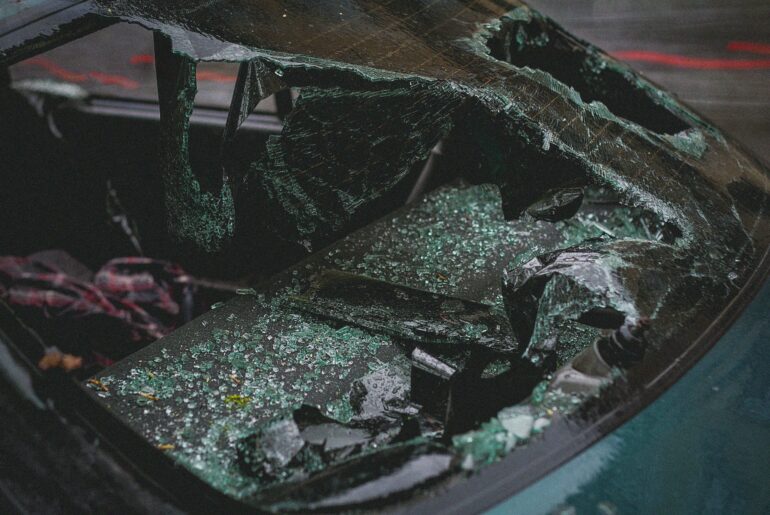
The speeding. The swerving. The crash.

I had cried about it. I had panic attacks more times than I could count. In my silly, silly brain, I thought my imagination could equate reality. That I had rehearsed this scenario from all angles, whether it was a wreck, a collision, a rollover, such that I would be prepared if it ever happened.

But when we were mid-air, everyone shouting their lungs out, I quickly realized there is never enough preparation for this.

Reality is way more terrifying.

It felt like I was looking right into the eyes of death. Like my end is here. I started to say the shahada.

And even then, I knew. I KNEW. What Allah was trying to show me. The perfect illustration of a verse I had read literally two minutes ago.

I am okay. Alhamdulillah.

I know, I know. I should have started with that. But what’s the fun in that? 😀

Now, let’s rewind to where it all started.

Earlier this week, my sister and I were walking to the matatu stage, each silently reading their adhkar. Out of the blue, I remembered a reel I saw on Instagram maybe one or two days earlier. A content creator, Sukaina, excitedly shared how she taught her child the dua whenever they boarded their car:

“سُبْحَانَ الَّذِي سَخَّرَ لَنَا هَذَا وَمَا كُنَّا لَهُ مُقْرِنِينَ وَإِنَّا إِلَى رَبِّنَا لَمُنْقَلِبُونَ”

“Glory to Him Who has subjected this to us, and we could never have it by our efforts. And indeed, to our Lord, we will surely return.”

This was so random because at the time, I wasn’t even following Sukaina’s page. That video simply appeared on my feed. And of course, I replayed it a few times as she and her child cutely sang the dua in the Omar and Hana style, Allahumma bareek.

I turned to my sister and said, “Whenever I want to recite this dua, I can’t keep Omar and Hana’s voice out of my head, so I just end up singing it like they do instead.”

My sister laughed.

“This dua is for travel, right?”

“For mounting any animal or vehicle too.”

Then, in her typical Qur’an student style, she said, “The verse actually starts like this:

وَٱلَّذِى خَلَقَ ٱلْأَزْوَٰجَ كُلَّهَا وَجَعَلَ لَكُم مِّنَ ٱلْفُلْكِ وَٱلْأَنْعَـٰمِ مَا تَرْكَبُونَ ١٢

لِتَسْتَوُۥا۟ عَلَىٰ ظُهُورِهِۦ ثُمَّ تَذْكُرُوا۟ نِعْمَةَ رَبِّكُمْ إِذَا ٱسْتَوَيْتُمْ عَلَيْهِ وَتَقُولُوا۟ سُبْحَـٰنَ ٱلَّذِى سَخَّرَ لَنَا هَـٰذَا وَمَا كُنَّا لَهُۥ مُقْرِنِينَ ١٣

وَإِنَّآ إِلَىٰ رَبِّنَا لَمُنقَلِبُونَ ١٤

“And He is the One Who created all things in pairs, and made for you ships and animals to ride, so that you may sit firmly on their backs and remember your Lord’s blessings once you are settled on them, saying, ‘Glory be to the One Who has subjected these for us, for we could have never done so on our own. And surely to our Lord we will all return.’”

(Surat Az-Zukhruf: 12 to 14)

She reflected on the ayah. Allah tells us that He is the One who made it possible for these animals and vehicles to move. It is by His will, His power and His mercy, not human intellect or ability. This is among His signs that we need to contemplate and thank Him for. For making it possible. For making it happen with ease. He reminds us too that life and death are in His hands. And at the end of the day, we all return to Him.

We chit-chatted a bit about the verse, reflecting upon it. Then we started saying the dua together, word after word. And just like that, we were already at the stage.

Matatus were lined up in front of us, conductors calling out, urging us to board theirs. We decided to get into the first one that was going express. I sat in the seat right behind the conductor’s seat. My sister went to the far-left seat by the window. Soon enough, the matatu was full. The conductor decided to squeeze in an extra passenger, who went and sat next to my sister.

We left.

I can’t even tell you if a minute had passed or two. It was just a matter of seconds when the car hit a bump roughly and we were thrown into the air. At first, we thought the driver had just been careless, maybe had increased speed abruptly. So there were shouts of “Wewe! Oya dere!”

But soon it became clear this was not just reckless driving, the brakes had stopped functioning. The car was out of control.

The car started swerving left and right. The shouts increased. I kept shouting “Allahu Akbar! Allahu Akbar!” I don’t even know why that was the first dhikr that came to mind.

We swerved left, and I watched the moment our matatu knocked a man off his feet. My stomach dropped. I couldn’t believe what I was seeing. His body flew, and the world around me seemed to tilt sideways. My heart pounded so hard I could hear it in my ears. I was frozen, unable to move, unable to breathe properly. My mind couldn’t process it fast enough. This is real. This is happening. A cold wave of fear washed over me. My chest tightened, my hands trembled, and all I could do was cling to my seat and keep repeating, Allahu Akbar, Allahu Akbar.

The only thought that came to mind was, I am about to die. I should be saying the shahada instead.

So I started, “La ilaha illa Allah…”

And then boom!

Our matatu rammed right into the car in front of us. A tuktuk crashed into the other car on the side. That’s when the Matatu finally stopped.

And when it did, I let out the loudest, ugliest cry.

I was trembling, gasping for air, and frozen in place as the conductor flung the door open and people hurriedly alighted.

Someone behind me quickly tapped my back, “Shuka! Shuka!” and I staggered my way out, still weeping, barely able to catch my breath, not even caring that there was a crowd around.

My younger sister alighted and came to hug me, holding me, trying to comfort me. As if we weren’t both in the same accident. As if we hadn’t both been exposed to that same horror. “Alhamdulilah, say alhamdulilah,” she repeated.

I was weeping uncontrollably. I.just.couldn’t.stop. (Those who’ve ever experienced/witnessed panic attacks, you know what I mean).

Some people came to ask if I was hurt. I just shook my head because I couldn’t even speak. An older man kept saying, “Pole mamii. Pole mamii. Umeumia?” which was a bit funny because I really think he saw me with my backpack and rubber shoes and assumed I was a school student.

It reminded me of another time I had a similar panic attack on the road. I had to squat because my legs couldn’t hold me. The road was mostly deserted. A man passed by, hesitant to come near, and shouted, “Uko sawa?” I couldn’t speak. Then he asked, “Are you drunk?” I was weeping loudly, trembling, gasping for air, just like now. And yet, amidst my tears, I couldn’t help but chuckle at the absurdity of it all. Fun times 😀

Eventually, my panic attack ended.

I finally got to look around me.

The lady who had been seated at the very front beside the driver was now sitting on the ground. She had hurt her back and waist and was grunting in pain whenever she tried to move. Everyone was just staring. I remember thinking she needs to go to the hospital.

But no one was moving.

Call a tuktuk to pick her up. No one moved.

It was strange. That stillness. That collective pause. Everyone waiting for someone else to act first.

That was when I realized that the bystander effect is a very real thing.

My sister and I started looking around for a tuktuk. There was so much commotion and traffic. The lady was silently crying. The woman holding her, who I assumed was her sister, was in tears too.

Eventually, one tuktuk came and she was taken away.

I did get to see the man we had knocked down, seated on the ground, unable to move. I am not sure if anyone else was injured because we left the scene shortly thereafter. (I really do pray that they’re all okay and well by now, ameen).

All I could think of was that verse.

“And He is the One Who created all things in pairs, and made for you ships and animals to ride, so that you may sit firmly on their backs and remember your Lord’s blessings once you are settled on them, saying, ‘Glory be to the One Who has subjected these for us, for we could have never done so on our own. And surely to our Lord we will all return.’” (Surat Az-Zukhruf: 12 to 14)

I turned to my sister, tears in my eyes.

“Do you know, I rarely ever say this dua. Except for a few times when we are with the kids, and we sing it in that Omar and Hana style. But personally, I hardly say it. What are the odds that Allah would make me remember a random video on Instagram, from a page I wasn’t even following, and make us say it today?”

She said, “I rarely say it too. And it is Allah who made it easy for us to say it, on the right day, at the right time. Subhanallah.”

“I feel like Allah wanted us not just to read the verse, but to live it. To experience it. To truly understand His words. And to be grateful for His favour upon us,” I said.

She nodded, then said, “You know, in Surat Ash-Shura, Allah says something similar: ‘And among His signs are the ships like mountains sailing in the sea. If He wills, He can calm the wind, leaving the ships motionless on the water. Surely in this are signs for whoever is steadfast, grateful. Or He can wreck the ships for what the people have committed, though He forgives much.’”

Tears started falling again.

Later on, I realized that in the verse before that, Allah says: ‘You can never escape Him on earth, nor do you have any protector or helper besides Allah.’” Subhanallah.

After a brief pause, she added, “You know, when we boarded the matatu, I looked up at the sky and noticed a beautiful cloud with a flock of birds beside it. I was amazed and said, ‘Subhanallah!’ Then I remembered the dua again, so I repeated it.”

Then she went on to say, “And when the extra passenger came and sat beside me, I was a bit bothered because now we were seated four instead of three. We were squeezed. But at the road bump, when the matatu threw us up, we didn’t have much impact because there was no space between us. We could have gotten hurt had we been seated normally. Subhanallah.”

Indeed, we may dislike a thing, but it is khayr for us.
(If you own or drive matatus, please don’t use this as an excuse to overload 😀)

You know what the craziest part of all this is?

The previous night, the very last thing I had worked on was editing a friend’s book on adhkar. And the story revolved around a car malfunction and an accident. On top of that, earlier this year, I had told my inspirational sister, who’s far ahead in her Qur’an journey, that I wanted to be more intentional with tadabbur al-Qur’an.

Lo and behold, Allah decided, why just reflect when you can actually experience the verses 😀

Alhamdulillah, truly. My sister and I are okay. I did have a very slight injury on my knee, but now, whenever I walk and that pain kicks in, I remember to be more grateful. This is nothing. It could have been way, way worse. In the span of just a few minutes, two or maybe three, our lives could have ended or changed completely. One moment, we were walking to the matatu, calm and thinking about our adhkar. Next, we were in the middle of chaos, staring death in the face. It makes you realize how fragile life really is, how vulnerable we are as humanbeings, how quickly circumstances can shift, and how precious every single moment truly is.

A friend joked that this was exposure therapy for my constant fear of accidents. Who knows? All week, whenever a car oversped or went roughly, my sister and I would exchange tense looks, then chuckle softly. There’s that katrauma, that tightening of the heart. But at least now, we can smile about it.

Alhamdulillah for the gift of life.

Alhamdulillah for Allah’s favours upon us.

Guys, don’t FORGET YOUR ADHKARS & DUAS!

Side note: For influencers, and really, anyone who uses social media, may this be a reminder that whatever you post may positively or negatively impact someone’s life. Whether directly or indirectly. Sukaina may never know that a cute, simple video with her child, reminding people of a dua, may have been part of our protection that day.

Who knows?

Be conscious of what you share.

It may make all the difference in someone’s life.

Image Courtesy of: https://depositphotos.com

There are so many profound, thought-provoking ayahs within the Qur’an. Add that with a heart-warming recitation of Islam Al Sobhi or Mansur Al Salimi and your heart just melts away. It could bring you to tears when you actually ponder the verses and reflect on them. I will share with you some of my favourite ayahs and I hope they bring meaning to your life just like they do for me.

1.

I love this ayah a lot and I refer to it all the time. Because it answers all the questions we have no answers to. All the uncertainties, all the doubts, the questions of ‘why?’ Why did I fail despite working so hard? Why do good people go through the worst? Why did I go through such an ugly divorce despite being a good wife? Why don’t I have children? Why does God allow bad things to happen? Why is this happening to me? Why me? WHY WHY WHY…This is the answer right here.  ‘Do the people think they will be left to say they believe and not be tested?’  I leave this here as food for thought because we could write an entire book about this one ayah.

2.

“Jugular vein, is any of several veins of the neck that drain blood from the brain, face, and neck, returning it to the heart via the superior vena cava. If you block the jugular veins, the pressure in the brain goes up. The jugular vein system is essential and is found fairly deep in the body.”

Now Allah (S.W) makes us aware that He is THAT close to us and MORE. He knows what is going on within us; when our hearts are filled with envy, when we have lowly desires, when we are breaking, when we are hurting, our true intentions; ALLAH KNOWS. Because He created us, how can He not know? This should make us both fear Him and trust Him. Fear Him because He is aware of all that goes on within us; the good, the bad and the ugly, even when we conceal it from the entire world. Trust Him because He knows when we are in pain, when we want His help, when we are striving to be better human beings. HE KNOWS of all that is within you. He is listening, He is watching, He is with you always. ALLAH KNOWS…

3.

Think for a moment of your happiest day. The day you felt elated the most. Think of that day then now reflect on this day. Allah (S.W.) tells you that THIS LIFE is nothing but diversion and play. That happiness, that joy, that ecstatic feeling is NOTHING compared to what Allah (S.W.) has in store for us in Jannah. Picture how much happier you can actually be in the next life if you do make it.

Now think of your saddest moment in life. The day your soul crumbled. The worst time of your existence. Think of that then reflect on this ayah. Allah (S.W) is reminding you that this life is NOTHING. That this material life is useless and pointless. He is telling you that what you see in this life, all that you yearn for, all that you ache for, is temporary and cheap. That this dunya is a cheap game. Don’t you want more? Don’t you want what’s real? What’s eternal? Jannah. Aim for that instead.

4.

“أَلَمْ يَأْنِ لِلَّذِينَ آمَنُوا أَن تَخْشَعَ قُلُوبُهُمْ لِذِكْرِ اللَّهِ وَمَا نَزَلَ مِنَ الْحَقِّ وَلاَ يَكُونُوا كَالَّذِينَ أُوتُوا الْكِتَابَ مِن قَبْلُ فَطَالَ عَلَيْهِمُ الْأَمَدُ فَقَسَتْ قُلُوبُهُمْ وَكَثِيرٌ مِّنْهُمْ فَاسِقُونَ”

Allah (S.W.) is asking you dear believer, has the time not come for YOU to submit to Allah? Has the time not come? What are we waiting for? The sun rising from the west? Malakul maut standing in front of us? Till when will we delay giving in to what truly brought us to this earth? Till when it is too late? Till our hearts become hard and the word of Allah does not affect us anymore? It is high time. It is high time.

5.

I grew up hearing this ayah all the time from my mother and father (alhamdulilah for my parents). They literally made me SEE this with my own eyes. Whenever my parents were stuck at any matter, they would always, always refer this ayah to us. It always awed me, how they believed that much yet Allah never failed to respond to them. One door would close, another would open. Another would open and the previous would close. Whenever my mother needed anything and she had absolutely no way out, she would still say it confidently, ‘Allah will bring a way’ or mostly, ‘لَا تَقْنَطُوا مِنْ رَحْمَةِ اللَّهِ’ (Do not despair of the mercy of Allah) and I swear, Allah would always bring a way even if it was dead in the night. This wasn’t just with provision and money, but any kind of difficulty we faced. And through my parents, I learnt to trust that Allah will never forsake me so long as I have faith in Him.

There was a time I was at the matatu stage and I was feeling unwell. I just had two hundred shillings with me and there was no way I could go to the hospital with 200 bob. Also, I was supposed to be somewhere in town and that’s the same I needed for the fare. Nonetheless, I said I will tawakkal. I went to a nearby hospital in which the doctor has treated our family through out the years. So I walk in to the reception and she asks whether I had a card. The card was more than 4 months old and the hospital had a system where you had to renew the card every 3 months. So when I gave her the card, she was awed by how neat and new the card still looked and said, ‘Because you kept this very well, I won’t ask you to renew one now. You can go in and see the doctor.’ I go in and talk to the doctor for a while about my condition. At the end, I ask him how much it would cost. Remember, with me I just have two hundred shillings. Which doctor takes 200 shillings anymore?! The doctor looks at me and says, ‘You don’t have to pay anything. Take this prescription and buy the meds’. And that was it. I still got to go to both the hospital and my destination in town. Tell me, how is that even possible without Allah’s mercy? Coincidence? I bet not.

This doesn’t mean I am pious. Far from it. Nor does it mean I feel better than others, walyadhu billah. But I just wanted to show this example how Allah actually and truly gives you a way out when you have faith in Him.

There is a lady who lacked anything in her house some years back. It was Ramadhan like it is now and she met her neighbour on the way. As we know our culture here in Mombasa, we’d ask, ‘Leo wapika nini futari?’ (what will you cook today for iftaar?’ The lady laughed and said, ‘Iftaar? I don’t even have the tiniest bit of salt let alone prepare any meal.’ Her neighbour immediately offered some little cash, but this lady knew that her neighbour was struggling just as she is. So she respectfully declined, thanked her and said, ‘God will bring a way’. She headed back home and upon opening the door, the entire seating room was filled with food items. The lady was shocked and asked her then jobless husband, ‘where did all this come from?’ The lady was a teacher and several parents of her students had brought her the food. The lady was so moved, she had to sit down to get a hold of herself. Tears were rolling down her eyes, awed by how good our Lord is.

Sadly, so many of us, Allah favours us in this same way, yet we never even recognize it. We become so blinded with this material life and forget who actually has been above it all; helping us, paving ways for us, removing blocks on the path. We assume we have what we do because we worked for it or because we deserve it. However, if you look keenly, you will know for sure, it is ONLY by ALLAH. Ask anyone who’s had it rough in life and eventually arose, they’ll tell you, ‘Ni Mungu tu…’

***
Ramadhan Mubarak to you my dear reader. May Allah accept our good deeds, forgive us, guide us, relieve our worries and doubts, protect us from Nar and grant us His mercy to see Him on the day of Judgement. May Allah grant us health, contentment, peace of mind and willingness to keep on striving on this earth. Ameen.

May Allah accept this as sadaqa jariya for me and my parents who’ve been my greatest example and role models on how to rely on Him alone. May Allah forgive them all their short-comings and grant them the highest level of jannah. Ameen.

Please do include me in your duas and stay tuned for part 2 in shaa Allah!

Photo Courtesy: Good Samaritan

Ask anyone who has lived in Mombasa before moving elsewhere, what they miss most from home (apart from the food of course), in that same list, Jumuah (Friday) would appear. Now Friday is usually a grand day for Muslims all over the world but when it comes to a place like Mombasa, where the area is highly populated with Muslims, it becomes more than the prayer part alone, it becomes a cultural affair.

I love Fridays for many reasons. It’s not just the end of the week. It’s the day homes get busier than usual. The men are choosing their best sparkling clean kanzus before they get ironed, surat kahf is reciting in the room and in the neighbour’s house and the neighbour to the neighbour’s house too. It’s the day everyone cleans up earlier than usual (apart from the earlier working class birds), the smell wafting from the homes is from the strong lovely scents of oud. The men are extra smart in their neat kanzus, trimmed nails and moustaches and well-combed beards. Women are not left behind as they clean themselves and wear their lesos/praying attires and join the friday prayers while some decide to do it at home in their own solitude and privacy. The typical Swahili neighbourhood is all about good perfumes and scents at this moment.

Now maybe that happens in some other places too, but have you seen the groups of men going to the masjid for the prayer? Have you seen the kanzus all over the streets? The restaurants taking extra orders for special biryani and from all corners, voices calling to prayer and preaching can be heard. You go to the shops at 11:55 a.m. and one door is already closed with the attendants hurriedly serving the remaining customers because ‘hallo? don’t you know it’s Friday?!’

Messages of duas and well wishes are not to be missed on this day as people remember one another in their prayers.People who don’t usually pray may appear on this day and sometimes, earlier than usual. The preacher is preaching in a rhythmic, poetic manner and the rewards of this prayer makes it a lot like the best day of the week. Once the prayer is done, see the multitudes of Muslims streaming out of the masjid, greeting one another; big smiles, big hugs, kinda like a weekly reunion.

At home, Friday means a special meal. It means eating biryani, if not, then the nearest to it, many a times, pilau. There is even extra effort to have fruits on the table and salad and kachumbari and fresh juice and hot chilli, I mean, just the sort of meal you’d look forward to every other week.

The children are home earlier than usual and this day becomes the best to invite family and even friends over for meals. There is a lot of togetherness, love and co-existence vivid than any other day of the week. It is in a great way similar to Eid days.

Those who go abroad especially Western countries, sometimes they barely even hear the adhan because masjids are miles apart. Most of the times, families are totally separated which makes it almost impossible to have a wonderful get-together after the Friday prayer. I mean, isn’t it a privilege being at home? In a place where Islam has become a way of life, we don’t have to struggle to get permission from work or school to attend the prayers. It’s a privilege you can put on the qur’an in the office and no one will grumpily shout to you, ‘get yourself some earphones!’ It’s a privilege we get to hear khutbahs in our own mother tongue, Kiswahili. I mean some Muslims out there are listening to khutbahs experiencing language barrier and not understanding one word. It’s a privilege that we are surrounded by mosques all over, we can even choose which one to go to. It’s a privilege we are so close together in our neighbourhoods and livelihoods, we don’t have to hide practicing our beliefs. We don’t have to struggle to have gatherings. I think it’s a privilege to be a Muslim living in Mombasa. Ever thought of it that way?

Photo Courtesy: https://www.alquranclasses.com/

Do you remember your first Ramadhan? I am talking about those days when fasting to you was for mum and dad’s sake. That is to say; if mum or dad and of course the “reporter” sibling in the family did not see you break the fast, your fast is still valid. You can deny it and I can, but Allah saw you every time you drunk half the water meant for rinsing your mouth while taking wudhu. But of course it was not a big deal, we were young and the thought of staying the whole day without food or water to drink either seemed torturous or mission impossible. I remember thinking to myself that even the adults sneak a sip or two of water when no one is watching because there is no way anyone can stay that long without water. At the age of 7 to 10 years Ramadhan to me was to be able to convince the people around me that I have stayed the whole day with neither food nor water.

Imam Siraj Wahaj puts it nicely when he says, Islam means progress. Right now I can look back at those years and see the progress in my Ramadhan. Maybe the adults around me understood it too and that is why they did not punish me when I broke my fast two hours to Magharib adhan (too dumb, I know that now). I was on training and it was okay to slip here and there, my relation with Ramadhan was still being nurtured. However, I never cease to enjoy the holy month. Apart from the hunger and thirst torture, there was the joy of having the extended family meeting up almost every day and excessive playing with friends (no wonder the unbearable thirst). Having the masjids full during all the swalahs, cooking the best foods and being able to witness the amount of blessings increase in the month. Till date, Ramadhan at my home is known as the month of barkah; not because we were taught so but because we saw the blessings. And then there was the ultimate joy that was Eid. So, in a nutshell, Ramadhan to most of us at that young age was torture from hunger and thirst, good food, friends and family.

When you do something wrong and you know it is wrong but no one reprimands you for it and they all act like it was okay for you to do what you have done, your conscious kills you. Or at least that’s what happens to me. At the age of 11-12 years, during Ramadhan all I could think about is that I got to do better. I have to see to it that I stay true to my fasting. It was a real struggle, reminding myself when it got hard that I can do it, I can stay the whole day with no water. Accomplishing this would make me happier than ever during the time of breaking fast and whenever I failed the enthusiasm of breaking the fast was lost all together. Ramadhan to me then was to be able to stay with no food or water the whole day; and it was enough.

Whenever I speak about Sheikh Khalifa, some people look at me with that eye of “oh she is at it again”. The truth is that given a chance to speak about my high school, I would not shut up. I love my high school. Not because it is the best high school in the Coastal province, though it is a bonus, but because of the role it played in building me as a young Muslimah. It was there that I also learnt that finishing the recitation of the whole Qur’an was highly recommended during Ramadhan. I still remember how people would struggle to finish the Qur’an at least twice while I would be struggling with my one khatm. I admit, I would be disappointed when I could not meet my one khatm goal, knowing that most of my friends had two khatms and others even three. All the Ramadhans in Sheikh Khalifa, my goal was that one khatm. I think I realized it once though I’m not so sure.

One of my biggest dream is to speak Arabic. I once told my friend that the day I would be able to speak Arabic fluently, I would not stop talking. He said that is the reason why I have not learnt Arabic till now. I am sure he is wrong. Being outside sheikh Khalifa my thirst for Arabic became intense; not just so as to be able to speak but I really wanted to understand the message in the Qur’an. My recitation was fluent but apart from a few surahs, I didn’t understand most of it’s message. So I asked one of the local ustadh to teach me Arabic at the same time I found myself a mushaf with the translation. And if you thought finishing a khatm was hard try doing it with the translation. Truth be told, I’m yet to accomplish it and I am disturbed by it. Still I was glad that I not only got to recite the qur’an fluently but I could also understand what it was saying to me.

Every Ramadhan has been different to me with different meanings. I have studied specific surahs, I have used Ramadhan to quit some sins. I have done memorizations of specific surahs, supplications and hadith. I have struggled to make each Ramadhan mean something to me. And it all comes back to; Islam means progress. I have seen my progress in my meaning of this beloved Holy month, and if Allah enables me to see more Ramadhans, I pray that I find more meaning to it.

Now as a 25 year old lady I ask myself what does Ramadhan mean to me and my mind goes back to the verses of the Qur’an that I memorized a long time ago due to how much they would be repeated during this month;
“O you who have believed, decreed upon you is fasting as it was decreed upon those before you that you may become righteous” (2:183)
In them I get my answer. This month was meant for me to attain Taqwa. To build the strongest bond possible with my creator and as Umar ibn Abdul Aziz (Rahimatullah) said ;
“Taqwa is not praying long into the night and fasting long into the day but it is to abandon the obstacles between you and Allah (SWT).”
In other words, it is to abandon sin.

Ramadhan was meant for me to have that ultimate connection with the Qur’an. Not only by finishing multiple khatms or memorization but to be able to gain the guidance that Allah talks about when he says;
“Ramadhan is the (month) in which the Qur’an was sent down, as a guide to mankind and a clear guidance and judgement” (2:185)
So yes, Ramadhan is meant for sharing, showing love and compassion to each and every one of us, for the ummah to be united more than ever, but at an individual level, What does Ramadhan mean to you?

RAMADHAN MUBARAK. WA KULLU 3AMUN WA ANTUM BI KHEYR

Powered by WordPress