I peeped out of the window just as the matatu came to a halt. The door hissed open and people spilled out, voices rising, bags swinging, feet already on the ground before it had fully settled into place.
This wasn’t part of the plan. I groaned as I alighted carefully, gathering my buibui as I jumped over a shallow pool of muddy water. Rain droplets landed softly on me as I looked up and noticed the sky, dark and clouded, hanging low over the city.
I hurried down the stairs of the Buxton underground tunnel. The stench of urine and waste hit my nose instantly, and I picked a corner of my hijab to cover it as I walked past two men lying on opposite sides of the tunnel, their presence half-swallowed by the dimness, with huge sacks resting beside them like silent companions. Wrappers, rugs, banana peels, and worn-out slippers lay scattered all over, while the walls were scribbled with fading insults and indistinguishable letters, layered with torn posters promising jobs worth a thousand bob per hour. I smirked.
My phone buzzed in my pocket. I pulled it out just enough to see the caller. Aisha–Poly calling… I looked up and met the gaze of a short, skinny young man in rugged clothes staring at me. I slid the phone back into my pocket.
Near the exit, a middle-aged albino woman sat tucked beneath the shelter at the end of the stairs, an umbrella beside her and a wide hat on her head, quietly holding out a plastic container with a few coins. A small crowd had gathered, pressed together in shared hesitation as they waited for the rain to ease. I paused just long enough to glance at my watch, then back at the grey downpour. “Nah,” I said to myself as I took the stairs two at a time and stepped into the drizzle.
Water slowly seeped into my shoes and socks as I moved forward, and when I glanced down, I froze. Two crows lay still just steps apart, their bodies stiff and drained of blood. A shiver ran through me, and I hurried past them only to find a third a few steps ahead.
“Audhubillah!” I muttered, jerking my gaze away from the crows as a chill crawled up my spine, my eyes scanning for a boda but finding none.
So I resorted to my posh Footsubishi.
I ran between kiosks, ducking under makeshift shelters as the drizzle turned into a soaking rain, my fogged-up spectacles making everything blur slightly, but I kept moving anyway, half-seeing, half-feeling my way through.
A man with built-up arms ran towards me at full speed, and before I could fully move aside, I felt his arm slam into mine.
“Ouch!” I exclaimed, almost in disbelief, rubbing my arm as I made my way toward the university gate.
When I arrived in class, Betsie was already seated by the window, her hot pink headphones over her dreads, and soon after the small talk of “Hiii’s” and “mambos,” Lewis and Juma walked in.
“What’s up, what’s up!” Juma beamed, filling the room with his usual energy.
“Who’s missing?” Lewis asked, skipping greetings entirely.
“Aisha, Henry, and Kassim. Aisha and Henry are almost here.”
I stood at one corner, wringing the rainwater from the hem of my buibui. I remembered Aisha’s call. I have to call her back when I’m done with this.
“They better be. Tumalize hii kitu fasta fasta,” Juma said.
“I don’t even know why we are here. Kassim should have handled this matter, he best knows how,” Lewis grumbled.
“Do your assignment, that is?” I rolled my eyes.
“Mh mh. OUR assignment. Mostly his…” Lewis grinned.
“We mzee! Ain’t you ashamed? He’s been handling all your group assignments since Year 1.”
“And who asked him to?” Juma laughed. “Si amejitakia mwenyewe.”
“Eh maze… let him finish what he started,” Lewis added.
“Kijana mwecheche!” Henry exclaimed as he walked in, breaking into his familiar wide grin as he shook Juma’s hand. “Kijana mwecheche mwenyewe!” Juma shot back, grinning as Henry went around the room shaking hands with everyone else.
The gents soon drifted into a heated debate about the Man U and Arsenal game from the previous night.
“Why don’t we start the discussion as we wait for them?” Betsie suggested.
“I can’t even remember the topic. Kassim wrote it down. Where is he anyway?” Henry asked.
Silence settled.
“I guess we wait for Kassim then,” he said.
Just as I smoothed down the fabric, a vibration cut through the room.
Aisha – Poly calling. I picked it up.
“Uwi! Uwi! Guys, mmeskia?” Aisha’s voice cracked through the speaker.
“Aisha? What’s wrong?”
“Uwi… Kassim amejinyonga.”
My throat closed instantly. “What… what do you mean?… Which Kassim?”
“Kassim.. Kassim.. Our class rep.”
The phone slipped from my hand.
“It’s Kassim…” I whispered. “He killed himself last night.”
The room froze.
Henry grabbed the phone. “Where is this information from?”
“I’m at his house. His cousin called me. It is true…” Aisha wept.
Silence filled the room. Betsie bent forward over the desk, her shoulders shaking quietly, and no one seemed to find their voice. Even breathing felt heavier than usual.
“We need to go,” Juma said finally. Henry grabbed his bag from the floor. “Aisha, send us the location.”
Slowly, we began gathering our things. The silence stayed with us as we left the room.
By the time we arrived in Mshomoroni, the drizzle had turned into a heavy, relentless rain. Muddy water and a thick, airless grief filled the compound, as a crowd gathered outside a small mabati house. The rusted roof rattled under the weight of the rain, as though trying to drown out the cries from inside. Three policemen stood nearby, their dark raincoats glistening as they spoke in low, muffled voices.
Aisha spotted us and came over quickly.
“Mungu akusamehe mume wangu! Mungu akusamehe mume wangu!” a young woman cried out, her voice breaking as she stood in a two-piece leso, eyes swollen and bloodshot, while two older women held her as though trying to keep her from collapsing into the ground. They guided her slowly inside the house.
“Mume wangu?” Juma said under his breath.
We exchanged looks.
“Kassim was married?” I asked quietly.
“Yes…” Aisha said.
“Man… how didn’t we know that?” Betsie said, her voice low, still shaken.
“Why is she saying ‘Mungu amsamehe’? What did he do?” Henry asked.
“Suicide is a sin in Islam,” I muttered softly.
“Does that mean he’s going to hell?” Lewis asked.
The question lingered longer than it should have.
“Life is not black and white,” I said after a moment. “We don’t know what he was carrying. We don’t know what he was fighting.”
My voice softened.
“In the end… only Allah knows. Only He can be the judge.”
Silence followed, not empty but heavy, as the rain continued to fall without pause against the mabati roof and Kassim’s wife’s cries rose again from inside the house.
“There’s more,” Aisha said.
We stared at her. More?
“Kassim has a one-year-old son with sickle cell anaemia. He’s been in the ICU for a month. They have a debt of 1.5M.”
“Gai!” Betsie exclaimed.
A lump formed in my throat.
For a moment, I thought of the crows again, lying still in the rain, and how easily I had looked away.
“1.5 million,” Juma’s shoulders sagged, his usual spark gone.
More people filled the compound as women in buibuis moved inside the house and men gathered under the veranda in kanzus, while we remained under a small shade across the house, suspended between both spaces, not quite belonging to either side.
The rain had not stopped.
If anything, it fell harder, as though it had been building long before we arrived.
“We should do something… we should create an M-Changa account for his son,” I said.
Everyone nodded. For a long moment, we all just stood there, waiting for the familiar voice to assign roles and take notes. But the only sound was the rain hitting the mabati.
“I’ll go to Safaricom,” Lewis said. “I’ll get the paybill set up today.”
“Thank you, Lewis,” I said.
“We need to go in. The burial will start soon,” Aisha said.
We moved slowly toward the house as the crowd separated into sections.
My mind stayed on the boy who had just lost his father and the mountain of debt he had inherited.
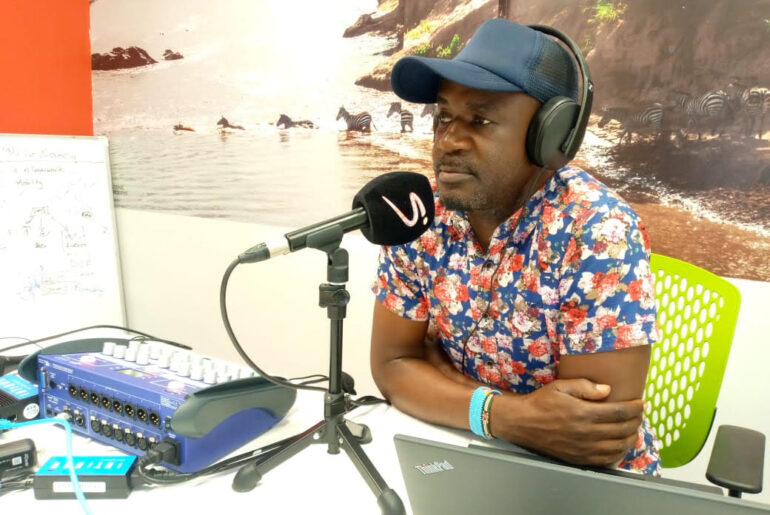
The Extraordinary Journey of Japhet Kahindi Makanaki
Just weeks ago, the world stood in awe of one of football’s most extraordinary full-circle moments. Years after a baby Lamine Yamal appeared in a UNICEF photoshoot being bathed by Lionel Messi, the two would eventually meet on football’s grandest stage in the FIFA World Cup final, where Yamal and Spain emerged victorious. It was the kind of story that reminds us that some moments seem too remarkable to be mere coincidence, and that God has always been the greatest Author. But miracles are not made in the West alone. Sometimes, they happen in places that seem dry, forgotten and fruitless.
Such is the story of Japhet Kahindi Makanaki, a young boy from Mariango Village in Bamba, Kilifi County, a place that many have long overlooked and written off. Yet from there emerged a story that would stretch across continents and grace some of the biggest sporting stages in the world.
Back in the days when radio was the heartbeat of entertainment and the primary source of news, the young Makanaki would walk more than twenty kilometres to a friend’s village simply to listen to live football commentary on the Kenyan Premier League. The journey was long, tiring and often exhausting, but none of that mattered to him. Missing the voices of legendary commentators such as Leonard Mambo Mbotela, Jack Oyoo Silvester, Ismail Ahmed and many others was never an option because, even as a little boy, he had already fallen deeply in love with the beautiful game and the art of bringing it to life through words.
The following day, he would roll pieces of paper into something that resembled a microphone, climb a tree and recreate the previous day’s match entirely from memory and imagination. Slowly but surely, people began gathering beneath the tree just to listen to the young boy’s imaginary football commentary. What started as an unusual childhood pastime gradually became the talk of the village, and before long, the name Makanaki had become synonymous with football commentary.
When he completed Class Eight, he had earned an opportunity to join Mangu High School. However, circumstances forced his father to enrol him at Chanagande Secondary School, a little-known school tucked away in the remote parts of Kaloleni. While many would have viewed it as a setback, his passion for football commentary refused to diminish. If anything, it only burned brighter. Whenever there was a football match, Makanaki volunteered to commentate, never asking for payment, driven purely by love for the game and the dream that quietly lived inside him.
Then came a day that looked ordinary, yet would become the defining moment of his life. Determined not to miss the secondary school ball games in Kilifi Town, Makanaki sneaked out of school knowing very well that punishment awaited him upon his return. His passion simply would not allow him to stay behind.
When the games were over, he returned to school, where he received eight strokes of the cane and was ordered to uproot a coconut stump as punishment for sneaking out. Looking back, he often says that the strokes came before the blessings from Baraka FM.
Unknown to him, however, someone in the crowd had been paying close attention. Among those covering the school ball games was Josephat Kioko, the Head of Sports at Baraka FM. Deeply impressed by the young student’s remarkable talent, Kioko approached him immediately after he finished commentating the match and told him that his commentary was nothing short of magic.
Not long afterwards, Kioko took the young Makanaki to the Baraka FM studios at Canon Towers. While waiting for his Form Four results, Baraka FM absorbed him into its system. The station also sponsored his university education, enabling him to pursue his studies while continuing to work at Baraka FM.
As if that was not enough, another opportunity soon followed when Radio Salam station manager Adan Harar reached out to him. Not long afterwards came another life-changing phone call from Madam Angie inviting him to join SuperSport. One opportunity led to another, each one preparing him for stages he could never have imagined as a young boy growing up in Mariango.
For six years, Makanaki worked from SuperSport’s studios in Johannesburg, South Africa, where he found himself rubbing shoulders with some of the biggest names in football broadcasting. Along the way, he interacted with Asha Tshabalala, Peter Drury, Michael Owen, Lucas Radebe and many other internationally recognised commentators, presenters and football personalities. He later worked with the Spanish sports media company Mediapro as Kenya’s sports correspondent while also lending his expertise to Homeboyz Radio, further cementing his place as one of Kenya’s most respected sports broadcasters.
His gift was now taking him across the world, opening doors he could never have imagined and allowing him to grace some of the biggest sporting stages on the planet. His work took him to some of football’s most iconic destinations, including Highbury, where he met former Arsenal defender Gaël Clichy. In 2022, he commentated in Kiswahili at the World Martial Arts Championships in South Korea. His career has also seen him cover the 2010 FIFA World Cup in South Africa, the 2022 FIFA World Cup in Qatar, four Africa Cup of Nations tournaments, six CECAFA championships and numerous other international sporting events. The young boy from Mariango would probably never have believed that one day he would fill three passports with stamps from countries he had only ever heard about on the radio, yet that became his reality.
Along the way, Makanaki also became a mentor to many of Kenya’s finest sports commentators, including Geoffrey Mwamburi of Citizen TV, among many others. Today, he serves as the Head of Sports at Swahilipot Hub, where he continues to nurture young talent while still doing what first captured his heart as a little boy.
Against all odds, the young boy from Mariango Village in Bamba has become a respected name on international sporting stages. Yet, perhaps the most remarkable part of his story is that he is still the same little boy who once rolled pieces of paper into a microphone and climbed a tree to commentate imaginary football matches. Only now, the tree has become the world, the audience has grown from curious villagers to millions of football lovers, and the dream that was born in a forgotten village has become a living testament that no beginning is too humble when God decides to write your story.
***
Over a month ago, alhamdulillah, we were honoured to receive the Best Creative Creator award at the BAKE Awards. It is by Allah’s tawfiq and your immense support through your votes, encouragement and unwavering belief in Strokes of My Pen that we achieved this. Thank you for every vote you cast, every kind word you shared, and every moment you made time to read my work. I do not take any of it for granted. Barakallahu feekum!
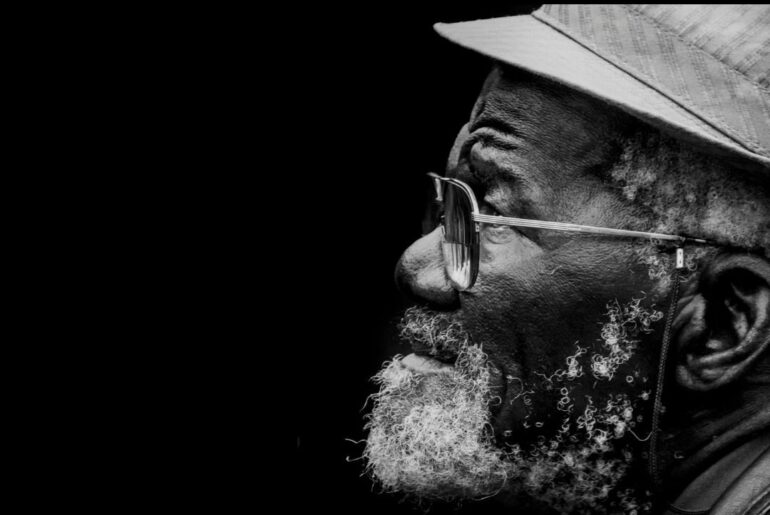
What do you do when your oldest son, the same one who has been the apple of your eye, is the one who lights up a bonfire to throw you in? What do you do when he faces you, a panga in one hand and hatred clenched in the other, ready to slice you into two equal parts, half father, half prey?
You run. You roll. You crawl from the once safe haven you called home that has suddenly turned into hell.
That is exactly what Mzee Charo did.
He ran, or at least he tried. But that was after his head had already been permanently disfigured by a panga wound. Despite his desire to escape, his seventy-something bag of bones could only get him so far before he was caught, carried back, and thrown into the bonfire. Yes, the same bonfire that his own son and his mates had started. And there, he was left to simply burn to death.
But life had other plans for Mzee Charo.
Against all odds, he managed to roll out of the fire and crawl into the wilderness before he was eventually rescued. The Chief became involved and somehow, despite everything, he survived.
As unfortunate as it is, this story is not unique to Mzee Charo. Hundreds upon hundreds of elderly people, especially men, have been killed across several coastal communities. Their crime? They have grey hair.
Peculiar as it sounds, there remains a belief that elderly people with grey hair are witches and therefore must be eliminated. But when you go deeper, witchcraft often becomes only the surface story. Beneath it, there is something else entirely.
Land.
Old people understand land in a way that is not just ownership, but memory, identity, and life itself. It is where families are raised, where culture is preserved, where faith is practised, and where generations remain rooted to who they are.
But for many young people, land begins to look different. To them, it is not memory but opportunity. Not heritage but unused wealth waiting to be turned into money.
And so the difference grows.
One generation considers land the REAL ESTATE. The other considers money the REAL WEALTH.
And so the hunger games begin, turning life itself into a battlefield, half father, half prey.
Within that hunger, some come to believe that the easiest way to access land is to remove the elders standing in their way. But how do you justify that kind of thing? How do you silence your conscience?
And that is where witchcraft becomes a convenient story. A label that makes the unbearable easier to carry out. A name that turns a parent into something disposable.
The matter had been going on for decades until a peace walk by the Malindi District Cultural Association MADCA, through the interior villages revealed something they could not ignore. Fresh graves, one after another. Stories emerged of elderly people, primarily men and some women, custodians of the land who had been attacked, killed, or forced to flee.
The same parents and grandparents who had spent their lives raising, feeding, clothing, and educating their children were now the ones facing the pangas and bonfires of those same children.
At the time, MADCA was simply a centre dedicated to preserving Mijikenda culture and heritage. But what they encountered changed everything.
They opened their doors to elderly people fleeing violence from their own families.
Some arrived with deep panga wounds. Others carried burns that never fully healed. Some did not survive. Others lived, but barely.
Mzee Charo was among those who survived.
But survival did not mean return. Many had lost everything. Their land. Their families. Their sense of belonging. Even their dignity. And they carried wounds that time alone could not heal.
Slowly, MADCA became more than a cultural centre. It became a refuge.
A place where the elderly could be treated, sheltered, fed, and most importantly, reminded that they still mattered.
Today, MADCA hosts about forty four elderly residents, with new cases still arriving every few weeks. Since 2011, hundreds of elderly people have passed through its care.
Beyond rescue, MADCA also began working on awareness and education, using films, cultural festivals, and community campaigns to challenge the beliefs that continue to endanger the elderly. Among these campaigns are slogans like “Mudzi ni Muthumia: My elder, my beacon” and “Mvi si uchawi, ni hekima”, a reminder that grey hair is not witchcraft, but a symbol wisdom.
MADCA has also worked to bring understanding between cultures and faiths, helping communities confront harmful misconceptions and slowly rebuild trust where it had been broken.
And so today, beneath the shade of trees at the centre, elderly men and women sit together. They weave baskets. They cultivate maize and vegetables. They prepare and sell snuff (ground tobacco), tend to the sick, and build traditional houses. They share stories. They practise their faith. In fact, one of the leaders is pioneering in writing books in their mother tongue. Others simply sit in a quiet that no longer feels like abandonment.
And on this World Elder Abuse Awareness Day, the story becomes more than memory. It becomes a reminder that what happens to the elderly is shaped by choices made in homes, in families, and in silence that is allowed to grow.
And yet, in the work of MADCA, something else is slowly taking shape. A different kind of future. A quiet rebuilding. A refusal to accept that this must be the ending. Through rescue, awareness, and campaigns, a new dawn is not something declared. It is something being built slowly, in shelters, in conversations, in changed minds, and in the dignity being returned to those who were almost forgotten.
And while Mzee Charo continues his recovery journey, his story remains a reminder of what is at stake when societies forget their elders.
Because growing old should never become a crime.
And because the people who once carried us through life deserve far more than fear in their final years.
***
Assalam aleykum warahmatullah wabarakatuh
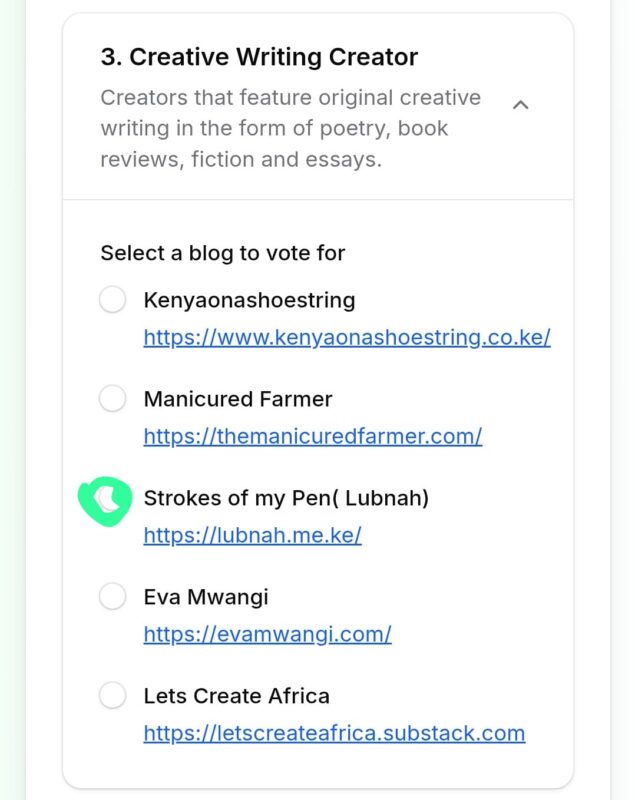
Alhamdulilah my blog ‘Strokes of my pen’ has been nominated for the 3rd time by Bloggers Association of Kenya under ‘Creative Writing Category’.
I’m kindly requesting for your votes.
Here’s how to vote:
Visit https://vote.bakeawards.co.ke/
Enter your details then click ‘Next’.
Scroll to the Creative Writing Category (number 3)
Select ‘Strokes of my pen’ then scroll to the bottom and click ‘Next’.
Click on ‘Send code via email’
A verification code will be sent via email. Enter the code then click on ‘Verify’.
Scroll to the bottom and submit.
Make sure you see the submission notification, otherwise, your vote didn’t go through!
At the end of his fourth year in Engineering school, a brother I know made a decision many people around him could not understand: he dropped out.
To some, he was throwing away four years of his life. To him, he was cutting his losses.
While the course itself was five years long, he had fallen into circumstances that forced him to make a difficult decision. He eventually left Engineering and joined a short Aviation course instead. Many people viewed it as quitting. But from his perspective, it was choosing a different future before investing even more time into something that no longer aligned with where his life was headed.
So then, which is which? Quitting or cutting one’s losses?
In psychology, there is a phenomenon called the sunk cost fallacy, the tendency to continue investing in something simply because of what we have already invested into it. It could be an investment of money, time, energy, effort, or even emotions, which then makes one think:
“I spent all that on this education, I can’t quit now.”
Even when the thing, person, or situation no longer serves them.
This is evident in many different aspects of our lives.
You start a business. You pour in your sweat, tears, money, and heart into it. You sacrifice your time and energy to fully concentrate on making it work. Two years in, the business is barely paying off. Your costs are high and the profit margins are painfully low. But you have already spent two whole years trying to make this dream a reality. So even when the books clearly show the business is not working, you continue investing in it with the hope that someday it will finally pick up.
It is the same with long-term relationships. It becomes harder to leave a toxic relationship because you have already been someone’s spouse for over a decade, and leaving begins to feel like a waste of your prime years. So you hold on. You justify the decision with thoughts like: “He is the father of my children.” “We own property together.” “Maybe things will get better once we have children.” “She knows me too well. I cannot start all over again with someone else.”
Not necessarily because things are improving, but because as human beings, we are naturally averse to loss.
Even in our day-to-day lives, we see the sunk cost fallacy at play. You book a plane ticket to attend a major function in another town. The function gets cancelled unexpectedly. Even though there is no longer any real reason for you to travel, you still feel compelled to use the ticket so that it “doesn’t go to waste,” even if the trip will now cost you more time, energy, and money. Even when the math is not mathing.
There is also the shame and guilt that increases as the sunk cost increases. It becomes difficult to admit that perhaps we were mistaken, made poor decisions, or ignored advice we were given. And social pressure does not make it any easier. As our people commonly say: “Watu watasema nini?” (What will people say?)
Again, as our people say: “Maji ukiyavulia nguo, yaogee.” (Once you have already committed yourself to something, you might as well continue with it.)
And so we continue bathing in that water even when we are slowly drowning in it.
As much as optimism is a beautiful trait to have, there is a thin line between optimism and delusion.
As such, one should take a moment to reflect on the matter at hand and ask: Is this resilience, or am I simply afraid to let go?
How then can one know when it is time to move on?
When the future cost is bigger than the past cost.
One way of figuring this out is by asking yourself: “If I had not already invested anything into this, would I still choose it today?”
If I was not already in this job, this course, this relationship, or this situation, would I still willingly choose it?
If the answer is no, then perhaps you are no longer holding onto it because it is right for you, but because you have already invested too much into it.
When effort is no longer changing outcomes.
Sometimes we convince ourselves that if we just keep trying harder and harder, things will eventually fall into place. And sometimes they do.
But sometimes they do not.
If you consistently put in effort and nothing changes, if you repeatedly knock on a door that remains firmly closed, then perhaps it is time to redirect your energy elsewhere.
Persistence is admirable, but not every closed door is meant to become an entrance.
When your only reason for staying is: “I have already come this far.”
As painful as it is to watch something you poured your heart into fail, let history not become the only reason you continue fighting for something.
Your future matters too.
When hope is no longer based on evidence.
It is good to be hopeful and optimistic. But let that hope be rooted in actual progress, not merely in the thought: “Maybe it will change because I need it to.”
There is a difference between hope grounded in reality and hope grounded in desperation.
When you are more afraid of leaving than of staying.
One should ask themselves: “Am I staying because I genuinely still see value in this, or simply because leaving something familiar feels too frightening?”
Sometimes fear disguises itself as loyalty.
Letting go does not mean your investment was meaningless or pointless. It simply means accepting that it no longer serves your future self.
The cost has already been paid whether you stay or leave. What remains is deciding whether you will continue paying for something that no longer serves you.
And who knows what doors will open up after letting go?
I recently met a friend who had interned and volunteered at a workplace for nearly three years. She genuinely loved the place. She learned the system well, connected with many people there, and invested herself emotionally and physically into the organization. She spent a great deal of her time, energy, and even money there.
But despite all that, she was never absorbed into the company.
The disappointment hit her very hard. Even months after leaving, she still kept hoping for another opportunity to return. But eventually, she decided to cut her losses and look elsewhere.
Not long after, she landed a brilliant international opportunity that aligned far better with her passion, personality, values, and long-term goals than the previous workplace ever did.
As for the brother who left engineering for aviation, he says he does not regret his decision. In fact, his experience in engineering school ended up helping him tremendously in aviation. He found himself thinking differently from many of his peers. His reasoning skills, ability to think outside the box, and approach to problem-solving helped him rise quickly within his workplace.
And so, perhaps it is not always so terrible to cut one’s losses.
The sunk costs have already sunk. There is no way to recover the past.
But the future is still negotiable.
***
Assalam aleykum warahmatullah wabarakatuh Alhamdulilah my blog ‘Strokes of my pen’ has been nominated for the 3rd time by Bloggers Association of Kenya under ‘Creative Writing Category’.I’m kindly requesting for your votes.
Here’s how to vote:
Visit https://vote.bakeawards.co.ke/
Enter your details then click ‘Next’.
Scroll to the Creative Writing Category (number 3)
Select ‘Strokes of my pen’ then scroll to the bottom and click ‘Next’.
Click on ‘Send code via email’
A verification code will be sent via email. Enter the code then click on ‘Verify’.
Scroll to the bottom and submit.Make sure you see the submission notification, otherwise, your vote didn’t go through! Thank you in advance 😇
Have you ever met someone and immediately felt, deep in your heart, that they were a beloved of Allah? No, it was not someone who was born Muslim, raised in the rhythm of ‘ibadah, fasting by day and praying qiyaam by night. Rather, it was a new revert who had reached rock bottom, swimming in the depths of depression, alone and broken.
Just before her reversion she had been engulfed in grief after losing two of her closest friends and her father back to back. The losses came so quickly that the weight of them crushed her spirit, and in an attempt to escape the darkness within her she had turned to the bottle heavily. It was such a painful phase in her life that she would often wear dark shades simply to hide her swollen eyes from all the crying she had been doing. The world around her kept moving, but inside she felt completely lost.
Then one night, as she lay in her bed doing nothing, a thought came to her mind. Why don’t I become Muslim? Doesn’t Islam mean peace? And simply for this reason she decided to embrace Islam.
Yet even after becoming Muslim the peace did not come immediately. A series of misfortunes followed, but the first one that shook her to the core was a ruptured ectopic pregnancy. The two Muslim women who had initially held her hand during the beginning of her journey slowly withdrew their support because she was not married, even though she was a new Muslim, even though she had to undergo surgery, even though she was literally on the verge of losing her life, and even though she had no one else beside her.
She struggled with fasting, was mocked for her nail business even though she only did it reluctantly for income, received side-eyes for her attempt at modest dressing of a scarf and baggy jeans, and was explicitly told she wasn’t truly Muslim by someone she had prayed with. Even during the aftermath of her ruptured ectopic pregnancy, she faced the fear, the pain, and the uncertainty almost entirely alone.
Yet through all of this, Allah’s gentleness was visible in ways that were almost impossible to ignore. Literal miracles unfolded before our eyes as Allah straightened her affairs, comforted her, and rescued her through one hardship after another.
But even before the provisions began appearing in her life, Allah had already given her something far greater. Slowly, quietly, He began to mend the heart that had been shattered by grief. The same girl who had once hidden her swollen eyes behind dark glasses began to find moments of calm in her prayers and relief in speaking to Allah. It was As-Salaam, the Source of Peace, who gently healed her from the inside, restoring her heart and granting her resilience. The peace she had hoped for when she first thought about Islam did not come all at once, but Allah granted her something just as powerful along the way: strength to rise again after every hardship, and the courage to keep turning back to Him even when life felt overwhelming.
When she eventually moved into a new home, she named it House of Salaam. She once told me that it was in this home that she began to feel truly supported and steadied after the darkness she had endured. The sense of calm and inner strength she found there marked a turning point in her journey.
And soon after that, the help around her life began to unfold in ways that were almost unbelievable.
Even when she decided to return to school despite having absolutely nothing, Allah brought forth a stranger who paid ninety six thousand for her school fees in one go. Subhanallah. Later, when she needed a laptop for her studies, the stranger literally asked her to choose whichever one she wanted. When she chose a lesser one, the stranger encouraged her to take a better one and paid for it fully. Then someone else bought her a desk. Another got her the spectacles she needed for reading. Someone covered her rent for two months. Another surprised her with a new phone. And the help just kept coming. Allahumma bareek.
Tell me if that isn’t Allah. Tell me if that isn’t Al Wahhab, the Infinitely Giving, the Giver of Gifts, who brings forth just the right people, the right circumstances to give you just the right kind of help at the right time.
She would often share stories of crying to Allah like a child, pouring her heart out in the quiet moments of the night, and then watching Allah do what seemed impossible for her. Even when her steps in Islam were still slow, even when she felt she had not yet reached where she wanted to be, the mercy of Allah would appear in the most unexpected ways around her. It was as though Allah was gently reminding her that every sincere step towards Him, no matter how small, was seen and appreciated.
This always reminds me of a post I have read many, many times, yet it still strikes me with awe every time I come across it. It says, “I was reading Suratul An‘am and came across a verse that translates to ‘Your Lord has made mercy obligatory upon Himself.’ I put my Qur’an down and took a deep breath. A higher Being who has made it compulsory upon Himself to be merciful to me?”
Subhanallah. There is a narration that captures this mercy most vividly.
‘Umar b. Khattab reported that there were brought some prisoners to Allah’s Messenger (ﷺ) amongst whom there was also a woman, who was searching (for someone) and when she found a child amongst the prisoners, she took hold of it, pressed it against her chest and provided it suck. Thereupon Allah’s Messenger (ﷺ) said:
Do you think this woman would ever afford to throw her child in the Fire? We said: By Allah, so far as it lies in her power, she would never throw the child in Fire. Thereupon Allah’s Messenger (ﷺ) said: Allah is more kind to His servants than this woman is to her child.”
Subhanallah! How profound it is that the King of Kings can be gracious, loving and forbearing towards us, the weakest of creatures, often faulty and often deficient in our worship. The more you grow in faith, the more you realise that no one can love you or show mercy to you more than Allah.
When this Ramadhan began the sister texted me and told me that she had looked back at the du‘as she made during the previous Ramadhan. One by one she realised that almost all of them had been answered except for one. Even the things that once seemed impossible had come to her through unexpected means.
Later she texted me again sounding excited. I assumed perhaps the final du‘a had finally been answered, but instead she said that she was simply practising for the moment when it would come true. Her certainty in Allah’s promise was so calm and sincere that it filled my own heart with hope.
Subhanallah, this girl has been through depths of darkness that most people would struggle to survive. I have witnessed many of those moments myself, and again and again I find myself in awe of how Allah tests her because He tests those He loves, yet at the same time He opens doors for her in ways that no human being could have arranged.
And perhaps that is why, the very first time I met her, something in my heart quietly felt that she was a beloved of Allah.
Her journey has been such a humbling reminder never to disregard another Muslim based on what they do or do not do, because wallahy it is only Allah who knows what the souls conceal. This reminder is especially important when it comes to reverts. Many of us grew up knowing what is permissible and what is not, and perhaps that familiarity makes certain aspects of faith easier for us. But someone who has come to Islam later in life is often rebuilding their entire world from the ground up, and the least we can do is stand beside them with compassion, grace and support rather than judgment. Let’s not forget that the Prophet ﷺ and his sahabas were not bombarded with rulings of permissibility and prohibitions at one go. Rather, by Allah’s infinite mercy and wisdom, He gradually sent down guidance on what is right and wrong. As such, we should expect gradual learning and growth by reverts too.
And perhaps stories like hers are meant to remind us of something we often forget, that Allah’s mercy is not reserved for the perfect, but for the sincere. For those who stumble yet continue walking towards Him, even when their steps are slow.
Perhaps this is also a reminder for those of us who feel overwhelmed this Ramadhan. For those who feel they have not done enough, those who feel exhausted yet unfulfilled, and those who feel a quiet sadness as the blessed days begin to slip away. We should remember that He is Ar Rahman and Ar Raheem, the Most Gracious and the Most Merciful, and that we will never be deprived of reward while we have a Lord who has made mercy obligatory upon Himself.
All that is required of us is sincerity, intention, and effort, even if our steps are slow.
May Allah grant this sister stability in her life, firmness upon His guidance, and a heart that continues to find peace in Him. May He make her path easier, protect her from the trials that overwhelm the soul, and grant her strength, resilience, and steadfastness in her faith. May He accept her du‘as and worship.
And Ya Allah, in these last blessed days of Ramadhan and in the nights of Laylatul Qadr, grant us and all those striving sincerity in our hearts, barakah in our efforts, and the ability to benefit fully from every moment. Make us among those whose deeds are accepted, whose hearts are softened by Your mercy, and whose lives are illuminated by Your guidance. May we emerge from this Ramadhan renewed, forgiven, and closer to You, and may Your mercy encompass all who seek You sincerely, ameen!
***
Today’s episode of Imam Omar Suleiman’s Ramadhan series touched on Al Wahhab and His other names of ‘Giving’ that resonate with this write-up. I just had to come back here and share it, for it is such a beautiful, wholesome episode. Don’t miss out! https://youtu.be/lYKgYOZ0Uqo?si=oNzTSrAx2uFk8LQo
Once you begin to realize that Allah is Al-Kafī, the Sufficient One, something slowly begins to shift in the way you look at the events of your life. The things that once felt confusing or painful begin to settle differently in your heart. And gradually, as time passes, you start to recognize another reality alongside His sufficiency: that He is also Al-Ḥakeem, the Most Wise.
You begin to understand why certain doors closed when they did, why some attachments had to be loosened, and why certain matters in your life were delayed altogether. The wisdom behind these moments is not always visible when they first happen. Often it becomes clear only much later, through conversations, reflections, or moments when Allah allows you to look back at your life from a slightly different place.
I remember having a conversation about the same Surah Al-Baqarah with a friend who is married with children. As we spoke about its blessings, lessons, and the ways in which Allah shapes us through our circumstances, she shared parts of her own journey navigating attachment within marriage and motherhood.
At one point, she paused and said to me, almost thoughtfully, “Aren’t you just glad that Allah taught you detachment before marriage? Trust me, the hurt and pain of refinement can be double, maybe even triple, once you’re married and have children.”
As she spoke about the challenges she had faced along the way, she eventually asked me a question that stayed with me: “Do you now understand why the delay?”
I nodded in agreement. Indeed, Allah does not withhold except for our own good, for a wisdom we may only come to recognize later. Sometimes it is also a form of mercy that we do not immediately comprehend.
Her question led me to reflect on the man who was about to tie the knot with me, who suddenly had to put everything aside to become a caregiver to his adoptive mother after she was diagnosed with cancer. At the time, it did not strike me as wisdom, nor did I see the mercy behind it. I did not fully understand why things had unfolded the way they did.
It was only recently, during another conversation with my family about attachment and emotional reliance, that something began to make sense to me in a way it had not before.
I began to think about the role of a caregiver and what that responsibility truly entails. Caring for a parent who is battling illness is the ultimate act of love. It requires sacrifice on every level; emotionally, physically, mentally, and financially. Life shifts entirely, and work, social life, personal routines, and even the possibility of marriage often fade into the background as the focus becomes caring for someone who is suffering. (May Allah grant them immediate relief, ease, complete healing, ʿāfiyah, and comfort, yā Rabb.)
And I found myself wondering what that situation would have looked like within a marriage at a time when I had not yet fully learned how to be alone, when my emotional world was still so deeply intertwined with the people around me. I also know myself well enough to recognize how deeply the suffering of those I love affects me. Witnessing illness, especially in someone’s parent, is not something the heart observes from a distance; it becomes something you carry with them.
The more I reflected on this, the more I began to understand that however well-intentioned I might have been, the emotional weight of such a reality would likely have affected me more deeply than I realized at the time. I would not have been the person I had imagined myself to be, not with the level of attachment I carried then and the way I often centered others before nurturing my own relationship with Allah.
And it was in that realization that something about Allah’s wisdom became clearer to me.
Allah had always known that.
He is Al-ʿAleem, the All-Knowing, fully aware not only of our intentions and compassion, but also of our limits, our emotional capacities, and the tests we are truly able to carry. And in His wisdom as Al-Ḥakeem, He arranged matters in a way that ultimately protected me from a situation I was not yet ready to face.
This is because He is also Al-Laṭīf, the Subtle and Most Gentle, the One who moves the pieces of our lives with a kind of mercy that is often too delicate for us to recognize while we are living through it.
And as I reflected on my own readiness, I could not help but sense that perhaps every person, in their own way, is navigating lessons only they can fully understand. Sometimes what we see as obstacles or delays are opportunities for growth that the heart cannot yet grasp. Perhaps he, too, was being guided through lessons of patience, resilience, and reliance on Allah in ways that were uniquely his own. Allah knows best.
Recently, I came across a story about a couple who had been praying for a child for nearly seven years. Eventually, Allah Subḥānahu wa Taʿālā granted them a beautiful child who, subḥānallāh, was born with a rare disease. As any parents would, they began searching tirelessly for treatment and possible options that might help their child. During that search, they came across a newly established clinical trial specifically for this rare condition. Their child was accepted into the program, and the treatment was fully funded.
Now, subḥānallāh, the way one looks at such a story makes all the difference. Someone might ask: Why did Allah delay them for so many years, only to grant them a child who would face such a trial?
But the person who shared the story reflected on it differently. Allah already knew their child would be born with this rare condition. And so perhaps, from His mercy and wisdom, He delayed their conceiving until the time when that clinical trial had been established, allowing the child’s birth to coincide with the very opportunity that could provide treatment and support.
Had the child been born years earlier, the circumstances might have been very different. The parents might have faced far greater distress, searching endlessly for options that simply did not exist yet. What once appeared to be a delay may, in reality, have been mercy unfolding in a way only Allah could arrange. And even if we do not understand why the child has the rare disease, we have to trust that Allah knows best. That there is kheyr even in the heaviest of tests.
Most times, we do not realize these things because we shut down, distracted by the noise of our own lives. We do not pause to reflect, to contemplate Allah’s names, and to ponder His verses.
Yet when we do allow ourselves even a quiet moment of reflection, the heart begins to soften toward trust.
And so, I close this reflection with a simple, heartfelt duʿā’, asking Allah for the best of all our affairs:
Transliteration: Allahumma innī as’aluka minal khayri kullihi, ʿājilihi wa ājilihi, mā ʿalimtu minhu wa mā lam aʿlam, wa aʿūdhu bika minash-sharri kullihi, ʿājilihi wa ājilihi, mā ʿalimtu minhu wa mā lam aʿlam, wa as’aluka an tajʿala kulla qaḍā’in qaḍaytahu lī khayran.
Meaning: “O Allah, I ask You for all good, immediate and delayed, what I know of it and what I do not know. I seek refuge in You from all evil, immediate and delayed, what I know of it and what I do not know. And I ask You to make every decree You have written for us a source of goodness.”
And perhaps, with time and reflection, we too will come to recognize that what once felt like delay or deprivation was simply Allah arranging our lives with a wisdom far greater than our own.
***
I know at this point, my Ramadhan series feels like an extension of Sheikh Omar Suleiman’s 😀 This was not planned, but Subhanallah, Allah willed it so. And without a doubt, Sheikh remains a huge influence in my life and my writings too! May Allah preserve him and reward him immensely for his great efforts and for being a source of guidance and reflection for us, ameen.
Two months after I began reading Suratul Baqarah consistently every day, my life began to shift in ways I did not anticipate. I had known the hadith in which the Prophet (peace be upon him) described Suratul Baqarah as a source of blessing, but I think I understood the word “blessing” in a very limited way. I imagined expansion, relief, visible goodness. And yes, after a long and draining season of tarmacking, I did receive a job. But what unfolded alongside it was not ease. It was a kind of isolation I had not prepared for.
Not the obvious kind. Not the dramatic withdrawal from people. But the kind where life becomes overwhelming enough that you are forced inward. Work demanded more than I expected. My social life tanked from being a humble 2% to being negative 2%. Friends became immersed in their own journeys. My health demanded attention I had postponed for too long. Even when surrounded by people who loved me, I could not ignore the emptiness within. I grew tired of explaining myself, tired of trying to translate exhaustion into language that others could fully grasp.
It was during these years of introspection and reflection that I came across the nasheed by Hamid Althufiri, من لي سواه. Such a beautiful, soul-touching love of Allah. I would listen to it often, and whenever it reached this part, I would weep and weep and weep:
“At His door, it is sweet to stand.
I pray and my hands tremble.
Words choke in my throat.
Oh Lord, do as you wish.
My trust in my Lord never fails.
He is the Most High, the Near.
Whenever I complain to Him, He answers,
and I continue to whisper in prayer.
Who do I have besides Him?
And is there anyone other than Him?”
Honestly, the English translation loses much of the sweetness of the Arabic. You gotta listen to it yourself to understand what I mean: https://youtu.be/WAi84o5oQPU?si=ztxfxwoDmXzPNOIZ. To me, it perfectly encapsulated that phase of my life, the theme I was experiencing deep in my heart.
Around that same time, the exhaustion I had been carrying became unbearable. My doctor suggested hospital admission. And so, last Ramadhan, I quietly packed my bag and admitted myself. My family asked, “Are you sure you don’t want to take someone along?” because they knew I do not do well in isolation, especially in emotional moments. I declined, because by this point, I had come to understand the wisdom of Allah’s doing, or maybe… undoing. I had to be by myself. I had to sit with my own thoughts and feel my emotions fully. I had to complain my pain and grief to Him alone.
“O Lord, plant in my heart Your love. Occupy me with You alone. Draw me closer to You. Let me not weep except out of longing for the light of Your Face. O Allah, grant me Your love, Your help, and Your pleasure. O Allah, Your gentleness. O Allah, the need, all of it, is for You.”
I did not fully understand what I was asking for. To ask to be occupied with Him alone is to risk being emptied of distractions. To ask to need Him entirely is to have your dependencies gently exposed.
It was in these quiet moments of reflection that I began to understand something fundamental: my neediness, my clinginess, my impulses to seek reassurance from others, all had a proper resting place, and that place is with Allah alone. He is Ar-Rafeeq, the constant Companion who never leaves.
And when you experience that awakening, there is no going back.
You begin to sense Allah’s presence in everything. Nothing feels random anymore. It is no longer coincidence, but careful design. Each person, each circumstance, each blessing plays the role it is meant to play, not because of who they are, but because of Who Allah is.
The friend who loves you? It is because Allah drew their heart towards you. The colleague who supports you? It is because Allah softened their heart in that moment. The bonus or unexpected opportunity you receive at work? It is not merely your effort. It is Allah arranging circumstances, guiding hands, opening doors, and even concealing your faults so that others see only the best in you. Even the moments that feel empty, challenging, or isolating are by His design, teaching your heart to rest in Him alone.
This awareness slowly changes how you perceive life and relationships. You learn to love people deeply, to appreciate the blessings they bring into your life, but without letting your heart depend on them for what only Allah can give. Nothing is random, and everything, the people you meet, the opportunities that come, the trials you face, is part of a design far wiser than your own. It teaches the heart to rest, to trust, and to lean only on Him. Every blessing, every trial, every moment of solitude reminds me that He alone is enough. He is Al-Kafī, the Sufficient One. He is also Al-Walī, the Guardian, Protector who shields my heart in ways I cannot see, and An-Nāṣir, the Helper who lifts me in moments of trial and exhaustion.
Just as He gives, He takes. And even in the taking, He gently shifts your life until you confront a truth you may have recited for years but never truly lived:
“Is not Allah sufficient for His servant?” (39:36)
It is a question that echoes differently once you have been emptied of what you thought you needed.
And He says:
“And whoever relies upon Allah, then He is sufficient for him.” (65:3)
Sufficient. Entirely.
When we reflect on the story of Al-Khidr and Musa, we see this reality unfold in a way that unsettles the heart. A child beloved to his parents is taken without warning, without explanation. Yet behind what appeared to be devastation was divine protection. Allah knew what they did not know. What felt like loss was in fact mercy unfolding in a form they could not yet understand (Surah Al-Kahf, verses 60–82).
How often are we living inside that same unseen mercy?
Perhaps what was taken from you was not deprivation, but protection. Perhaps what you thought you could not survive without was the very thing preventing you from learning that He alone is enough.
And when that realization begins to settle, your perception shifts. What once felt like isolation becomes seclusion with Allah. What once felt like hardship becomes the refinement of character. What once felt like separation becomes detachment.
Blessing is not always found in what is given; sometimes, it is hidden in what is taken.
This understanding also makes you more graceful with others. Because you begin to realize that perhaps you were asking from them what only Allah could give in the first place. Expecting constancy from those who are themselves struggling. Seeking completeness from those who are also incomplete.
Even when human beings love you deeply, even when they are amazing people, they may still hurt you and disappoint you, just as you may hurt them and disappoint them. It does not make them bad people, just human.
And this understanding also changes how we see those we admire from afar. How often do we place celebrities, public figures, or even peers on pedestals, giving them more weight than they were ever meant to bear, and then feel disillusioned when they falter? Even if they make mistakes, that is their journey. The real question for us is why we put our hopes and dreams on them. Why we elevated them above what any human can truly carry, apart from our beloved Prophet ﷺ and his pious predecessors?
We are all just human beings, trying, in our own fragile ways, to live this life with some form of decency. We are all carrying battles we rarely articulate. We are all limited.
When you understand that, your expectations soften. You stop holding people hostage to roles they were never meant to fulfill. You stop measuring their love against a standard only Allah can meet. You forgive more easily. You excuse more generously. Not because you are above them, but because you see yourself in them.
And that, too, is part of realizing that He alone is sufficient.
This journey is not linear. It has dips and peaks. We fall short again and again. Yet in His mercy, Allah keeps teaching the same lesson until it finally settles, not just on the tongue, but in the heart.
وَكَفَىٰ بِاللَّهِ وَلِيًّا وَكَفَىٰ بِاللَّهِ نَصِيرًا “And sufficient is Allah as a Guardian, and sufficient is Allah as a Helper.” (4:45)
How He saved Nabii Yunus from the belly of the whale, parted the sea for Nabii Musa, made the fire cool for Nabii Ibrahim, and cured Nabii Ayub after decades of illness (aleyhim assalam). Everywhere we turn, we are reminded that Allah can do the impossible.
And yet, a quiet thought sometimes slips in. They were His prophets. Who am I, a simple, flawed human, heavy with sins, small among billions of His creation? Why would Allah turn up for me?
This is the beauty of our Lord, though. He is not only the Lord of prophets. He is the Lord of the pious and the sinner, of the one who falls and the one who returns, of the rich and the poor, of the known and the unseen. And when He decides to do the impossible for you, He simply will. And when it happens, it catches you completely off guard. It leaves you in awe.
This is exactly what happened to me some months back. It was a quiet afternoon, and a friend and I were reminiscing about our younger years, about a conversation we had more than a decade ago. Curious as always, I logged into Facebook to search for that old exchange. I did not find the conversation, but I found something else. A message sent four months earlier by a stranger living in Germany.
I began reading it. It was long, warm, and thoughtful. She had come across one of my articles and said it deeply touched her. She reflected on the topic and shared how she had written about something similar. It felt like one writer speaking to another across continents. I was honoured. Truly honoured. No mutual friends, no shared circles, just words travelling across the world and landing in her heart.
Towards the end of her message, she said she wished to send me a small gift, a token of appreciation and support for my work. We exchanged contacts, and soon after, she noticed my books and expressed interest. We exchanged our books, simply as writers do, with no expectations attached. She stayed up through the night reading mine and sent the most beautiful review. Then she brought up the gift again and asked for my PayPal account. But PayPal had some technical issues.
And then, unexpectedly, only two days after the initial PayPal attempt, she told me that her colleague would be travelling to Mombasa, Kenya, in just two days’ time. At that point, she did not even know I lived in Mombasa, only that I was in Kenya. Subhanallah. She then asked where the colleague could deliver the amanah. I gave her the location of my workplace. Shortly after, she sent me a screenshot from Google Maps showing her colleague’s route. When I first glanced at it, I was confused. The route shown was from my home area to my workplace. How does she know where I live? And then it dawned on me. Her colleague would be staying in the very same locality as my hometown. Goosebumps. Wallahi, goosebumps. Subhanallah! She was in tears, and I was in tears. Mind-blowing, how Allah arranges matters, how rizq travels, how nothing is random.
The week her colleague arrived in Mombasa, I met him. He handed me what I can only describe as a gift from Allah: crisp euro notes, an amount I had never held in my life. I was not just speechless. I was undone. Ya Allah, You did this for me? The flawed me? The sinful me? The broken me?
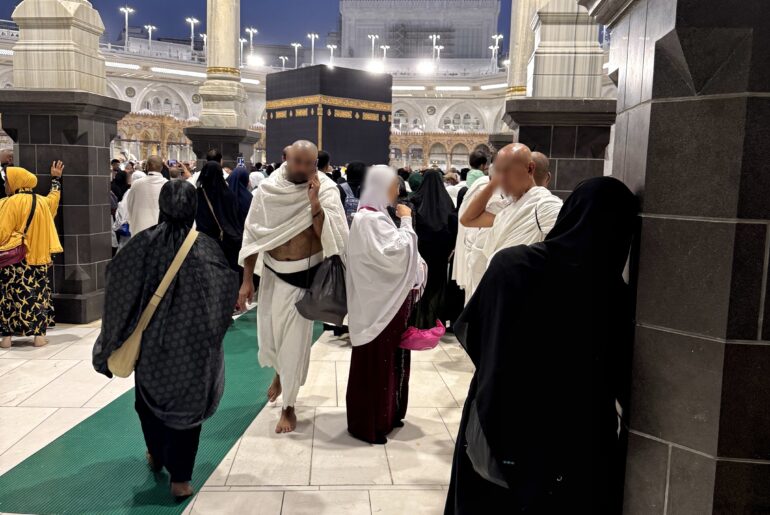
But this story did not begin here. It began more than a week earlier, while I was still at Umrah.
Remember the Umrah trip, and how I had prepared so extensively for it before everything fell apart? My finances had been aligned, and I was ready for the journey, until I wasn’t. By the time the trip finally happened, I found myself struggling. No one had warned me about the shock of international currencies, and suddenly, what I thought was sufficient wasn’t enough. Every exchange rate felt like a quiet blow. I struggled. I went into debt just to make ends meet. And beneath it all, I carried a quiet shame. I should have prepared better. I should have known better.
But in that sacred land, stripped of pride and plans, I did what I knew best. I made du’a. Sincere, bare, unfiltered, and I ended it with these words:
اللَّهُمَّ أَرِنِي عَجَائِبَ قُدْرَتِكَ فِي دُعَائِي Oh Allah, show me the wonders of Your power in my supplication.
It was not a dramatic du’a. It was not eloquent. It was simply desperate. And indeed, He did.
One week after my return, the message from the stranger in Germany appeared. When I later told her how Allah had used her as the means through which that du’a was answered, we both cried. Even then, I knew this was not about who I am, but about who He is, As-Sami’ The All-Hearing, Al-Qadeer The All-Powerful, Al-Mujeeb The Ever-Responsive, Al-Kareem The Most Generous. He heard the whisper I made in a moment of vulnerability, and He responded in a way I could never have arranged.
Reflecting on this incident still brings tears to my eyes because the lessons within it are profound.
First, the timing. The lady had sent the message four months before I ever saw it. Four whole months. I rarely open my Facebook account, let alone the inbox. Yet subhanallah, Allah guided me there, and I saw that message after all that time. Again, what are the odds? That a colleague would casually mention he was travelling to Mombasa, of all times, just then, rather than any other?
I cannot help but think about the concept of rizq. That provision was already written for me. It existed. It was on its way. But Allah chose to release it at the exact moment I was struggling, when debt felt heavy, when shame lingered quietly in my chest. It makes me reflect on how often we grieve over what we think are unanswered du’as. Perhaps they are not unanswered. Perhaps they are already written. It is only a matter of time.
This humbled me in ways I cannot fully articulate. As much as I have always known that Allah can do the impossible, I never truly thought He would do it for me. For someone still striving, still flawed, still struggling to be a better Muslimah. Yet He showed up for me in the most unexpected way. Not because of who I am, but because of who He is. And here is the part that still leaves me in awe: this same rizq could have come through a freelance gig, a work bonus, a regular reader, someone within my circles, or even someone from my country. Any reasonable channel. But instead, He used someone who had read one blog post, just one. A stranger across continents. Almost as if to say: so you know this is from Me, so you know this is My power.
Something else dawned on me in that moment. That rizq was already written for me, but maybe the only thing left to unlock it was for me to raise my hands and ask. Not with polished words. Not with entitlement. But with sincerity and vulnerability. اللهم أرني عجائب قدرتك في دعائي. And He did.
And just like that, Allah lifted me from the debt that had weighed so heavily on my heart. Even now, it brings tears to my eyes. That Allah heard me, responded to me, the me who is still striving, still imperfect, still far from the ideal Muslimah I hope to become. And yet, He responded in the most beautiful, deliberate way. I do not share this story from a place of pride, nor to suggest I am deserving in any special way. I share it with humility. Because if Allah can show me the wonders of His power, then who are we to limit what He can do for us?
This Ramadhan, open your heart fully before Him.
Ask boldly, ask vulnerably, ask for what feels impossible. Do not shrink your du’as to match your fears. Do not measure Allah’s power against human logic. He is Al-Qadeer, The All-Powerful. He is Al-Mujeeb, the One who responds. And if the response does not come in the way or time you expect, remember He is already arranging matters, already moving pieces, already writing a story you cannot yet see. Perhaps tonight, revise your du’a list. Revamp it. If you don’t have a list yet, it’s never too late. Start as you are, wherever you are.
Let your duas reflect who Allah is, not the limits of what you think is possible.
May Allah reward this wonderful soul who became a reason through which Allah answered my du’a in the most beautiful way. May Allah reward her with abundance in this life and the next, and may it be a means through which she is elevated in status. May she also earn rewards for anyone else who might be inspired by this story.
But this story is not just about her. It is also about the many other ways in which Allah has shown up for me through countless people along my journey. To friends, readers, family, mentors, and anyone who has gone out of their way to support me. Your encouragement, generosity, prayers, and contributions have meant more than words can express. I am deeply grateful for each and every one of you. May Allah bless you all, multiply your rewards, and grant you goodness in this life and the next. Ameen.
Last Ramadhan, we had an exclusive Ramadhan newsletter, available for a small charge. It was a humble effort, and I poured my heart into it, but I realized that it wasn’t reaching as many people as I had hoped.
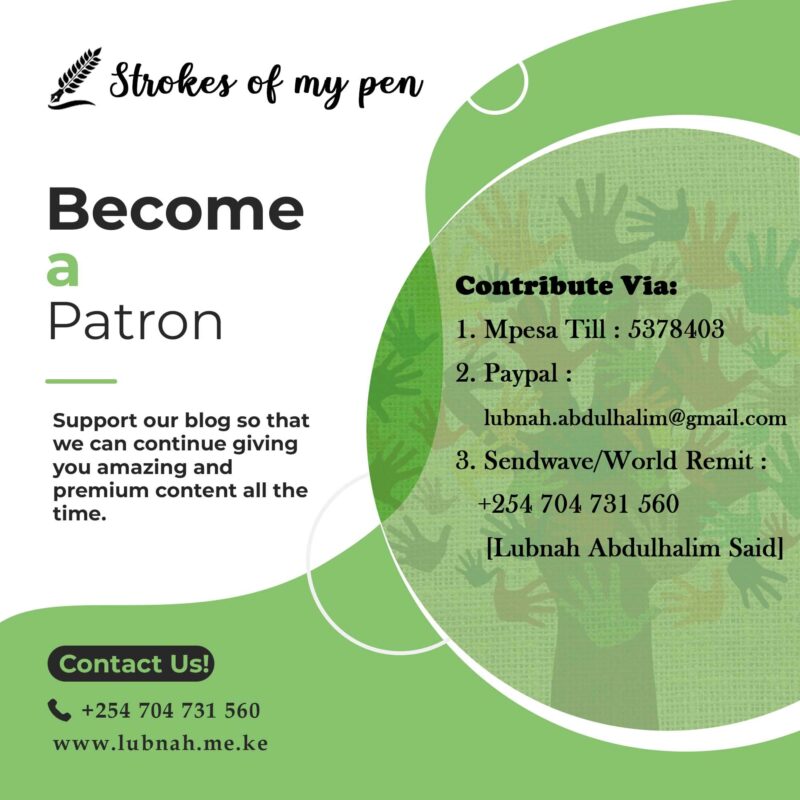
This year, I want to do things differently. The special Ramadhan content will be open to everyone. If you feel moved to give, you may contribute whatever works best for you (The poster for contribution is attached below). And if you cannot, that is completely okay. Your duas are far more important than anything else. Please remember me and my family in your prayers this Ramadan.
A couple of quick reminders: I do collect zakat and share it with deserving parties (I have a looong list). If you would like to give your zakat, please feel free to reach out to me at 0704731560. If you send anything, kindly text me to clarify that it is Zakat. Your contribution could be the reason someone feels relief, hope, or receives sustenance this Ramadhan.
And for those who love gentle, reflective reading, my books are available and recommended for Ramadhan. The Striving Soul (1250/=) and Reflection and Resurgence (1500/=) are written to be companions for quiet reflection and healing.
Ramadhan Mubarak, my beloved readers! May this month bring peace, reflection, and countless blessings to your hearts. May it soften the hardest places within us and make our hearts feel lighter and nearer to Allah. Ameen.
I had cried about it. I had panic attacks more times than I could count. In my silly, silly brain, I thought my imagination could equate reality. That I had rehearsed this scenario from all angles, whether it was a wreck, a collision, a rollover, such that I would be prepared if it ever happened.
But when we were mid-air, everyone shouting their lungs out, I quickly realized there is never enough preparation for this.
Reality is way more terrifying.
It felt like I was looking right into the eyes of death. Like my end is here. I started to say the shahada.
And even then, I knew. I KNEW. What Allah was trying to show me. The perfect illustration of a verse I had read literally two minutes ago.
—
I am okay. Alhamdulillah.
I know, I know. I should have started with that. But what’s the fun in that? 😀
Now, let’s rewind to where it all started.
—
Earlier this week, my sister and I were walking to the matatu stage, each silently reading their adhkar. Out of the blue, I remembered a reel I saw on Instagram maybe one or two days earlier. A content creator, Sukaina, excitedly shared how she taught her child the dua whenever they boarded their car:
“Glory to Him Who has subjected this to us, and we could never have it by our efforts. And indeed, to our Lord, we will surely return.”
This was so random because at the time, I wasn’t even following Sukaina’s page. That video simply appeared on my feed. And of course, I replayed it a few times as she and her child cutely sang the dua in the Omar and Hana style, Allahumma bareek.
I turned to my sister and said, “Whenever I want to recite this dua, I can’t keep Omar and Hana’s voice out of my head, so I just end up singing it like they do instead.”
My sister laughed.
“This dua is for travel, right?”
“For mounting any animal or vehicle too.”
Then, in her typical Qur’an student style, she said, “The verse actually starts like this:
“And He is the One Who created all things in pairs, and made for you ships and animals to ride, so that you may sit firmly on their backs and remember your Lord’s blessings once you are settled on them, saying, ‘Glory be to the One Who has subjected these for us, for we could have never done so on our own. And surely to our Lord we will all return.’”
(Surat Az-Zukhruf: 12 to 14)
She reflected on the ayah. Allah tells us that He is the One who made it possible for these animals and vehicles to move. It is by His will, His power and His mercy, not human intellect or ability. This is among His signs that we need to contemplate and thank Him for. For making it possible. For making it happen with ease. He reminds us too that life and death are in His hands. And at the end of the day, we all return to Him.
We chit-chatted a bit about the verse, reflecting upon it. Then we started saying the dua together, word after word. And just like that, we were already at the stage.
Matatus were lined up in front of us, conductors calling out, urging us to board theirs. We decided to get into the first one that was going express. I sat in the seat right behind the conductor’s seat. My sister went to the far-left seat by the window. Soon enough, the matatu was full. The conductor decided to squeeze in an extra passenger, who went and sat next to my sister.
We left.
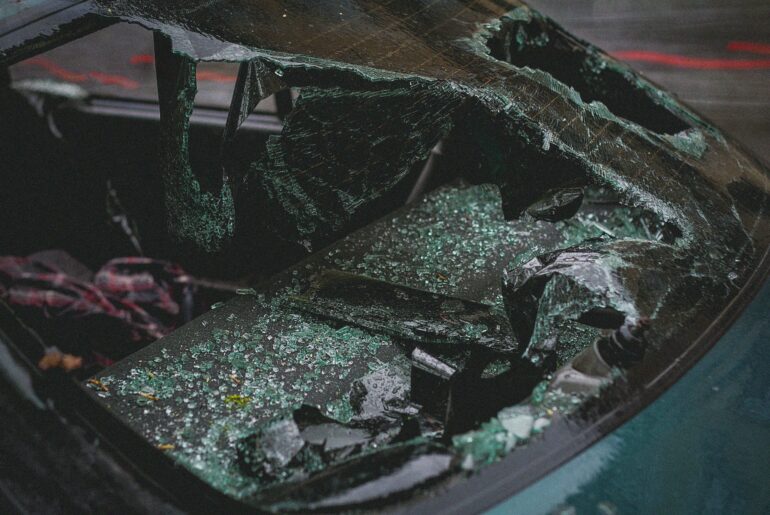
I can’t even tell you if a minute had passed or two. It was just a matter of seconds when the car hit a bump roughly and we were thrown into the air. At first, we thought the driver had just been careless, maybe had increased speed abruptly. So there were shouts of “Wewe! Oya dere!”
But soon it became clear this was not just reckless driving, the brakes had stopped functioning. The car was out of control.
The car started swerving left and right. The shouts increased. I kept shouting “Allahu Akbar! Allahu Akbar!” I don’t even know why that was the first dhikr that came to mind.
We swerved left, and I watched the moment our matatu knocked a man off his feet. My stomach dropped. I couldn’t believe what I was seeing. His body flew, and the world around me seemed to tilt sideways. My heart pounded so hard I could hear it in my ears. I was frozen, unable to move, unable to breathe properly. My mind couldn’t process it fast enough. This is real. This is happening. A cold wave of fear washed over me. My chest tightened, my hands trembled, and all I could do was cling to my seat and keep repeating, Allahu Akbar, Allahu Akbar.
The only thought that came to mind was, I am about to die. I should be saying the shahada instead.
So I started, “La ilaha illa Allah…”
And then boom!
Our matatu rammed right into the car in front of us. A tuktuk crashed into the other car on the side. That’s when the Matatu finally stopped.
And when it did, I let out the loudest, ugliest cry.
I was trembling, gasping for air, and frozen in place as the conductor flung the door open and people hurriedly alighted.
Someone behind me quickly tapped my back, “Shuka! Shuka!” and I staggered my way out, still weeping, barely able to catch my breath, not even caring that there was a crowd around.
My younger sister alighted and came to hug me, holding me, trying to comfort me. As if we weren’t both in the same accident. As if we hadn’t both been exposed to that same horror. “Alhamdulilah, say alhamdulilah,” she repeated.
I was weeping uncontrollably. I.just.couldn’t.stop. (Those who’ve ever experienced/witnessed panic attacks, you know what I mean).
Some people came to ask if I was hurt. I just shook my head because I couldn’t even speak. An older man kept saying, “Pole mamii. Pole mamii. Umeumia?” which was a bit funny because I really think he saw me with my backpack and rubber shoes and assumed I was a school student.
It reminded me of another time I had a similar panic attack on the road. I had to squat because my legs couldn’t hold me. The road was mostly deserted. A man passed by, hesitant to come near, and shouted, “Uko sawa?” I couldn’t speak. Then he asked, “Are you drunk?” I was weeping loudly, trembling, gasping for air, just like now. And yet, amidst my tears, I couldn’t help but chuckle at the absurdity of it all. Fun times 😀
Eventually, my panic attack ended.
I finally got to look around me.
The lady who had been seated at the very front beside the driver was now sitting on the ground. She had hurt her back and waist and was grunting in pain whenever she tried to move. Everyone was just staring. I remember thinking she needs to go to the hospital.
But no one was moving.
Call a tuktuk to pick her up. No one moved.
It was strange. That stillness. That collective pause. Everyone waiting for someone else to act first.
That was when I realized that the bystander effect is a very real thing.
My sister and I started looking around for a tuktuk. There was so much commotion and traffic. The lady was silently crying. The woman holding her, who I assumed was her sister, was in tears too.
Eventually, one tuktuk came and she was taken away.
I did get to see the man we had knocked down, seated on the ground, unable to move. I am not sure if anyone else was injured because we left the scene shortly thereafter. (I really do pray that they’re all okay and well by now, ameen).
All I could think of was that verse.
“And He is the One Who created all things in pairs, and made for you ships and animals to ride, so that you may sit firmly on their backs and remember your Lord’s blessings once you are settled on them, saying, ‘Glory be to the One Who has subjected these for us, for we could have never done so on our own. And surely to our Lord we will all return.’” (Surat Az-Zukhruf: 12 to 14)
I turned to my sister, tears in my eyes.
“Do you know, I rarely ever say this dua. Except for a few times when we are with the kids, and we sing it in that Omar and Hana style. But personally, I hardly say it. What are the odds that Allah would make me remember a random video on Instagram, from a page I wasn’t even following, and make us say it today?”
She said, “I rarely say it too. And it is Allah who made it easy for us to say it, on the right day, at the right time. Subhanallah.”
“I feel like Allah wanted us not just to read the verse, but to live it. To experience it. To truly understand His words. And to be grateful for His favour upon us,” I said.
She nodded, then said, “You know, in Surat Ash-Shura, Allah says something similar: ‘And among His signs are the ships like mountains sailing in the sea. If He wills, He can calm the wind, leaving the ships motionless on the water. Surely in this are signs for whoever is steadfast, grateful. Or He can wreck the ships for what the people have committed, though He forgives much.’”
Tears started falling again.
Later on, I realized that in the verse before that, Allah says: ‘You can never escape Him on earth, nor do you have any protector or helper besides Allah.’” Subhanallah.
After a brief pause, she added, “You know, when we boarded the matatu, I looked up at the sky and noticed a beautiful cloud with a flock of birds beside it. I was amazed and said, ‘Subhanallah!’ Then I remembered the dua again, so I repeated it.”
Then she went on to say, “And when the extra passenger came and sat beside me, I was a bit bothered because now we were seated four instead of three. We were squeezed. But at the road bump, when the matatu threw us up, we didn’t have much impact because there was no space between us. We could have gotten hurt had we been seated normally. Subhanallah.”
Indeed, we may dislike a thing, but it is khayr for us. (If you own or drive matatus, please don’t use this as an excuse to overload 😀)
You know what the craziest part of all this is?
The previous night, the very last thing I had worked on was editing a friend’s book on adhkar. And the story revolved around a car malfunction and an accident. On top of that, earlier this year, I had told my inspirational sister, who’s far ahead in her Qur’an journey, that I wanted to be more intentional with tadabbur al-Qur’an.
Lo and behold, Allah decided, why just reflect when you can actually experience the verses 😀
Alhamdulillah, truly. My sister and I are okay. I did have a very slight injury on my knee, but now, whenever I walk and that pain kicks in, I remember to be more grateful. This is nothing. It could have been way, way worse. In the span of just a few minutes, two or maybe three, our lives could have ended or changed completely. One moment, we were walking to the matatu, calm and thinking about our adhkar. Next, we were in the middle of chaos, staring death in the face. It makes you realize how fragile life really is, how vulnerable we are as humanbeings, how quickly circumstances can shift, and how precious every single moment truly is.
A friend joked that this was exposure therapy for my constant fear of accidents. Who knows? All week, whenever a car oversped or went roughly, my sister and I would exchange tense looks, then chuckle softly. There’s that katrauma, that tightening of the heart. But at least now, we can smile about it.
Alhamdulillah for the gift of life.
Alhamdulillah for Allah’s favours upon us.
Guys, don’t FORGET YOUR ADHKARS & DUAS!
Side note: For influencers, and really, anyone who uses social media, may this be a reminder that whatever you post may positively or negatively impact someone’s life. Whether directly or indirectly. Sukaina may never know that a cute, simple video with her child, reminding people of a dua, may have been part of our protection that day.
Merely four days after publishing my story, I got the awaited call. There was hope after all. The trip was going to happen. The estimated dates had been communicated. We were indeed going for Umrah, yeeyy!! But there was a catch. Members of the initial group that was to travel had taken a step back. Only two of us were remaining: the chairlady and I. Only the two of us would be going.
There was a pause in my voice, an apparent hesitation. Only two of us?! The structural change was stark. Traveling without a mahram was already a matter of deep contemplation for me, but the presence of a group had felt like an acceptable allowance within Shariah. Now, I was traveling without both that reassurance and a group. I requested some time to think about it, pray about it. The logistics alone felt overwhelming. What if something unexpected happened on the journey? What if we faced confusion or difficulty navigating the crowds alone? But above all, the lingering question that weighed on my conscience was, ‘Will this be displeasing to Allah? The lack of both a mahram and a group?’
I laid down my Muswallah and prayed two rakaats of istikhara. At this point, my head was going in circles. Fear engulfed me. What if I go all the way to Makkah, perform Umrah, and I don’t get the full reward just for this reason?
As I reached for my phone, the notification blinked on the screen; the visa was finally out. For a moment, everything inside me stilled. I just stared, letting the reality sink in. After all the waiting, all the praying, all the back-and-forth of hope and disappointment… the door had finally opened.
I felt a lightness in my chest, almost like a small wave of relief washing over me. Alhamdulilah. This was really happening. I whispered a quiet Thank You to Allah, trying to savour that tiny moment of joy before it slipped away.
But almost immediately after that calm came the familiar tightening in my heart. A quiet nervousness creeping in from the edges. Was this truly the answer to my istikhara? If Allah opened this door in such an unexpected way, what was I meant to understand? Why did my joy feel tangled with fear?
Little by little, the worries began to circle again… the lack of a mahram, the group shrinking to just the two of us, the uncertainty of travelling this way. Happiness, relief, fear, sadness… everything collapsed into each other until I wasn’t sure which feeling belonged where. The trip was now confirmed. I was to travel after one day.
That one day was painfully long. It was mostly me making phone calls to the learned scholars in my circle. What am I to do? The more the answers varied, the more heartbroken I felt. But throughout, my family insisted, ‘You’ve done your bit. You asked. You prayed. You cannot do anything at this point. This is out of your control. Now just tawakkal.’
The morning of the journey, I was a mess. Tears flowing. Heart aching. I make one last call to the ‘Hudaibiyyah’ friend, the same one who reminded me of Hudaibiyyah when my first trip got cancelled. She says to me, “Lubnah, when you prepared so perfectly for this journey, Allah closed that door. Now, when everything is imperfect, is when He’s opened the door. You have to trust there is kheyr in this even when you don’t see it. Rejoice! You’re going for umrah!”
And so I left. Broke. Broken. Tired. Unsure.
This is not how I envisioned my journey. Everything was out of place. And as a perfectionist, nothing tears me down like a messed-up plan. But then I remembered something. Throughout the months leading up to this journey, I prayed a lot about every single aspect of it. Including companionship. I was very specific about what type of companionship I wanted. If this is what Allah has chosen for me, then there must be a reason. A wisdom. A lesson that perhaps I would only learn if we were just the two of us. And boy, oh boy, did I not learn?!
***
Remember when the Chair, my partner, previously warned us that our patience shall be tested? She was absolutely right. It started with the bus trip from Mombasa to Nairobi. What would usually take 8/9 hours took me 12 good, long hours. And I had to keep reminding myself of the verse in Suratul Naml, “This is by the grace of my Lord to test me whether I am grateful or ungrateful. And whoever is grateful, it is only for their own good. But whoever is ungrateful, surely my Lord is Self-Sufficient, Most Generous.” I arrived, exhausted but grateful. Much calmer now.
Our trip to Saudi Arabia was very early the next day, and so before I slept, we had a quick conversation with my partner. We were to enter into the state of ihram before we left home, since we’d pass the miqaat while on air. Okay? Okay. I’ve got this.
I knew I’d got this because do you know how many videos of Umrah I had watched? Many, simply too many. I was sure I’d got this. The next morning, I got ready, went into the state of ihram and set off to the airport. On the way, my cousin asks me casually, ‘And so which soap did you use since scented ones are not permitted in Ihram?’ And I…
HOW ON EARTH DID I FORGET THAT?
Yep, not only did I use a scented soap. I forgot to wash my hair too 🥲
Listeeeen, nothing bothers an anxious person than being an inconvenience to someone else. Now, how was I going to break the news to my partner? 🥲 Mind you, this is someone I’d just met once before the Umrah trip plans, and talked only a couple of times. Yep, I hated myself in that moment.
When I told her though, she simply suggested I check whether I can do the ghusl in one of the washrooms within the airport. But due to a lack of water, that was not possible. We had to change our plans entirely. We’d get to our hotel, I’d redo the process, then go to Masjid Aisha as our new miqaat location, then leave for Makkah. She was calm and graceful about it in a way that I was so grateful for.
When we were at the airport in Saudi now buying SIM cards, and they couldn’t get my fingerprints due to sweat. The man kept telling me to wipe my hands, but it was simply not working. They brought the tissues, they even brought a small fan in front of me lol but my hands just wouldn’t cooperate. The man looks at me and says, “You need to relax. Relax…” In my mind, I’m like, ‘Yeah. So easy for you to say!’ But my tongue utters something else, “It’s my first time here.” I chuckle softly. “Ohh! Most welcome!… Let’s use your sister’s fingerprints then.” And so we do.
We get to the hotel. We do our thing. But of course, me being me, I just had to, I just had to! mess it around a little bit more 😄
JUST as we were about to leave the hotel room, both of us already in our abayas, genius me said to myself, “I’m going to talk to my Lord. I need to freshen up my mouth again.” And yep! I went for the flavoured, scented toothpaste. When I was done, I casually asked my partner, “BY THE WAY, is this okay?” My goodness. Next, we were quickly Google searching on the permissibility of scented/flavoured toothpastes, SMH. Some say it is disliked, some say it is okay. Most suggest miswak as that is the safest. All in all, at least it not haraam. Phew, alhamdulilah. My partner says to me, “Remember, Allah does not expect or require perfection from you. All He looks at is your effort. You’ve put in the effort, leave the rest to Him.” And throughout the journey, that’s something she frequently reminded me about. Allah does not expect perfection. Just sincere effort.
By the time we got to Masjid Al Haram, it was already Asr time. The lower floor, which leads directly to the Kaabah, was already full, so we moved to the first floor. The place is too crowded, it feels like the entire Ummat Muhammad is there, subhanallah. I was overwhelmed; I couldn’t even fully comprehend what was going on. We got a place to sit, and it wasn’t until I heard the familiar adhan, the adhan we’d heard over and over again since childhood, on our TVs, that it struck me hard. I’m here. I’m truly here. I am in Makkah. The Kaabah is just a few steps away from me. The tears flow naturally. It feels like a dream. I am here.
After the prayers, we join the flock of pilgrims on the lower floor to start our Umrah by doing tawaf. As we were entering the lower ground of the masjid towards the Kaabah, the voices of the guards echoed, “Yallah ya Hajjiyah! Yallah ya Hajji!” The constant call to “Move, pilgrim! Move, pilgrim!” was meant to control the dense crowd. On our way, we meet several groups heading in the same direction.
In my head, my favourite nasheed, ‘Ilahy Wasi’ul Karami’ by Yusuf Ayub, played. I had always daydreamed about approaching the Kaabah while this nasheed played, and in this moment, the lyrics perfectly described my state:
إلهي واسع الكرم وربُّ البيت والحرم
My God, Most Vast in Generosity, Lord of the House and the Sacred Sanctuary,
إليك أتيت منكسرًا متيبًا أغيّر القدم
To You I have come broken, weary, my steps weak and unsteady.
أُبدي طمعًا وجَلًا ويهيف خاطري وفمي
I show my hope and my fear before You, and my heart and tongue tremble.
لله الحمد انتهت بي لما أوليت من نعم
All praise belongs to God, who brought me here after all the blessings He granted me.
ضيوفك بالحُصَى نزَلوا بخير الأشهر الحُرم
Your guests have arrived with the pebbles (of Ihram), during the best and sacred months.
وجئتُك في ركائبهم إلى بردِ المتابِ ظمي
And I have come with them on their mounts, thirsty for the coolness of repentance.
The nasheed described my heart as “broken” and “trembling,” and that was the truest description of my state. My body felt physically unsteady, mirroring my spiritual vulnerability. Yet, the lyrics provided solace: I was before the “Most Vast in Generosity,” and He had brought me here despite my faults. My need for perfection was irrelevant; only His vast grace mattered.
And finally, there it was, the magnificent Kaabah right in front of me. Before I could savour its beauty, the crowd pushed me forward. I didn’t get a moment to pause. To let the moment sink in. To absorb this beautiful moment.
For me, it wasn’t a grand, beautiful moment like most people describe it on Instagram. I was overwhelmed. The place was full to the brim. I felt like I was being taken on a wave, just floating around, as we are pushed around. You know how, when you see a flock of sheep and it just seems like they are just going aimlessly? It felt like that, only that this was the tawaf. Everyone knew the direction they were headed to, but that’s simply what it felt like for me. Like I’ve been abducted by some Turkish aunties, and I’m circling around the Kaabah with them lol.
My partner and I realize we need to do something. We tie our hijabs and hold each other’s hands tightly. A man near us starts reciting dua loudly, as his what I assume to be his group mates respond to the dua. I looked around. All kinds of people. All colours of people. One minute we were with the Turkish group, next were among another South Asian, probably Malay group. It was indescribable, the feeling of witnessing all these nationalities, races, individuals, each with their own story, subhanallah. All here simply for one reason. To worship Allah. The weight of it all hit me once again. And then I cried and cried and cried. My partner heard my sobs and tightened her hand. It was a lot. I felt so overwhelmed, but also, so so emotional. So grateful.
Sometimes I would be so lost in the intimacy of my own dua, when suddenly a wave of sound would break my concentration: a powerful, soulful dua recited loudly by a stranger nearby. It was impossible not to stop and listen, my own whispers fading as I paused, feeling compelled to join the chorus, thinking, “Let me say ameen to these beautiful duas first.”😄
We move from one ritual to the other, then to the Sa’y, which felt like the hardest of all subhanallah. The walk between Safa and Marwa was so humbling. You see all kinds of people walking back and forth; some in crutches, some in wheelchairs, some very old, some very young, some with visible physical deformities, some young, strong and fit. You get to appreciate your health, your youth, your strength, and above all, contemplate on our mother, Hajar and her journey.
For the next few days, our life revolved around Masjid Al Haram and its environs. And what a pleasure, what an honour, to just stand behind Imams we’ve longed to hear in real life, to gaze at the Kaabah late into the night, to have solitude with Allah that we’ve always craved for, to meet so many lovely souls within the Haram. It was during this period that we met a friend of my partner, a Ugandan lady who was an inspiring, joyful soul and an activist. Her presence added a vibrant, familiar energy to our quieter routines in the Holy Lands. We had such wholesome and intriguing conversations with her, ranging from the Umrah experiences to Palestine and world injustices, to shared views on community upliftment. Her perspective, rooted in both faith and practical action, was a quiet inspiration. These unexpected meetings, though brief, reinforced the core lesson that Allah had chosen this specific, small company, including my partner and her friends, for my journey.
But above all, the greatest lessons were found in the day-to-day reality of living with my partner, which became yet another profound journey of learning for me.
***
Look, they’re not wrong. There are two kinds of people on this earth: me and my partner.She’s naturally outgoing, bubbly, effortlessly friendly, the kind of person who starts conversations with strangers in a queue and somehow walks away having made a friend. She’s bold, brave, and courageous, always ready to face whatever comes her way with a fearless heart.And then there’s me. A little quieter, a little more cautious. The observer. The overthinker. Gentle, soft-hearted, always careful about the next move.Even our food orders tell the story. Her plate is full of colour , greens, olives, and all things fresh, nourishing, and wholesome. Mine? Small portions of junk, whatever comfort food I can get my hands on. She takes life in strides, saying “Whatever happens, happens” with a calmness and groundedness I quietly admire. Meanwhile, I try to control every tiny detail, like peace depends on it. I don’t flow with life as easily, I wade through it with intention and constant questions.
I remember one afternoon, she bought me a Matcha. Very confidently, she said, “This slaaaps! You’ll love it!” I took the first sip and exclaimed, “Oh my God! They were right! This tastes like graaasss!” And we burst into laughter.See? Two kinds of people.You may call us the dynamic duo 😄
And so, very quickly, we learnt how widely different we are. Yet one thing connected us. One thing remained true: we are both striving souls, both seeking the pleasure of Allah, both deep in understanding the human psychology, both passionate about the pen and ink. And so we slowly learnt how to adjust to one another, accommodate one another, but most importantly, give each other grace. For someone who truly embodied the Islamic lifestyle, from her clothing to eating to health care to parenting to prophetic medicine, there was so much inspiration and wisdom I acquired from her.
I vividly remember one morning when I was so in my head. I had prayed istikhara about a matter and was just thinking about it privately as I hadn’t yet shared it with my partner. We were heading for breakfast when she started telling a story. I don’t even know how that conversation started, but she started sharing an experience she had had with a friend and what she’d advised her in that moment. As I kept listening, I could feel the goosebumps on my body. Her friend’s situation was quite exactly the same as mine. And there it was, the answer to my istikhara. Subhanallah. What are the odds? For me, it honestly felt like she was my Khidr, my teacher, in this journey.
We had many deep, eye-opening conversations throughout the journey, which made me realize why exactly Allah chose this trip for us together. Despite our differing approaches, our values, principles, and faith are well-aligned, and we shared the same deep aspirations in Deen. We focused on gently navigating our differences, both between us and with other people along the way, while simultaneously strengthening our shared purpose. Through this, we slowly learnt how to adjust to and accommodate one another, but most importantly, to give each other grace. As she would sometimes say to me, “Lubnah, this is marriage!” highlighting how individuals with good intentions may vastly differ in behaviour, personality, and mindset. This revealed the deeper dynamic of all relationships and the commitment required to make them work.
And so throughout the journey, the repeated theme was grace. Grace, grace, grace. And it was so beautiful and even comforting to experience and witness.
***
On our last night in Makkah, we headed for Qiyam. The distance between the bus stop and the masjid was quite a bit, so we trudged on, half asleep. My partner was listening to a voice note she’d received, when she started nudging me gently with her hand. “What’s wrong?” I asked. She kept listening, her hand still nudging mine, and soon she was in tears. “I’m fine,” she murmured between sobs. I knew she was undergoing a distressful stress during this trip, and I truly admired how she handled the entire matter with such calm and composure. We held each other tightly as she went on weeping. Finally, she managed to speak: “I prayed to Allah for a sign of His pleasure regarding my patience, and He has answered me! He has done it for me!” Goosebumps spread all over me as she narrated the news she’d just received. My heart just melted at how merciful Allah is, how good our Lord is. As she kept sobbing, we paused walking, embracing tighter, right under the last third of the night light. My heart was in awe with our Lord. Oh how generous our Lord is, subhanallah!
We then proceeded to do tawaf. The tahajjud gang was already there, so it was quite packed, subhanallah. We held each other’s hands and started circumambulating around the Kaabah. As we kept being moved by the crowd, at some point we found ourselves right at Maqam Ibrahim, and we were able to look at it closely, albeit in a minute and touch it, alhamdulilah. We then proceeded around. To be honest, for all the times we’d done tawaf, there was no way we could have touched the Kaabah. It was simply too packed, and we were just limited as two ladies surrounded by masculine men. But then at some point, almost in a miraculous way, I noticed an opening on my left side; there it was, right in front of me, just an empty space in the direction of the Kaaba. I turned to my partner, “Look! We have a chance!” She nodded, and we proceeded to move closer and closer to it. Wallahy at that moment, I just felt that that was Allah’s mercy. Cause of how people were moving, that space just appeared out of nowhere. It was like people literally made space for us, subhanallah.
So we inched closer and closer until we reached like three lines away from it. Now that was where the tug of war was happening. Everyone was scrambling to touch the Kaaba. A lady was groaning in front of us; you could see she was literally suffocating, trying to find her way out. Another Egyptian woman was stuck to the Kaaba, crying, not budging despite all the push and pull. And as my younger sister said when she heard the story, all that scrambling I’ve done with matatus back home had been preparing me for this moment 😂 I pushed myself harder into the crowd. I stretched my hand. I widened my fingers apart trying to touch the Kaaba. It was so so close. So close, but my hand was short. My partner, who’s taller than me, tried to pull my hand closer, and she kept doing that until we both finally touched the Kaaba. And that moment was so surreal, so emotional. I couldn’t hold myself back and just started sobbing, my weeping clear to the people next to me. And I cried my heart out on that wondrous night. And this night became the most favourite part of my journey. So surreal. So profound.
***
That evening we set out to Madina, only to find that all trains had been cancelled due to another train malfunction. We found ourselves in a five-hour long drive to Madina. We arrived exhausted, but excited. The heart singing, “Qalby fil Madina”.
Madina was just….beautiful. It is crowded too, but there’s just some different air to it. It’s slower paced. Less noisy. Less people. Just the place to find the solace you’ve been longing for.
Outside our hotel we could directly see Mount Uhud. It is humongous! I was mind blown by it and my partner reminded me of that hadith on following a funeral procession:
Allah’s Messenger (ﷺ) said, “(A believer) who accompanies the funeral procession of a Muslim out of sincere faith and hoping to attain Allah’s reward and remains with it till the funeral prayer is offered and the burial ceremonies are over, he will return with a reward of two Qirats. Each Qirat is like the size of the (Mount) Uhud. He who offers the funeral prayer only and returns before the burial, will return with the reward of one Qirat only.”
You guyysss, if you knew how bigggg that mount is, I don’t think any of us would miss a salatul janazah. And to think of how the prayer itself takes less than five minutes? I was mind blown!
There was just so much peace in Madina. Especially the Fajr hours, and you get to witness the amazing sunrise and the beautiful ‘umbrellas’ unfolding simultaneously.
It was quite heartbreaking to not have had a chance to go to the Rawdha. Due to the quick plans, we only got to be in the waitlist. I still joined the line in an attempt for another miracle 😄 But yeah, the guard wouldn’t hear it. I felt that kiaziiii 💔 It was heartbreaking. But then, I felt like I had no right to complain at all. Many things didn’t turn out as we initially anticipated, many places we didn’t get to go. We also didn’t get to visit Quba, or any of the other surrounding places. We didn’t do much of anything much beyond the Haram and our hotel room. The time was short and many things were not in our control, but Alhamdulilah for every blessing. This was simply not my night at the Rawdha. Maybe not the trip to explore all the towns and their deep histories. This trip simply felt like an intimate moment with my Lord with lessons to be learnt throughout the journey.
Leaving the town to get back home was quite heavy. You feel like you’re leaving home. It reminds you why this experience is so wholesome so fulfilling, cause we get to do what we were created for; worship Allah in the most sincere of ways.
Despite all the words I’ve written, nothing can truly capture the feeling, the emotion, and the deep peace that comes with being in the Holy Lands. It’s an experience I pray to have again and again. And I pray that you, dear reader, along with every soul yearning and preparing for this journey, get to feel it over and over, surrounded by your loved ones, in good health and high spirits. Ameen.
I want to take this moment to thank each and every one of you who made dua for me when the first trip didn’t happen. Many do not know, but this was the third time this trip had been rearranged. Those duas went a long way, and alhamdulilah Allah finally made it happen. May Allah surprise you all with a similar joy of a more beautiful Umrah and Hajj ya Rab.
This trip was far from being perfect. But the clear message, the clear lesson from Allah throughout this journey is that He doesn’t want our perfection. He wants our sincerity. Our effort. Our striving. Almost like He is saying, “Come as you are beloved servant. Come tired. Come broken. Come broke. Simply come. We’ll receive you as you are.”
May Allah accept our Umrah, our broken efforts, our imperfect ibadah, our desperate duas in the most beautiful way. And for my sister, whom Allah intentionally chose as my partner in this journey, may Allah elevate your status both in this life and the next. Nothing happens by chance with Allah, and you became a beautiful part of my destiny, of my most beautiful journey yet. Thank you immensely for your kindness, generosity and companionship. Barakallahu feeki.
To my favourite stranger, the kind soul who made the payment that confirmed this entire journey: May Allah reward you beyond measure for your generosity and trust. May my humble efforts during this trip produce a ripple effect of reward for you and your family, ameen.
Above all, the greatest blessing of this experience is that the journey itself was the answer to a persistent dua. Additionally, the family mission mentioned in Part I happened, alhamdulilah, by Allah’s overwhelming mercy and grace. The greatest lesson of all was that when we turn to Him with sincerity, He takes care of the details. His promise remains true:
وَلَسَوۡفَ يُعۡطِيكَ رَبُّكَ فَتَرۡضَىٰٓ
And ˹surely˺ your Lord is going to give you, and you will be satisfied.
Allahu Akbar!
***
Alhamdulilah by the mercy and grace of Allah, my blog ‘Strokes of my Pen’ (Lubnah) has been nominated for the BAKE (Bloggers Association of Kenya) Awards- Creative Writing Creator Awards. Please take a moment to vote: 1️⃣ Visit vote.bakeawards.co.ke 2️⃣ Enter your Name, Email & Phone Number 3️⃣ Select your preferred creators 4️⃣ Verify your vote via email using the code sent 5️⃣ Submit!
The voting deadline has been extended to 11th December, 2025. Thank you for your precious time!
*For latest stories and articles, please click on the ‘Subscribe’ button at the bottom of the page 😊