Category

2025 Exclusive Ramadhan Musings


Category

إِنَّ اللَّهَ عَزَّ وَجَلَّ يُحِبُّ إِذَا عَمِلَ أَحَدُكُمْ عَمَلًا أَنْ يُتْقِنَهُ

“Allah loves to see his servant who does a job with itqan (meticulously).”  (Al-Mu’jam Al-Awsat lit-Tabrani)

As a perfectionist, this hadith resonates deeply with me. It’s a clear affirmation: YES! It should be this way! Efficiency, proficiency, integrity, and excellence are essential to Islamic work ethics. However, when we reflect on our sincerity, do we truly give 100% in our jobs or settle for the bare minimum?

The answer may be a resounding YES for self-employed individuals, but the real question pertains to those who are employed or contracted. When we examine the work culture in Mombasa and across our country, we often encounter a mentality of “doing the bare minimum.” This mindset also extends to individuals who sell low-quality products or provide subpar services to others.

I understand why this mindset exists. Working hours can be exhausting, and the work environment may be challenging. Sometimes, bosses can be demotivating or even harsh, which makes it difficult to feel inspired to put forth our best effort. As a result, many people perform their tasks just enough to get by, and some may not complete their responsibilities at all.

However, it’s essential to recognize that our work is, in fact, an amanah (trust).

When someone hires you or calls you for an interview, and among several other candidates, they choose to trust you with that role, it is considered an amanah (trust). This is something for which you will be held accountable. Regardless of whether you are a teacher, car dealer, nurse, or secretary, you will be questioned about how well you fulfilled your responsibilities.

Our religion is perfect and we have values, principles and ethics in every single aspect of our lives. When you overcharge a person due to their naivety, Allah knows. You lie and give fake excuses to miss out on work days, Allah sees. You accept bribes to do what you shouldn’t be doing, Allah is fully aware. You intentionally do shoddy work because you simply don’t care, Allah cares. You purposely waste time during work hours, avoiding the actual responsibility, it is all written down.

It doesn’t matter if you are the ideal Muslim who prays the obligatory prayers and the tahajjud, fasts on all the sunnah days, and goes to Umrah every year. If your good manners and work ethic do not reflect these practices, then something is still missing.

Remember, the Prophet Muhammad (peace be upon him) received the proposal from Khadija bint Khuwaylid not only because of his exemplary manners but also because of his excellence and diligence in conducting business.

Diligence is highly encouraged in Islam, as demonstrated in the hadith of the Prophet Muhammad (peace be upon him). He said, “If the Hour comes while one of you has a shoot that he is able to plant, then he should plant it.” [Ahmad, Al-Bukhari in Al-Adab Al-Mufrad]

Take a moment to reflect on the gravity of this hadith. Imagine it is the Day of Judgment; there is panic and chaos everywhere, and everyone is filled with fear about what lies ahead. It is a time of immense anxiety and confusion. Yet, the Prophet still advises that if you have the opportunity to plant a tree, you should go ahead and do it i.e. finish your task!

One question I often ask myself when I take on a new role is, “Do I truly deserve every dollar I earn from this job?” At the end of the day, can I honestly say that I have delivered or even exceeded expectations? I believe many of us lack taqwa (the fear of Allah) in our work because we tend to view this life as purely worldly, thinking that it doesn’t really matter to Allah. However, it actually does.

In the case that you believe you are doing more than what you are being paid for, take comfort in the Prophet’s assurance: “Help from Allah comes to the servant according to his diligence.” [Imam Al-Bazzar]

I know a man who started his career as a cleaner at the university. Today, he serves as a lecturer and holds an important leadership position at the same institution. There are many similar stories we have encountered over the years. For instance, another man began his journey as a cleaner at a bank and eventually became the manager. These successes come first from Allah and are followed by the effort and dedication that individuals put into their work. It is clear that if you strive sincerely, Allah will elevate your status.

Some people argue that the lack of respect and appreciation in their workplaces justifies abandoning Islamic work ethics. However, we must remember that our religion instructs us to treat others and act according to Islamic teachings, regardless of how others behave. We should not wait for humans to reward, appreciate, or acknowledge us before we strive to do our best. Indeed, everything we do should be done with Ihsan, for the sake of Allah, and ultimately to seek His pleasure.

Just as there was a time when people preferred to do business with Muslims, trusting that they would act honestly and not deceive others, let us also cultivate a culture of diligence and excellent work ethics.Let us be an example to society. Let people yearn to do work as we do, and be rather confident in working with us because ultimately, they know that Muslims deliver.

It is true that work is exhausting and draining especially in these tough economic times, but before you decide to lower your effort and do the bare minimum, remember that Allah has favoured you immensely by giving you a halal source of rizq that many wish for. I recently came across a tweet that hit me hard, it said, “Alhamdulilah for the exhaustion of work.” See all that sweat, all that fatigue? Many would die for a chance to experience it. So alhamdulilah always.

Ibn al-Qayyim (may Allah have mercy upon him) said:

The sages of every nation agree that welfare cannot be obtained through welfare, that anyone who prefers comfort will miss it, and that joy and pleasure depend on the level of risks and difficulties that are experienced when getting them. There is no joy for a person who has no resolve; no pleasure for a person who lacks patience; no bliss for a person who endures no hardships; and no comfort for a person who has no hard work. If a person is exhausted for a short time, he will relax for longer. If he endures difficulties for a short while, this will lead him to eternal welfare. People who will receive eternal delight [the people of Paradise] earned this status due to their patience in this very short worldly life. Truly, Allah alone gives help, and there is no power except in Him.

The loftier one’s own self is and the higher his aspirations are, the more a person’s body is exhausted and the less his comfort is. Yahya ibn Katheer (may Allah have mercy upon him) said. “Knowledge cannot be acquired when the body is in comfort.” [Muslim]

“All those who are sensible undoubtedly believe that perfect comfort depends on the level of exhaustion, and perfect bliss relies on the level of difficulties that are endured when achieving it. Comfort, pleasure, and bliss are free of exhaustion only in Paradise, not in this worldly life. [Quoted from ‘Uluw Al-Himmah by Shaykh Muhammad ibn Isma`il]

As we wrap up this bit, do have it in mind that even if you absolutely hate your work or your boss or your workmates, your job is an Amanah, and you shall be questioned about it. In the same way, you shall be rewarded for your hard work and efficiency. Stay diligent good people!

Also, here is a short yet beautiful reminder of how to become your best self, at work and in life in general; https://youtu.be/BhYvXJ3VtNc?si=sa6sNwTwqji_Id04

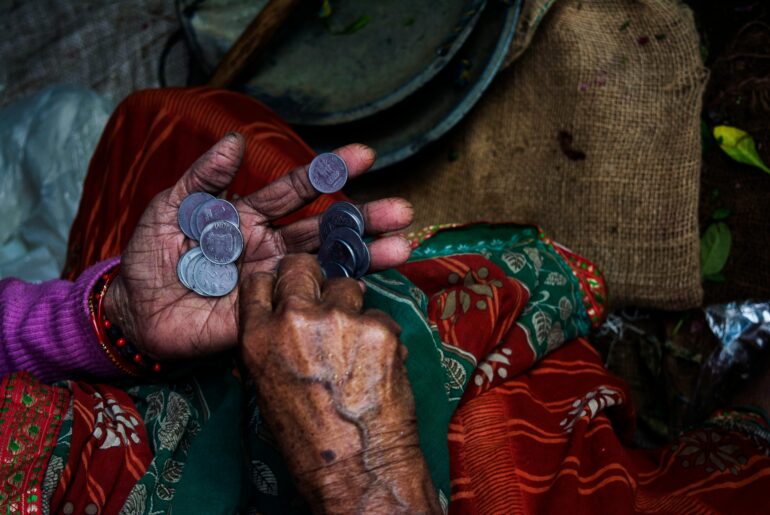
Have you ever heard of generational poverty? While the term may not be familiar to everyone, many of us have likely experienced it or seen others living in such circumstances. Generational poverty is generally defined as a situation in which at least two generations of a family live below the poverty line. Once poverty takes root in a family, it tends to persist unless there is some form of external intervention.

The primary reason for the cycle of poverty is the lack of capital formation or wealth accumulation that perpetuates through generations. In contrast, there are instances where individuals face temporary hardships due to circumstances such as food insecurity, wars, reduced income, or economic instability. In these cases, they may only experience short-term poverty and can often return to their previous standards of living with assistance. This type of poverty is known as situational poverty. However, if relatives or external organizations do not intervene, situational poverty can lead to generational poverty.

In Suratul Israa, Allah (s.w) speaks about spending on family members concisely yet powerfully with a couple of verses. He says:

 وَآتِ ذَا الْقُرْبَىٰ حَقَّهُ وَالْمِسْكِينَ وَابْنَ السَّبِيلِ وَلَا تُبَذِّرْ تَبْذِيرًا

(26) And give the relative his right, and [also] the poor and the traveller, and do not spend wastefully.

and;

وَلَا تَقْتُلُوا أَوْلَادَكُمْ خَشْيَةَ إِمْلَاقٍ ۖ نَّحْنُ نَرْزُقُهُمْ وَإِيَّاكُمْ ۚ إِنَّ قَتْلَهُمْ كَانَ خِطْئًا كَبِيرًا

 (31) And do not kill your children for fear of poverty. We provide for them and for you. Indeed, their killing is ever a great sin.

When we reflect on the verses mentioned, we see that Allah (S.W) emphasizes the importance of spending on family before any other social obligations. He explicitly forbids the killing of children out of fear of poverty, a practice that was common during the Jahiliyyah period. Poverty is a calamity that imposes negative effects upon people, and because of this, Allah’s Messenger would often pray to Allah, asking to be protected from the trial of poverty.

There are several reasons why people may refrain from helping their relatives. One common cause is the failure to maintain family ties. Conflicts arising from financial or emotional issues often create divisions among relatives. Some may distance themselves from their families because of differing social standards. This should not occur. Sometimes cutting ties is a result of a trial (fitnah) that occurs between family members. For example, when Aisha (R.A) was accused of wrongdoing by one of her relatives, Abu Bakr (R.A) vowed not to support him and his family anymore. In response, Allah revealed a verse addressing this situation.

﴿وَلَا يَأْتَلِ أُولُو الْفَضْلِ مِنكُمْ وَالسَّعَةِ أَن يُؤْتُوا أُولِي الْقُرْبَىٰ وَالْمَسَاكِينَ وَالْمُهَاجِرِينَ فِي سَبِيلِ اللَّهِ ۖ وَلْيَعْفُوا وَلْيَصْفَحُوا ۗ أَلَا تُحِبُّونَ أَن يَغْفِرَ اللَّهُ لَكُمْ ۗ وَاللَّهُ غَفُورٌ رَّحِيمٌ﴾

“And let not those of virtue among you and wealth swear not to give [aid] to their relatives and the needy and the emigrants for the cause of Allah, and let them pardon and overlook. Would you not like that Allah should forgive you? And Allah is Forgiving and Merciful.” [Surah Al Nur, Verse 22]

Conflicts can certainly arise, but Allah (S.W.) prefers forgiveness over allowing a relative in need to struggle.

A common problem is the lack of understanding regarding Islamic teachings on wealth distribution. In Islam, wealth distribution encompasses inheritance, wasiyyah (will), and waqf a’aily (family waqf). The Qur’an outlines specific shares for heirs and encourages individuals to create a will before passing away, allowing them to designate one-third of their assets to non-heirs, including other family members. All of these guidelines aim to safeguard us from disputes, ensure that everyone receives their rightful share, and prevent the mistreatment of relatives. Establishing a waqf foundation for one’s family is also strongly encouraged and can significantly benefit future generations.

Emphasizing financial assistance from family can yield considerable resources that can be channeled into advantageous opportunities. Given that family members often spend a substantial amount of time together, they typically have a good understanding of each other’s needs and life phases. As Muslims, it is our duty to understand these ideas and consult scholars regarding these crucial issues, which can aid in maintaining the dignity of families. The Prophet (S.A.W.) said,

 “If you leave your heirs independent of means, that is better than leaving them to beg from people.” Narrated by al-Bukhaari, 2742. 

In Islam, charity begins with those closest to us. As the Prophet Muhammad (PBUH) said, “The best charity is that which is practised by a wealthy person. And start giving first to your dependents.” (Sahih al-Bukhari 1426). This emphasizes the importance of prioritizing family in our acts of charity, especially during Ramadan, a time when Muslims are particularly generous.

During this blessed month, it is essential to remember our family members who are struggling. Assisting relatives in need is not just an act of charity; it also strengthens family ties and promotes long-term independence. The Quran also emphasizes this obligation:

آبَاؤُكُمْ وَأَبْنَاؤُكُمْ لَا تَدْرُونَ أَيُّهُمْ أَقْرَبُ لَكُمْ نَفْعًا ۚ فَرِيضَةً مِّنَ اللَّهِ ۗ إِنَّ اللَّهَ كَانَ عَلِيمًا حَكِيمًا

 “Your parents or your children – you know not which of them are nearest to you in benefit. [These shares are] an obligation [imposed] by Allah. Indeed, Allah is ever Knowing and Wise.” (Surah An-Nisaa, 4:11).

For those affected by generational poverty who lack relatives to help them, it is the responsibility of the Muslim Ummah to provide substantial support to enable their independence.

The Muslim Ummah must unite to offer comprehensive assistance that empowers individuals toward self-sufficiency. This support should include interest-free loans, education and vocational training, business/start-up capital, as well as mental and physical healthcare to help individuals develop the skills and health necessary to thrive. Community-based initiatives such as business incubators, scholarships, and wellness programs can lay the groundwork for long-term independence.

One of the most overlooked groups in need is reverts to Islam. It is essential to recognize the unique challenges they face, particularly those who can no longer inherit from their non-Muslim families. Many reverts find themselves in vulnerable financial situations, losing family support and lacking resources for sustenance. This can create a cycle of poverty that, if not addressed, may become generational.  This is why reverts are eligible to receive zakat, as they too need assistance to overcome financial hardships.

Likewise, in Surah Al-Hashr, Allah Subhanahu Wataala beautifully recounts the monumental moment of Hijrah, when the early Muslim migrants, known as the Muhajirun, arrived in the welcoming city of Madinah after fleeing persecution in Makkah.

لِلْفُقَرَاءِ الْمُهَاجِرِينَ الَّذِينَ أُخْرِجُوا مِن دِيَارِهِمْ وَأَمْوَالِهِمْ يَبْتَغُونَ فَضْلًا مِّنَ اللَّهِ وَرِضْوَانًا وَيَنصُرُونَ اللَّهَ وَرَسُولَهُ أُولَئِكَ هُمُ الصَّادِقُون (8)

8. For the poor emigrants who were expelled from their homes and their properties, seeking bounty from Allāh and [His] approval and supporting [the cause of] Allāh and His Messenger, [there is also a share]. Those are the truthful. {Al-Hashr}


وَالَّذِينَ تَبَوَّءُوا الدَّارَ وَالْإِيمَانَ مِن قَبْلِهِمْ يُحِبُّونَ مَنْ هَاجَرَ إِلَيْهِمْ وَلَا يَجِدُونَ فِي صُدُورِهِمْ حَاجَةً مِّمَّا أُوتُوا وَيُؤْثِرُونَ عَلَى أَنفُسِهِمْ وَلَوْ كَانَ بِهِمْ خَصَاصَةٌ وَمَن يُوقَ شُحَّ نَفْسِهِ فَأُولَئِكَ هُمُ الْمُفْلِحُونَ (9)

9. And [also for] those who were settled in the Home [i.e.,al-Madīnah] and [adopted] the faith before them. They love those who emigrated to them and find not any want in their breasts of what they [i.e., the emigrants] were given but give [them] preference over themselves, even though they are in privation. And whoever is protected from the stinginess of his soul – it is those who will be the successful.

As revealed above, the Muhajirun arrived with little more than the clothes on their backs, having left behind their homes, possessions, and loved ones in their quest for safety and the practice of their faith. The local residents of Madinah, referred to as the Ansar, greeted these newcomers with immense joy and open-hearted hospitality.

With generous spirits, the Ansar shared their resources, providing shelter, food, and companionship, effectively creating a supportive community that allowed the Muhajirun to rebuild their lives from the ground up. They pooled their wealth and efforts, ensuring that the immigrants could thrive in their new environment while cultivating a sense of brotherhood and solidarity.

This incredible event exemplifies the selflessness and unity that the ummah should embody. It highlights the importance of community support and collaboration in improving the lives of those in need. We are reminded that true strength lies in our willingness to stand together and uplift one another during difficult times.

With that in mind, the ummah should focus on creating sustainable projects and businesses by providing guidance, resources, and support. This approach will enable individuals to establish self-reliant income streams. Furthermore, advocating for fair wages, affordable housing, and systemic change is essential to addressing the root causes of poverty.

In conclusion, let this be a reminder to all believers to share the blessings that Allah has bestowed upon them, starting with their relatives. For those who are wealthy or have access to more resources than others, it is especially important to go beyond giving temporary handouts or food items that provide short-term relief. Instead, strive to create sustainable projects and opportunities that empower your relatives and the broader Ummah. By investing in education, skills training, businesses, and long-term support, we can help break the cycle of poverty and foster lasting independence. May Allah grant us the wisdom and generosity to give in a manner that He loves, beginning with our loved ones and creating opportunities that uplift others for the long haul.

REFERENCES

https://quranenc.com/en/browse/english_saheeh/17/#31

https://islamqa.info/en/answers/95340/poverty-in-islam-negative-effects-and-means-of-elimination

https://www.compassion.com/poverty/generational-poverty.htm

https://myislam.org/quran-verses/generosity

To a great extent, many of us have embraced the global social media community. Within this realm, we share lessons, absorb influences, and sometimes face pressures that challenge our character. In a world where fighting, insulting, and mocking have become all too easy, where silence is misinterpreted as weakness, and gentleness mistaken for stupidity, let us hold close the wisdom of the Prophet, peace be upon him.

Ibn Mas’ud (may Allah be pleased with him) reported that the Messenger of Allah (ﷺ) said, “Shall I not tell you whom the (Hell) Fire is forbidden to touch? It is forbidden to touch a man who is always accessible, having a polite and tender nature.” (Riyad as-Salihin 641)

Today, we find ourselves in an environment where conflict, resentment, and the tarnishing of others’ dignity over trivial mistakes have become alarmingly commonplace. This normalization has created a troubling culture where starting fights, whether in person or online, seems almost routine. We often underestimate the impact of our words and actions, particularly when directed at strangers, perhaps believing that anonymity shields us from accountability.

However, we must confront the reality that the emotional pain inflicted by online mockery is just as profound as that felt in face-to-face interactions. The sting of ridicule or harsh criticism can linger, affecting individuals deeply, regardless of the medium through which it is delivered. It raises an essential question: why do we assume that our actions on digital platforms lack significance? The truth is that every comment, every taunt, and every insult contributes to a broader culture of hostility, and we need to recognize and take responsibility for how our words can impact others.

This is dedicated to those gentle souls who often face judgment for their compassionate nature. This is your gentle reminder that embodying the principle of being the bigger person aligns perfectly with the teachings of the Sunnah. You should not be seen as foolish, naive, or weak for choosing to step back from conflict. In fact, your decision to refrain from engaging in battles, to restrain your words when provoked, and to forgive those who have wronged you is a mark of strength and maturity.

It’s important to clarify that embracing this path does not mean you should become a doormat, allowing others to insult you, trample over your rights or oppress you. A Muslim should always stand up for themselves and not allow anyone to humiliate them.

That aside, you should recognize that every act of patience, restraint, and forgiveness elevates your status in the eyes of Allah and sets you apart as someone who truly embodies these noble traits.

Consider the profound teachings found in the Sahifah of ‘Amr bin Su’ayb, where the Messenger of Allah (may peace and blessings be upon him) spoke about the Day of Judgment:

“When Allah will gather the people on the Day of Judgement a caller will call: ‘Where are the people of patience?’

A small group of people will stand up and move hastily to Paradise; the angels will meet them and ask: ‘We see that you are hurrying to Paradise; who are you?’

They will reply: ‘We are the people of favour.’

‘What was the cause of your favour?’ they will ask.

They will say:

‘Whenever we were wronged we remained patient, when we were ill- treated, we forgave, and when someone acted cruelly toward us, we showed forbearance.’

They will be told: ‘Enter Paradise; excellent is the reward of those who do good deeds. ” (Ibn Abi Al-Dunya in Al-Hilm)

Additionally, the Prophet peace be upon him also said, “I guarantee a house in Jannah for one who gives up arguing, even if he is in the right; and I guarantee a home in the middle of Jannah for one who abandons lying even for the sake of fun; and I guarantee a house in the highest part of Jannah for one who has good manners.” (Riyad as-Salihin 629)

This teaching serves as a powerful reminder that patience, forgiveness, and kindness not only reflect our character but also pave the way for a rewarding and elevated status both on this earth and in the Hereafter.

As much as this message is for everyone, it is particularly relevant to men who often face criticism or ridicule for expressing emotions such as affection, compassion, or gentleness. It is essential to recognize that the Prophet Muhammad, peace be upon him, exemplified the highest form of gentle masculinity. He was not only the commander-in-chief of the Muslim army but also the revered leader of an entire nation. Despite the weight of these responsibilities, he was celebrated for his profound tenderness toward his wives, his playful and kind demeanour with children, and his empathetic approach toward his neighbours and companions.

A great example is an incident during the prophet’s time when a Bedouin urinated in the mosque. Some of the persons stood up (to reprimand him or to check him from doing so), but the Messenger of Allah (ﷺ) said: Leave him alone; don’t interrupt him. He (the narrator) said: And when he had finished, he called for a bucket of water and poured it over. (Sahih Muslim 284a)

And in another occasion a man demanded his debts from Allah’s Messenger (ﷺ) in such a rude manner that the companions of the Prophet intended to harm him, but the Prophet (ﷺ) said, “Leave him, no doubt, for he (the creditor) has the right to demand it (harshly). Buy a camel and give it to him.” They said, “The camel that is available is older than the camel he demands. “The Prophet (ﷺ) said, “Buy it and give it to him, for the best among you are those who repay their debts handsomely. “
(Sahih al-Bukhari 2390)

Throughout history, it is clear how the prophet’s gentleness extended to all, setting a powerful example of how strength and compassion can coexist. Yet, that did not make him weak or powerless.

As such, let us not allow societal pressures or misconceptions to diminish our self-worth when we strive to embody the qualities of the Prophet. Instead, we should take pride in nurturing traits that are deeply cherished by Allah. Showing love, kindness, and gentleness is not a sign of weakness but rather an indication of true strength of character.

Aisha, the beloved wife of the Prophet, reported a significant teaching of his: “Verily, Allah is gentle and He loves gentleness in all matters.” (Sahih al Bukhari 6927) This profound wisdom, encourages us to incorporate gentleness into every aspect of our lives, reinforcing the idea that compassion is at the core of a fulfilling and righteous existence.

There was a time when I was so close to achieving a significant milestone. However, I didn’t accomplish the goal. Naturally, I was gripped by sadness and disappointment. In this moment of grief over what could have been, a close friend spoke words that would stay with me forever. “I’m so excited for you,” she said. Naturally, I asked, “Why?” With warmth in her voice, she replied, “Imagine—at one point, you thought this opportunity was the best you’d ever come across. Then Allah took it away. Now, think about the greater opportunity He has waiting for you. Aren’t you curious to see what He has in store?”

Her perspective ignited a deep reflection within me. How often do we fail to see the wisdom in Allah’s plan? When something is taken from us, it’s not a loss—it’s simply a redirection toward something even better. Amid darkness, it’s difficult to see the light. Yet, Islam teaches us that our belief in the future must be grounded in the trust that what comes next will surpass what we’ve lost. Allah Subhanahu Wataala reminds us in the Qur’an:
فما ظنكم برب العالمين

(Qur’an 37:87) “Then what is your thought of the Lord of the worlds?”

In another instance, I recall a time when I sold my thriving business to my sister, only for the sales to drop considerably in the following weeks. Her response, rather than filled with frustration, was one of complete trust: “Maybe it was other people’s rizq passing through your hands.” Her optimism reflected an unshakable faith in Allah’s wisdom and plan. Subhanallah.

فما ظنكم برب العالمين

Do you pause to reflect on His mercy? Do you acknowledge His love even in times of hardship? Can you feel the strength of that unwavering faith—knowing that Allah is with you, guiding your path with infinite care?

Consider someone you hold dear—a parent, sibling, or best friend. You trust them implicitly, believing in their loyalty and love without hesitation. If your faith in humans can be this strong, shouldn’t your trust in the One who created you, the One who has more mercy for you than even your mother, be unshakable? Allah promises that His mercy covers everything, and He is always with us, ensuring our affairs are in His
hands.

The mindset we adopt shapes the life we experience. What we believe to be true often manifests in our reality. Allah Subhanahu Wataala says, “I am as My servant expects of Me. If he expects good from Me, he will find it. If he expects evil from Me, he will find it.” (Sahih Ibn Hibban 639)

A very dear friend of mine once shared an inspiring story from her time in Canada. She and her partner were a young couple in a new environment when, in the middle of a freezing night at 2 a.m., their baby fell ill. They had no car, no money, and the buses were not operating at that hour.

Amidst their fear and worry, the couple decided to put their trust in Allah, believing that “Allah will bring His kheyr.” In 1997, they began their walk to the hospital, facing harsh cold and difficult, snow-covered paths. Just when the situation seemed insurmountable, a blue car appeared seemingly out of nowhere. The man inside greeted them with “Assalam aleykum” and inquired about their plight. He generously offered them a ride to the hospital and even expressed his willingness to wait for them. To this day, the woman believes that he was an angel, a true Godsend, reminding us of the miracles that can occur when we have faith.

Reflect, for a moment, on the story of Prophet Musa (alayhi salam). When he and his people fled from Pharaoh and his army, they reached a dead end at the Red Sea. While many would have panicked, Prophet Musa didn’t. He didn’t cry out, “We’re doomed, there’s no escape!” Instead, he calmly said, “My Lord is with me, He will guide me.” And indeed, Allah split the sea, guiding them to safety.

Abu’l-‘Abbaas al-Qurtubi (may Allah have mercy on him) explained that to think positively of Allah is to expect that He will respond to your prayers (du’a), forgive your sins when you repent, and accept your good deeds when they are done per His will. This trust in His promises is central to our faith.

In contrast, negativity often arises when we underestimate Allah’s greatness, His all-encompassing wisdom, and the precision of His divine plans. By focusing on doubts and fears, we leave space for pessimism to grow, causing us to overlook Allah’s strength and His guiding hand. In doing so, we create unnecessary hardship and suffering in our lives.

There’s a profound lesson in the story of the Prophet Muhammad (ﷺ) visiting a sick Bedouin. The Prophet (ﷺ) reassured him, saying, “No harm will befall you! May Allah cure you!” The Bedouin responded skeptically, “You say, ‘may Allah cure me’? But it’s a fever that will lead me to the grave.” The Prophet (ﷺ) replied, “Yes, then may it be as you say.” Soon after, the man passed away.

This teaches us that if we think Allah cannot lift us from our hardships, He won’t. If we believe that nothing good is meant for us, we will continue to feel stuck. But if we trust in His mercy and greatness, our lives will be filled with possibility and grace.

To conclude, let us remind ourselves: even when life feels overwhelming, we must never forget the greatness of our Lord. Never underestimate His power to provide, protect, and guide. This reminder is not just for today but for every moment of our lives.

Ibn Abi Dunyaa (rahimahullah) mentions in Having Good Thoughts About Allah that Abdullah Ibn Mas’ood (radhiyAllahu ‘anhu) swore by Allah, saying: “A believing servant has not been given anything better than having good expectations of Allah.”

He also said, “I swear by the One who is the only One worthy of worship, that no servant who perfects their assumptions about Allah will ever be let down. Allah will grant them what they have assumed, and all goodness lies in His hands.”

And so, dear reader, my question to you today, “Then what is your thought of the Lord of the worlds?!”

We’ve all had that one dua, or several, that brought us down to our knees—a desperate plea, a heart-wrenching request, something that brings tears to our eyes the moment it’s mentioned. “Please pray for us to have a child.”

“I am miserable at my workplace. I need a new job.”

“I’m so stressed from all my debts…”

“I wish I could get married too.”

“Please remember my sick daughter in your duas…”

“I keep praying for my spouse to change…”It goes on and on.

We’ve all experienced that sense of helplessness and heartache, longing for our prayers to be answered. It may have been days, months, or even years of waiting, praying, begging, and pleading, telling anyone willing to listen to please pray for us. In the midst of all this heaviness and desperation comes the ultimate submission to Allah. We realize that this world, with all its riches, is insignificant and powerless, except when Allah wills it.

During these trying times, Shaitan is particularly active, looking for any opportunity to instil hopelessness in us, to make us believe that Allah can’t hear us or won’t respond. He wants to make us abandon acts of worship, making us think, “What’s the point if Allah won’t answer my pleas?”

Imagine a child eagerly wanting to swim in the deeper side of the pool. They see their friends confidently swimming in that part, having fun and enjoying themselves, and they desperately want to join them. But as the parent, you know that they’re not quite ready for the deeper end. If they jump in too soon, they might struggle, get overwhelmed, or even hurt themselves. So, you guide them to the shallow end, where they can gradually learn, gain confidence, and build strength. You might give them a floater or a swimsuit to help them feel safe and secure.From the child’s perspective, though, they don’t understand why they can’t jump into the deeper end right away. They see their friends thriving there, and they cry or beg to join, feeling left out. But as a parent, you know they need more time, more practice, and more preparation before they’re ready to swim safely in deeper waters.

In the same way, when we make duas and pray for things — a job, a marriage, a child, a change, an opportunity — we often see others who seem to have what we desire, and we feel frustrated or impatient. But Allah, in His wisdom, knows we might not yet be equipped to handle the blessings we ask for. Like the child, we may long for what we see others enjoying, but the “not yet” answer isn’t a rejection; it’s a form of preparation. Just as a child needs time in the shallow end to build their skills and confidence, we, too, need time to grow, learn, and become ready for the deeper blessings ahead. The deeper end will come when we are truly ready to thrive there.

No matter how difficult a situation may seem and how long it may take, find comfort in this: Abu Razin reported that the Messenger of Allah (peace and blessings be upon him) said, “Allah laughs at the despair of His servant, for He will soon relieve him.” I once asked, “O Messenger of Allah, does the Lord laugh?” The Prophet replied, “Yes.” I then said, “We will never be deprived of goodness by a Lord who laughs!” (Source: Sunan Ibn Mājah 181)

Beloved reader, Allah knows. Allah knows. Allah knows. Do not let Shaitan lead you to despair. Remember how many times we have witnessed women, past their menopause, give birth after years of waiting? How often have we seen Allah reunite loved ones after decades of separation? Take, for example, the families in Palestine, often separated for years but eventually reuniting. And how many people have married after it seemed hopeless? (Just recently, I read about a 63-year-old woman who got married for the first time.) Consider how Allah has sent strangers to those in distress and debt, who unexpectedly paid everything off, providing them with a fresh start. Isn’t the Qalby Etmaan program just one illustration of many ways Allah brings relief to countless individuals? Subhanallah!

I know it may not seem like it right now. Your desires might feel too far-fetched, unattainable, or impossible. But remember who your Lord is. He is the Lord of Musa (alayhi ssalam), who parted the sea; the Lord of Ayub, who healed him after years of suffering; the Lord of Ibrahim (alayhi ssalam), who was unharmed by the fire; the Lord of Maryam, who was granted a miraculous pregnancy; and the Lord of Umar ibn Khattab, who transformed from being the greatest enemy of Islam to one of its staunchest supporters. Indeed, nothing is impossible.Hang in there.

This Ramadan, do not stop making your dua(s). Instead, elevate them with more passion, conviction, hope, and faith in Allah.It was narrated from Abu Sa’eed al-Khudri (may Allaah be pleased with him) that the Prophet (peace and blessings of Allaah be upon him) said: “There is no Muslim who calls upon Allaah with words in which there is no sin or severing of family ties but Allaah will give him one of three things: either He will answer his prayer soon, or He will store it up for him in the Hereafter, or He will remove something bad from him that is equivalent to what he is asking for.” They said, “Then we should make a great amount of du’aa’.” He said, “Allaah is greater.”Narrated by al-Tirmidhi, 3573; classed as saheeh by al-Tirmidhi and others.

In another hadith, It was narrated from Abu Hurayrah that the Messenger of Allaah (peace and blessings of Allaah be upon him) said: “(The du’aa’) of any one of you will be answered so long as he is not hasty in seeking a response and does not say, ‘I prayed but I have not had a response.’” Narrated by al-Bukhaari, 5981; Muslim, 2735

Search for that long-awaited response, dear reader. Although the relief you seek may not have arrived just yet, it is steadily approaching, like the first light of dawn breaking through a dark night. Hold onto hope, for it is on its way to you. It is coming, and with it, peace and resolution will follow. It is coming. The relief is coming.

P.S: It’s the first Friday of Ramadhan alhamdulilah. Seek the hour of acceptance of dua (sa3t Al istijabah) and pour your heart to Allah. May all that you utter in sincerity be granted to you with abundance, ameen. Allah’s Messenger (ﷺp.b.u.h) talked about Friday and said, “There is an hour (opportune time) on Friday and if a Muslim gets it while praying and asks something from Allah, then Allah will definitely meet his demand.” And he (the Prophet) pointed out the shortness of that time with his hands. (Sahih al-Bukhari 935)Please remember me and my family in your duas 🙂

I recently heard someone express a profound thought about charity that left me reflecting for a while. They said, “You might encounter a wealthy individual and share opportunities for good deeds with them, constantly reminding them of these chances. However, Allah may not intend to use that person to perform these good deeds. This could be due to their money not being pure or for any other reason that prevents them from having that opportunity. On the other hand, Allah might bring forth an unknown individual with very little to their name, yet He grants them the ability (tawfiq) to do good.”

For those involved in community service, this is a common observation. It’s not merely financial resources that inspire people to give; rather, their innate willingness, compassion, and sense of duty drive them to help others. One significant point we often overlook is that Allah, in His Encompassing Knowledge and Wisdom, determines who will do good and who will not.

An example of this is illustrated in Surah At-Tawbah, verses 41-47. In this passage, some Muslims made excuses to avoid participating in the Battle of Tabuk and sought permission from the Prophet Muhammad (peace be upon him) to remain behind. The Prophet allowed them to stay, but Allah (Subhanahu Wa Ta’ala) later revealed specific verses addressing this situation.

“No one would ask for exemption except those who have no faith in Allah or the Last Day, and whose hearts are in doubt, so they are torn by their doubts. Had they ˹really˺ intended to march forth, they would have made preparations for it. But Allah disliked that they should go, so He let them lag behind, and it was said ˹to them˺, “Stay with those ˹helpless˺ who remain behind.”

This principle extends beyond charity to all kinds of good actions, such as waking up for tahajjud, performing Hajj or Umrah, memorizing the Qur’an, spreading the message of Islam (da’wah), educating others, bringing happiness, aiding those in need, and being a supportive presence for others. Allah has intentionally selected you for these purposes. Have you considered the honour of that? That, amidst countless people, Allah chose YOU? He found you deserving of that chance to do good and receive the corresponding reward. He loves you, so He facilitates it for you!

The wonderful truth is that we all possess unique gifts and strengths in our faith to do good. Each of us is different in our approach and contributions.

Imam Malik illustrated this concept when he received a letter from a righteous person urging him to focus more on spiritual practices instead of teaching. He replied: “Allah, exalted is He, has distributed people’s actions just as He has distributed their sustenance. Sometimes He grants one person the desire to engage in optional prayers but not in optional fasting, or opens the door for charity but not for fasting, and so on. As for the pursuit of sacred knowledge, it is one of the most virtuous deeds, and I am grateful for what Allah has allowed me to do. I believe both paths are valuable, and I hope we are both striving for goodness.” (Al-Dhahabi, Siyar A‘lam al-Nubala)

This highlights that when Allah provides an opportunity and inspires a person toward a specific good deed, they should embrace that focus wholeheartedly. It’s important to also engage in other good actions without losing sight of what lies at the centre of their devotion.

The key question is: will you embrace the path Allah has set for you, or will you be among those who reject it?

Ultimately, Allah does not require our efforts, nor does He miss out if we fail to take advantage of the opportunities He gives us. He can effortlessly replace us with others to fulfil those same deeds.

Let us keep this in our hearts as a reminder whenever we face moments of lethargy that discourage us from rising for tahajjud, feeling reluctant to give sadaqah or a loan, or feeling fatigued when approached by those in need of our support. While we may feel ordinary, we have been bestowed an extraordinary honour. Consider how many individuals earnestly wish to visit Allah’s house but find themselves unable to do so. Reflect on how many genuinely desire to make a significant impact yet lack the necessary resources. Think of those who long to perform good for their parents but are left with memories, as those loved ones have departed from this world.

The next time an opportunity arises to do something good, I hope your heart overflows with genuine joy and excitement. I hope that you take that chance as if it were the final one you might ever encounter. I hope you don’t hesitate to go above and beyond, putting in the extra effort and dedicating yourself fully to the task at hand. When you take that chance, I hope you carry it proudly, wearing it as a badge of honour that reflects your commitment to making a positive impact on the world.

Dear Reader, take a few moments to engage in thoughtful contemplation about the unique purpose that Allah has set for you. Fully embrace this profound calling with all your heart and dedication, recognizing the significance of your role in the fabric of goodness in this world.

Here is a dua to help you and me continue doing good deeds:

Yahya related to me from Malik that he had heard that the Messenger of Allah, may Allah bless him and grant him peace, used to make dua saying, “O Allah, I ask you for good actions and for leaving what is disapproved of and for love of the poor. And if You wish to try people, then bring me to You without being tried.”

Allahumma inniy asa’luka fala’l-khayrati, wa tarqa’l-munqarati, wa hubba’l-masakin, wa idha aradta fi’n-nasi fitnatan fa’qbithni ilayka ghayra maftun.
اللَّهُمَّ إِنِّي أَسْأَلُكَ فِعْلَ الْخَيْرَاتِ وَتَرْكَ الْمُنْكَرَاتِ وَحُبَّ الْمَسَاكِينِ وَإِذَا أَرَدْتَ فِي النَّاسِ فِتْنَةً فَاقْبِضْنِي إِلَيْكَ غَيْرَ مَفْتُونٍ

May Allah make us a source of goodness for every place we set foot in and every soul we meet, and may we be honoured to be among the agents of kheyr in our lifetime, Ameen.

The most awaited time of the year, Ramadhan, is upon us, Alhamdulillah. For many people this means that the girl who wasn’t wearing her hijab will now be wearing it. The men who had stayed away from the masjid for months will now be standing in the front row of the mosque. Those who couldn’t go a day without smoking or using miraa will now put those habits on hold until later at night, or perhaps until the end of Ramadan. People who used to blast music in the neighbourhood will now have Sheikh Sudais on repeat.

Every year, we are reminded not to judge those who only engage in worship during Ramadan. Thereafter, we often observe them returning to their old habits. At times, we may find ourselves experiencing similar backsliding too. It’s easy to feel judgment toward them or ourselves based on how we revert to past sins. Regardless of how serious their actions may appear to us or those around us, we must remember that Allah’s door is always open to everyone—especially to those who seek a relationship with Him, even in the smallest ways.

There is a story about a thief that I once read, narrated by Sayyiduna Abu Bakr Shibli. “Once I was travelling to Syria along with a group of other travellers when on the way we were plundered by a gang of thieves. They took all our possessions and put them in front of their gang leader. Amongst the goods were a bag of sugar and almonds, the thieves began to eat them but their leader did not join them. I asked him why the rest of his gang was eating but he was not, he replied, “I am fasting”. I asked surprisingly, “How is it that you steal from people and fast at the same time?” He replied, “A man should do something to keep the doors of reconciliation open as well”. Sometime later I saw the same gang leader in a state of “ihram” performing tawaaf [circulating around] of the blessed ka’ba. His face was resplendent with the light of worship and he had weakened himself through devotional practices. I asked surprisingly, “Are you the same man?” he answered, “Yes, I am, and let me tell you, that very same fast is what caused my reconciliation with Allah”. (Raud-ur Riyaheen, P163, Maktaba-tul-Maymaniyyah Egypt)

This story serves as a powerful reminder that one’s past actions do not define the possibilities for redemption and transformation. It illustrates the potential for change and reminds us that no matter how ‘bad’ we might think we are, there is always the chance for growth and spiritual awakening. No one knows when a person will be granted tawfiq—the divine assistance to overcome their sins. Someone may have only worshipped during Ramadan for the past ten years, but perhaps this will be the year they finally conquer their nafs (inner self). Therefore, it is essential for us to extend grace, make dua (supplication), and guide others along the straight path without judgment. We never know what may happen. This perspective also applies to the struggles we face against our own nafs. Do not despair at Allah’s mercy; keep striving and be intentional about nurturing a good relationship with Him. No matter how distant you may feel from Allah, always keep the door open. There is always a chance for each of us.

Additionally, we must remember what Allah says about sinners;
The Prophet (ﷺ) said, “Allah, the Exalted, and Glorious said: ‘A slave committed a sin and he said: O Allah, forgive my sin,’ and Allah said: ‘My slave committed a sin and then he realized that he has a Rubb Who forgives the sins and punishes for the sin.’ He then again committed a sin and said: ‘My Rubb, forgive my sin,’ and Allah (SWT) said: ‘My slave committed a sin and then realized that he has a Rubb Who forgives his sin and punishes for the sin.’ He again committed a sin and said: ‘My Rubb, forgive my sin,’ and
Allah (SWT) said: ‘My slave has committed a sin and then realized that he has a Rubb Who forgives the sin or takes (him) to account for sin. I have granted forgiveness to my slave. Let him do whatever he likes”. The last sentence “let him do..”. means, as long he keeps asking for forgiveness after the commission of sins, and repents, Allah will forgive him because repentance eliminates previous sins”. (Editor’s Note) (Riyad as-Salihin 421)

As we enter this blessed month, let us approach it with intention and purpose. This is a time for deep reflection and repentance, where we turn to Allah with sincere hearts, asking for His divine guidance and support in our lives. It is essential that we confront and conquer our nafs, the inner voice that often leads us astray. And most importantly, when you see the ‘Ramadhan Worshippers’, before you start judging, before you feel the urge to mock, remember; the door of Allah is always open.

May this month serve as a powerful opportunity for redemption and transformation, helping us grow closer to our Creator and to our true selves. Ameen.

Please note: The Ramadhan Exclusive content will start on the 4th of March in shaa Allah. For 1000/= only, you can register for it through the following link: https://lubnah.me.ke/register/ramadhan/ Check out the poster below for more information.

I’m so excited for Ramadan; can you feel it? Ramadan Mubarak, good people! May this month be a breath of fresh air, a warm balm on our wounds, a comfy embrace, a chance for genuine change and the miracle we so desperately need. Ameen.

Powered by WordPress